Reading text
4.3 Ongoing Support and Critical Issue Management
In online learning environments, effective mentoring goes beyond simply conveying content: it includes ongoing support and the careful management of critical situations.
Chapter 3.3 aims to provide mentors with strategies for providing ongoing academic, emotional, and technical support to students, fostering a safe and inclusive environment, actively identifying and addressing difficulties, and managing conflicts before they become unmanageable. Only in this way can a positive and productive learning experience be ensured for all learners.
The success of an online training program depends largely on ongoing, multi-level support provided by mentors/instructors, who must therefore serve as key reference figures, capable of supporting not only the academic aspects of the learning process but also the emotional well-being of students and addressing any technical difficulties.
- Academic Support
Objective: help participants understand contents, acquire skills, and achieve learning objectives.
Value: prevents disengagement, improves learning outcomes, and strengthens self-confidence.
Examples:
Content clarification: organize Q&A sessions via video conference or forums to address complex topics or clarify doubts.
Homework feedback: provide timely, specific, and constructive feedback, explaining what works, what doesn't, and how to improve.
Resource orientation: guide students toward additional reading, video tutorials, or academic support services.
Study strategies: suggest online study techniques, time management, digital note-taking, and effective research.
Case study: A mentor notices common difficulties in solving an analytical task and takes action by organizing an optional in-depth session, sharing some examples with the class to better understand the problem.
- Emotional Support
Goal: support emotional state, strengthen confidence, reduce anxiety, and foster a sense of belonging.
Value: it is essential for maintaining motivation and preventing burnout.
Examples:
Regular check-ins: informal contact via text or email to ask how things are going.
Active Listening: accepting and validating participants' emotions with empathy.
Encouragement: recognizing commitment, progress and resilience, even in difficult times.
Promoting Growth Mindset: Reinforcing the idea that difficulties are opportunities for growth (see Dweck, Mindset, 2006).
Case study: A person writes to express frustration with the workload. The mentor responds with empathy, asking questions to better understand the difficulties and suggesting small steps or access to support services.
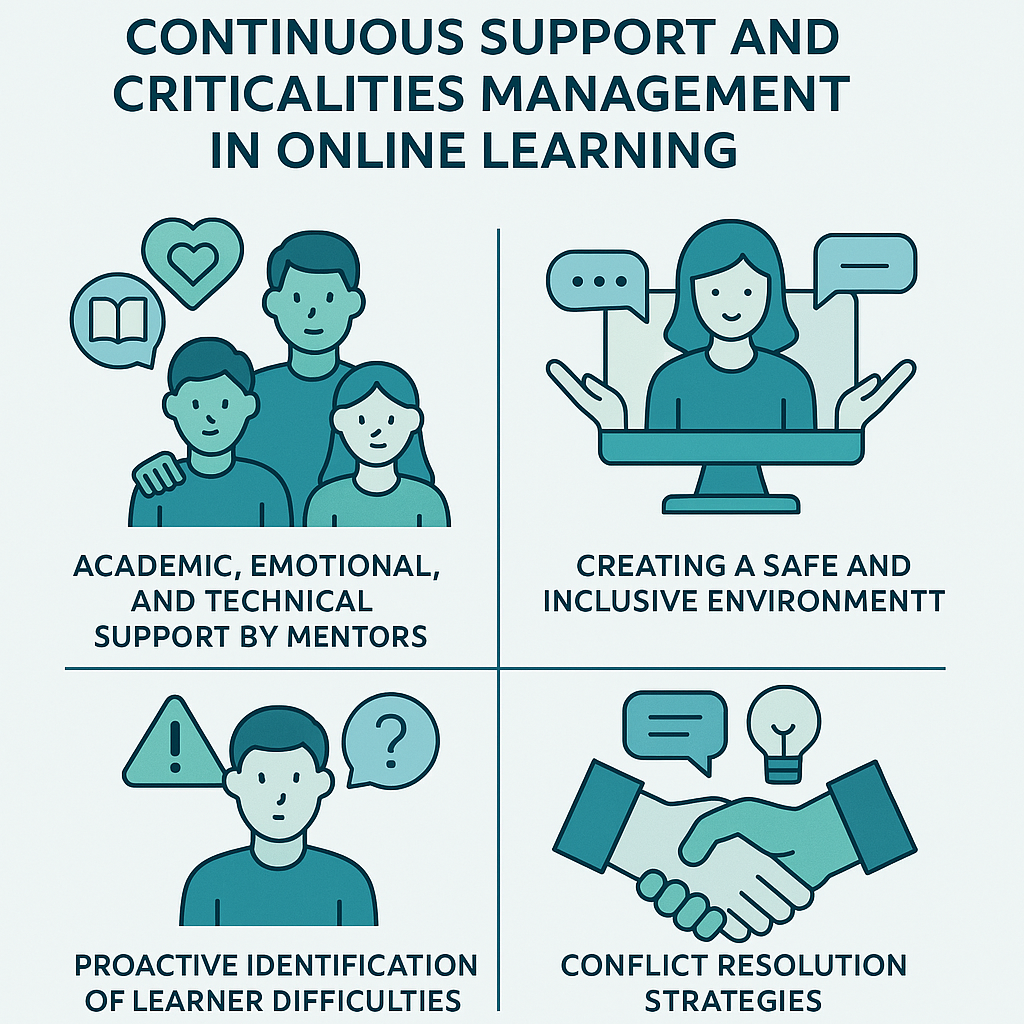
- Technical Support:
Objective: Assist in managing digital tools and platforms.
Value: Reduce frustration and ensure equal access to materials and activities.
Examples:
Basic Assistance: guide in resolving common issues (e.g., browser cache).
Orientation to Support Channels: provide the correct contact information for IT support.
Proactive Information: provide instructions and video tutorials before using new tools.
Peer Support: encourage mutual assistance with technical issues in forums.
Case study: if a participant is unable to open a video or download slides, the mentor provides troubleshooting guidance and, if necessary, involves technical support.
- Create a Safe and Inclusive Learning Environment:
Objective: Ensure that everyone feels respected and free to express themselves without fear of judgment or discrimination.
Value: Increases engagement, improves learning, and enriches the exchange of diverse perspectives. In line with the Universal Design for Learning (UDL) model.
Strategies:
Define coexistence rules: co-create or present guidelines for respectful communication
Use inclusive language: choose examples and cases that reflect diversity.
Promote empathy: stimulate reflection on different points of view.
Address microaggressions: intervene promptly and sensitively.
Foster a sense of belonging: use icebreaking or personal sharing activities.
Accessibility: ensure that materials and tools are accessible to everyone and direct them to dedicated services.
Case study: At the beginning of the course, the mentor proposes an activity in which everyone shares a significant cultural aspect, promoting openness and mutual respect.