Reading text
5.3 Communicating the importance of ecosystem services, low carbon footprint, and the ecological and social role of bivalves: ability to communicate complex ideas to a consumer audience using accessible language and platforms
5.3.2 Translating scientific and environmental information into accessible, engaging, and positive messages for consumers
Environmental communication is a distinct discipline with its own evidence base. Simply making accurate claims is not sufficient — framing, tone and format - all significantly affect whether a message is received, understood, and acted upon.
For aquaculture professionals, mastering environmental communication means understanding a few key principles derived from communication science and consumer behaviour research (Wang et al., 2020; Lu et al., 2022???; Yang et al., 2022; Kaimakoudi, 2024).
➔Positive framing outperforms deficit messaging: research in environmental communication consistently shows that messages emphasising what is already being done well — and what can be built upon — generate more positive attitudes and purchase intentions than messages centred on problems and failures. Communicating bivalve aquaculture as a proven, functioning solution to food system sustainability challenges is more effective than cataloguing the environmental failures of other protein sources. The message should be: 'This is what regenerative food production looks like' rather than 'Other proteins are damaging'.
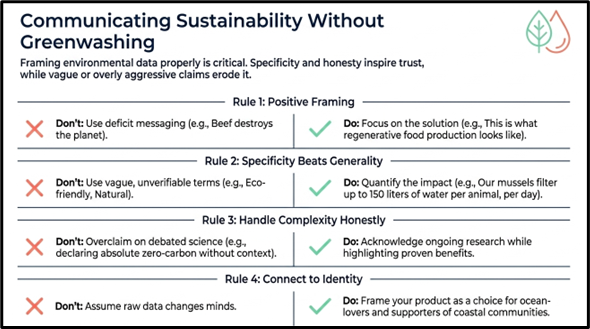
Fig. 31 - Communicating sustainability without greenwashing
➔Specificity beats generality: vague sustainability claims (eco-friendly, green, natural) are increasingly distrusted by consumers who are aware of greenwashing. Specific, verifiable claims: “our mussels require zero inputs and filter up to 150 litres of seawater per animal per day” are more credible and more differentiating. Where possible, these claims should be linked to certification, third-party data, or scientific sources.
➔The role of emotion and identity: environmental communication that connects to a consumer's sense of identity — as someone who cares for the ocean, supports local producers, or makes conscious food choices — is more likely to lead to behaviour change. Consumers do not just buy a product; they buy alignment with values they hold about themselves.
Bivalve farming has long been part of coastal communities, passed down through generations and closely tied to care for the environment—making it a powerful and meaningful subject for identity-focused communication.
➔Handling complexity honestly: the carbon sequestration debate is a legitimate area of scientific uncertainty, and professionals should not overclaim.
A message such as 'bivalve farming has among the lowest carbon footprints of any animal protein, and emerging research suggests significant carbon storage benefits — an area we are actively engaged with' is both accurate and communicates forward momentum.
Acknowledging uncertainty does not undermine credibility — in fact, it often enhances it among educated audiences.
➔Consumer education as a long-term investment: many consumers still do not understand what aquaculture is, where bivalves come from, or why they matter ecologically.
Educational content — short videos, infographics, farm visits, school programmes — builds the foundational awareness on which product-specific messages can then land effectively.
This is a sector-wide responsibility that individual producers, sector associations, and research institutions share.