Reading text
| Site: | Optima Project |
| Course: | Workers' course - ΕΝ |
| Book: | Reading text |
| Printed by: | Guest user |
| Date: | Friday, 2 October 2026, 10:29 PM |
Table of contents
- 1.1 Understanding the rationale and objectives of the OPTIMA project
- 1.1.1 Understand the importance of partnership in the OPTIMA project.
- 1.1.2 Understand the importance of communication between EU countries to increase the value of bivalve mollusc’s aquaculture.
- 1.1.3 Understand the value of bivalve farming and the lack of recognition of this practice at EU level.
- 1.1.4 OPTIMA Project Results.
- 1.2 Understanding the structure and objectives of the training program and the functioning of the online platform through which the program is delivered.
- 1.2.1 Understand the structure of the training course for workers in the bivalve mollusc aquaculture sector: how is the course structured? General topics, modules, self-assessment quizzes.
- 1.2.2 Know how to handle and use the platform training tool (how to subscribe, how to access the courses, how to see a video, how to complete a quiz).
- 1.2.3 Know how to complete quizzes and exercises with the e-learning platforms.
1.1 Understanding the rationale and objectives of the OPTIMA project
The OPTIMA project is an Erasmus+ initiative designed to improve training and skills in the European bivalve mollusc aquaculture sector. The project brings together different partners from several EU countries, including training organizations, research centres, and sector stakeholders. OPTIMA's main objective is to develop innovative learning tools and training pathways to support mentors and workers in the aquaculture sector. The project focuses on creating digital learning materials and mentoring approaches aimed at enhancing professional competences and making training more accessible. The target groups include students, workers in the bivalve aquaculture sector, trainers and organizations involved in marine and aquaculture activities. These groups are expected to benefit directly from the development of updated and practical training resources. The project result is intended to be widely used at European level. They include educational materials, digital tools, and guidelines that can be applied in vocational training systems to improve skills and promote innovation in the sector.
The program was developed to respond to the need for strengthening skills, knowledge exchange, and cooperation within the European bivalve mollusc aquaculture sector. Although this sector plays an important economic and environmental role, it is still characterized by uneven levels of training, limited cross-country collaboration, and the need to adopt more sustainable and innovative practices. The main objective of the project is to improve vocational education and training by introducing innovative and accessible learning approaches, including digital tools and mentoring systems. In addition, OPTIMA aims to foster sustainability in aquaculture practices, improve professional competences, and reinforce cooperation between European partners to increase the overall competitiveness and visibility of the sector at a European level.
1.1.1 Understand the importance of partnership in the OPTIMA project.
The partnership in the OPTIMA project brings together producer organizations and aquaculture stakeholders from France, Ireland, Spain, Italy and Greece, ensuring the project results work in the real world and meet the specific needs of the sector. In particular, organizations such as CNC (Comité national de la conchyliculture) for France, IFA (Irish Farmers’ Association) for Ireland and CRMG (Cooperativa de Rías Baixas) for Spain represent the production sector, providing direct insight into the practical requirements of shellfish farming and ensuring that the project results are applicable within real production environments. From a technical and educational perspective, M.A.R.E. and Demetra Formazione play a central role in the project. They are responsible for the design and development of Vocational Education and Training (VET) content, integrating scientific knowledge with structured training pathways directed at strengthening the skills and professional competencies of aquaculture workers. The technological development and quality assurance components are provided by IDEC (Innovation and Development in Education and Consulting S.A.) in Greece and SGS Tecnos in Spain. The first contributes to the design and implementation of digital e-learning solutions, enabling accessible, flexible, and scalable training delivery across partner countries, the second is responsible for quality assurance and certification processes, ensuring that training standards are consistent, reliable, and recognized at European level. The transnational configuration of OPTIMA enables the comparison and integration of different production models, contributing to the development of coherent training approaches and shared operational frameworks across European aquaculture systems.
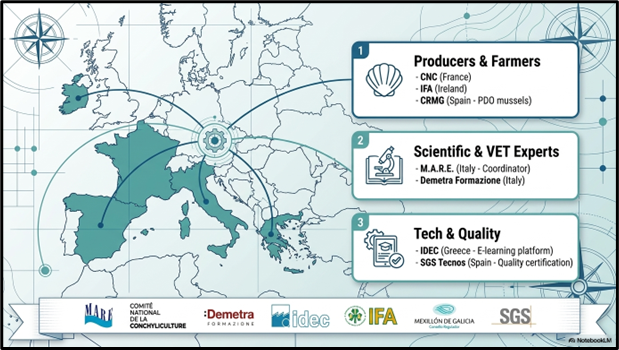
Fig. 1. OPTIMA project partnership.
1.1.2 Understand the importance of communication between EU countries to increase the value of bivalve mollusc’s aquaculture.
Effective communication between EU countries is crucial to enhance the development of bivalve mollusc aquaculture. It enables the exchange of knowledge, research outcomes, and best practices, leading to improved production efficiency, environmental sustainability, and product quality. Furthermore, international collaboration supports the harmonization of regulations and strengthens the resilience and competitiveness of the European aquaculture sector. International cooperation also plays a fundamental role in addressing structural challenges within the sector, such as regulatory fragmentation and uneven levels of development among Member States. EU policy frameworks, including coordinated approaches like the Open Method of Coordination (OMC), explicitly rely on the exchange of good practices and joint strategic planning to improve competitiveness and create a level playing field for operators. Furthermore, collaboration at the European level supports the coordination of standards, regulations and training systems, which is essential for ensuring product quality, food safety, and market integration. This is particularly relevant in a sector where growth is often constrained by regulatory complexity and limited access to suitable production sites, requiring organized policy and innovation efforts.
1.1.3 Understand the value of bivalve farming and the lack of recognition of this practice at EU level.
Bivalve farming, including species such as mussels, oysters, and clams, represents one of the most sustainable and strategically important forms of aquaculture in Europe. Unlike many other animal production systems, bivalves are filter feeders that rely on naturally occurring phytoplankton, requiring no external feed inputs, fertilizers, or antibiotics. This results in a very low environmental footprint, with greenhouse gas emissions among the lowest of all animal protein sources. In addition, their filtration activity improves water quality by removing excess nutrients and suspended particles, thus helping to mitigate eutrophication. Bivalves also provide key ecosystem services, including supporting marine biodiversity, enhancing habitat complexity, and contributing to sediment stabilization. At the same time, the sector plays a vital role in sustaining coastal economies, generating local employment, and preserving cultural traditions across many European regions. However, despite these benefits, the recognition and support of bivalve farming at EU level remains limited and uneven, particularly when compared to other aquaculture sectors. There are significant differences among Member States in terms of production systems, regulatory frameworks and economic importance. In Italy, bivalve farming, especially mussel and clam production, is highly developed and closely integrated with coastal lagoon ecosystems, such as those in the Adriatic Sea. Italy ranks as the second largest producer of mussels in Europe, with an annual production of approximately 64,000 tonnes. The core of Italian production is concentrated in the Po Delta area (Emilia-Romagna), which alone accounts for more than one-third of national output. This district is characterized by a high level of vertical integration along the value chain, combining production, processing, and distribution, resulting in improved efficiency and market stability. Despite its economic relevance, the sector is often constrained by complex administrative procedures and territorial conflicts with tourism and coastal development.
In France, oyster farming represents a historically established and well-organized industry, supported by solid institutional frameworks and quality labels. Mussel production reaches approximately 60,000 tonnes annually, yet it only covers about half of domestic consumption, resulting in substantial imports.
In Ireland, bivalve aquaculture is smaller in scale but recognized for its high environmental standards and strong focus on sustainability principles. The mussel industry is economically valuable and environmentally sustainable, with a sector value exceeding €25 million in the mid 2000s. However, it is highly dependent on the availability of wild mussel seed, which is subject to strong temporal and spatial variability.
In Greece, mussel farming represents the dominant aquaculture activity, with production reaching around 36,000 tonnes annually and a strong export orientation, especially towards other EU markets such as Italy. Nevertheless, the Greek sector is strongly export-oriented, with around 80% of production destined for foreign markets. This high dependence on external demand makes producers particularly vulnerable to fluctuations in international prices, transport costs, and logistical disruptions. Furthermore, the sector is characterized by relatively small farm sizes and limited organizational consolidation, which constrains its capacity to absorb market instability.
Spain is one of the largest producers of mussels in Europe, especially in Galicia, where raft farming systems (bateas) predominate, producing more than 200,000 tonnes annually. The sector has recently expanded into regions such as Andalusia, where it is considered a strategic alternative to declining fisheries. Spain also has a higher level of species diversification than other Mediterranean countries, including oysters and clams. The research highlights the high productivity and export potential but also stresses environmental pressures and the need for integrated coastal management.
1.1.4 OPTIMA Project Results.
The OPTIMA project aims to enhance the qualification levels of aquaculture professionals, including both bivalve mollusc farmers and their mentors, through the development and implementation of an innovative e-learning training model. This model leverages digital platforms and multimedia content to deliver accessible, flexible, and high-quality training across participating countries. To achieve this objective, the project began by building a comprehensive knowledge base through a range of activities. A background study was carried out in each partner country to assess the current state of bivalve mollusc farming, including farming techniques, environmental impacts, and certification systems. These national analyses were then integrated into a benchmarking study, which provides a comparative overview of the sector across the five participating countries. This report identifies common challenges, highlights best practices, and explores innovative solutions, offering a consolidated perspective on the present conditions and future potential of the sector. In parallel, a bibliographic study was conducted to review existing scientific literature on the ecosystem services provided by bivalve mollusc farming, as well as its potential environmental impacts. This work aimed to establish a solid and current foundation to support sustainable management strategies. The analysis highlights key ecosystem services such as water filtration, reduction of eutrophication, carbon sequestration, and habitat creation, while also addressing potential impacts including changes in sediment composition, bathymetry, and interactions with local biological communities. The knowledge generated through these studies has been translated into targeted training activities. The project initially focuses on the training of mentors, who play a central role in knowledge transfer. The mentor training programme is structured around modules addressing both technological and pedagogical aspects, including the European aquaculture context, the use of digital learning environments, online collaboration tools, and the organization of distance learning. The aim is to equip mentors with the skills needed to effectively deliver training in a digital context and to engage learners from the sector. To support these activities, an e-learning platform has been developed, providing a dedicated digital environment where mentors and learners can access training materials, share content, and interact. This platform represents a key tool for dissemination and long-term accessibility of the project outputs. The main output of the project is the training programme for workers and entrepreneurs in the bivalve mollusc aquaculture sector. This educational initiative translates the knowledge collected during the research phase into practical and accessible training content, with a focus on improving professional skills, promoting best practices, and strengthening the sustainability and competitiveness of the sector. The project includes the production of audiovisual materials in the five partner countries (Italy, Spain, Ireland, Greece and France). These national videos will be combined into a single comprehensive video providing an overview of the European bivalve mollusc aquaculture sector. The final product will illustrate differences and similarities in farming techniques, certifications, challenges, and solutions, highlighting both strengths and weaknesses across the participating countries.
1.2 Understanding the structure and objectives of the training program and the functioning of the online platform through which the program is delivered.
Understand the structure and content of the bivalve aquaculture training course, effectively use the online learning platform and its tools, and complete practical exercises to consolidate learning upon completion of the course.
1.2.1 Understand the structure of the training course for workers in the bivalve mollusc aquaculture sector: how is the course structured? General topics, modules, self-assessment quizzes.
The training course for bivalve mollusc aquaculture professionals, developed within the OPTIMA project, offers a comprehensive educational program delivered via a dedicated e-learning platform. Its structure is designed to provide transversal skills, combining purely technical knowledge with essential marketing, sustainability, and communication concepts. The training program is divided into five main modules:
- Module 1 (60 min): Introduces the OPTIMA project and its main objectives, and provides professionals with guidelines for effectively using the e-learning platform and related teaching tools.
- Module 2 (240 min): Offers an in-depth analysis of aquaculture in Europe, comparing farmed species, production systems, and the regulatory framework, and addresses the management of critical issues such as diseases, predators, and alien species in partner countries.
- Module 3 (240 min): Focuses on the environment, analyzing the concept of ecosystem services provided by bivalves, the impact of production (Life Cycle Assessment), and strategies for adapting to and mitigating climate change at the corporate level.
- Module 4 (240 min): Explores market dynamics: access, consumer preferences, the importance of sustainability certifications, traceability, new product development, and the use of digital tools and e-commerce.
- Module 5 (180 min): Focuses on strategic communication, teaching professionals how to promote the nutritional benefits of bivalves and their extremely low environmental impact (carbon footprint) through storytelling techniques suited to different audiences.
From a methodological standpoint, the course structure is strongly oriented towards self-training. In addition to theoretical study, the program explicitly requires users to complete practical exercises and self-assessment tests integrated into the online platform, which are essential for measuring progress and consolidating learning at the end of the training experience.
1.2.2 Know how to handle and use the platform training tool (how to subscribe, how to access the courses, how to see a video, how to complete a quiz).
Overview
OPTIMA Training Platform is a dedicated e-learning platform tailored for the aquaculture sector, providing specialized training resources, interactive modules, and up-to-date industry knowledge to support the professional development of workers, students, and stakeholders in the field.
Designed to address the unique challenges and practices of aquaculture, the platform offers courses on topics such as fish health management, sustainable farming techniques, water quality monitoring, and regulatory compliance. With a user-friendly interface and multilingual support, OPTIMA Training ensures accessible and flexible learning opportunities for users across different regions and experience levels.
The course provided on the OPTIMA Training Platform is open and accessible to anyone interested in following it.
Getting Started – Accessing the Platform
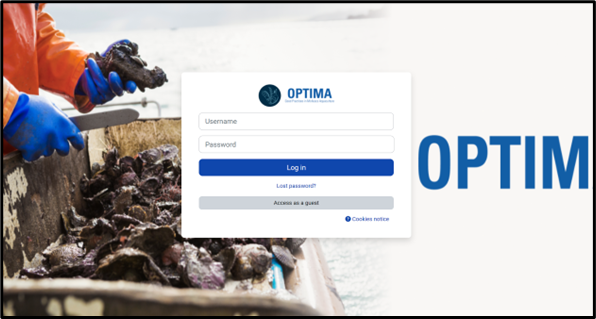
Fig. 2. Log-in home page
To access the platform, please visit https://learn.optima-erasmusproject.eu/ and log in by one of the following ways:
- Using the credentials provided to you by your national contact.
- By self registering and creating your own account.
- Click the Log in
- Click the Create new account button on the login page.
- Enter a unique username, a secure password, and a valid email address and fill in mandatory fields, which typically include first name, surname, country. Pay attention to the restrictions regarding the password (number of characters, use of symbols, capitals, numbers etc)
- Click the Create my new account
- Check your email inbox (including spam) for the confirmation link and click it to activate your account
- Log in with your new credentials and navigate to the homepage to choose the course you wish to join.
Upon successful login, you will have full access to all national versions of the training and a wide range of course materials specifically developed to support your learning journey.
Navigating the Dashboard
The dashboard displays all courses you are enrolled in, recent activity, and navigation menus.
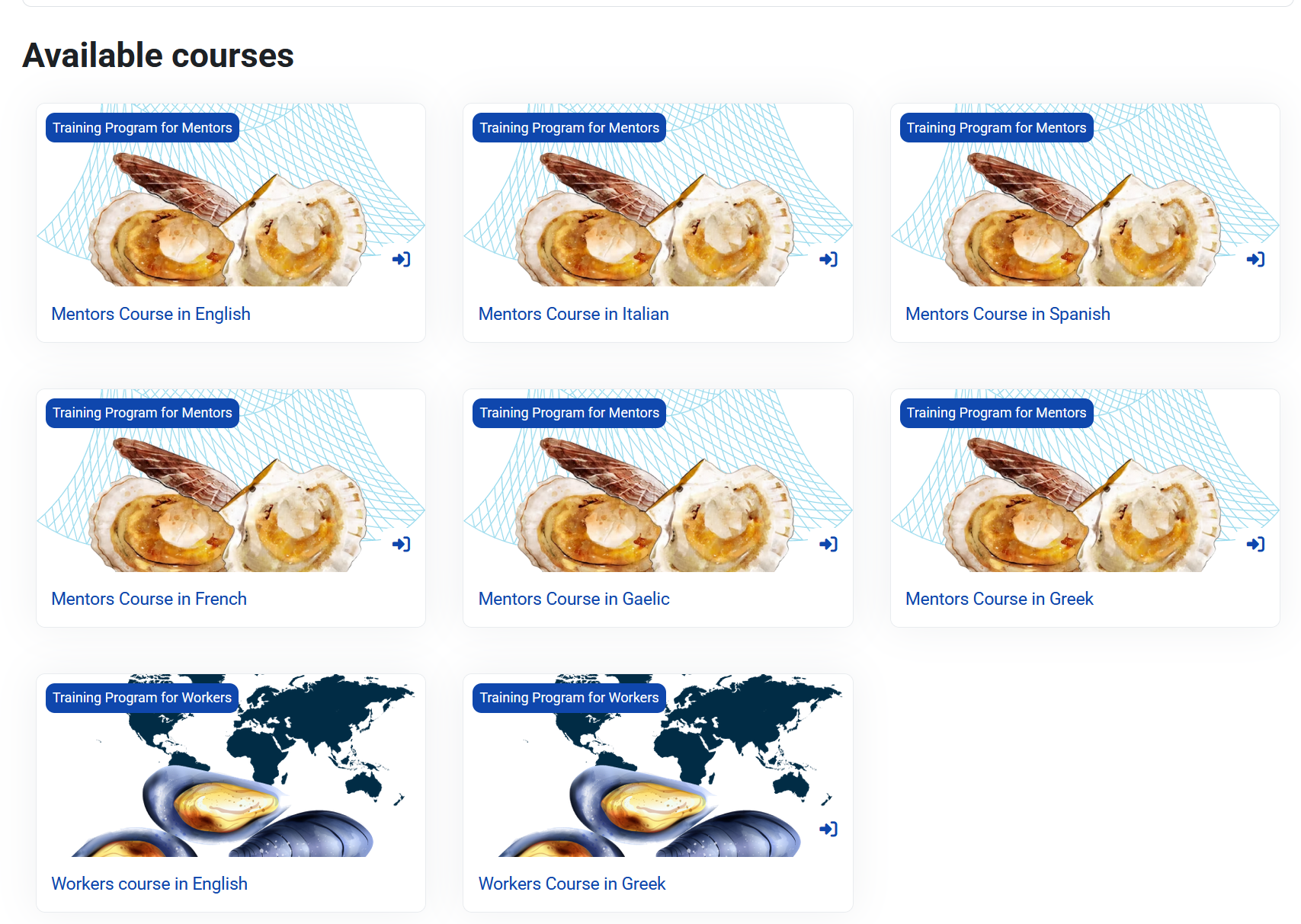
Fig. 3. Choose the available courses.
Course Structure – Course Categories and Modules
In the platform the courses are organised into categories and modules. Each module is preceded by a small description of the topics covered, the objectives and the learning outcomes.
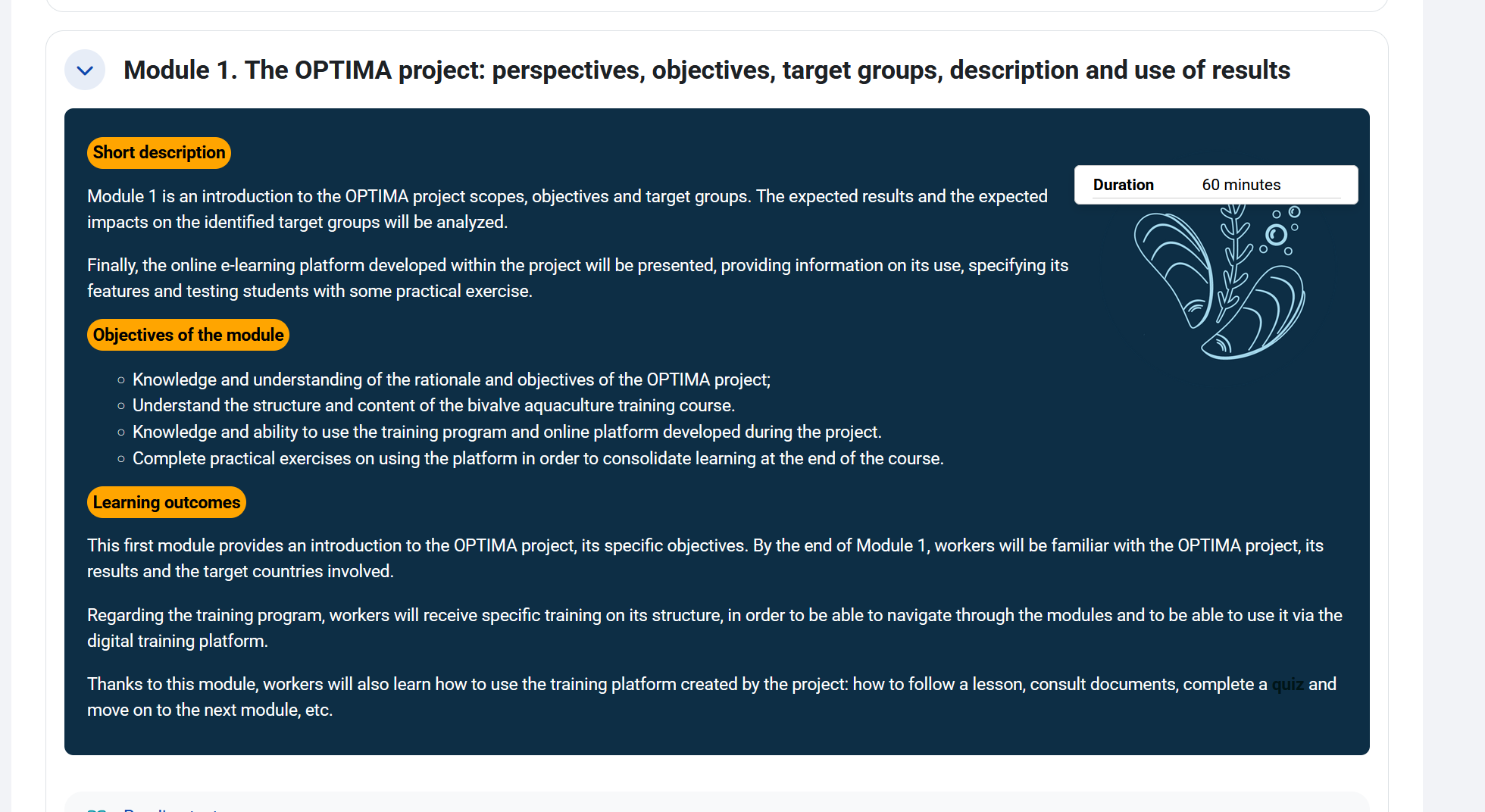
Fig. 4. See the information on the module.
Learners can find all the modules in the menu that appear on the left of the webpage by clicking on the button in the upper part of the webpage (on the left too).
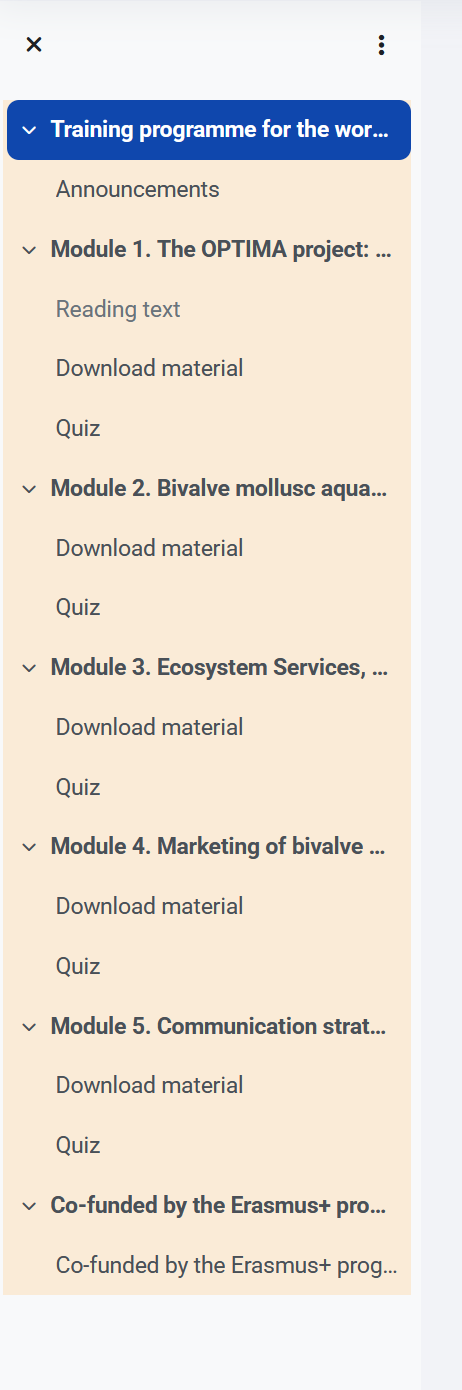
Fig. 5. Start to read the module.
Type of Course Materials
Learners can access resources such as PDFs, videos, links and quizzes.
Support – Technical Help
If you experience any technical difficulties or have questions while using the platform, you can contact the OPTIMA support team for assistance. They can be reached by email at info@learn.optima-erasmusproject.eu. The team will respond as soon as possible to help resolve your issue or provide the necessary information. You may also find helpful information and step by step guides in the detailed Moodle Documentation available at https://docs.moodle.org/500/en/Main_page.
1.2.3 Know how to complete quizzes and exercises with the e-learning platforms.
Quizzes are designed to assess student knowledge and understanding. They are useful to provide feedback to facilitate the student’s learning process.
How to start a quiz
Once logged into the platform and once chosen a training course, the training course home page will be opened. This page has a menu on the left in which the quizzes are located in the menu on the left side of the page. Each module has its own quiz.
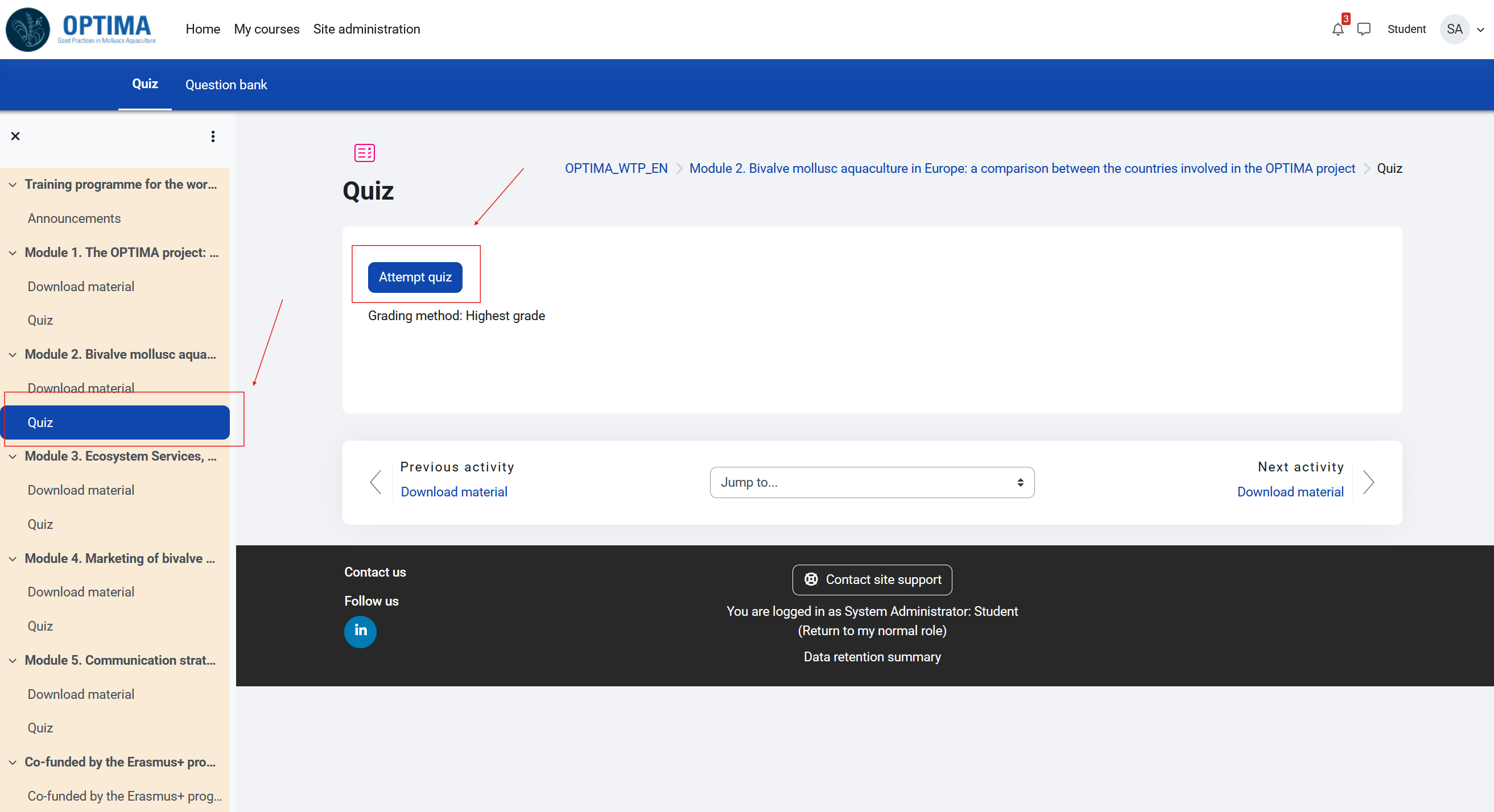
Fig. 6. Find a quiz on the e-platform.
Simply click on "Quiz" in the list of each module. A page will open where you can choose to "start the quiz" by clicking on "attempt quiz."
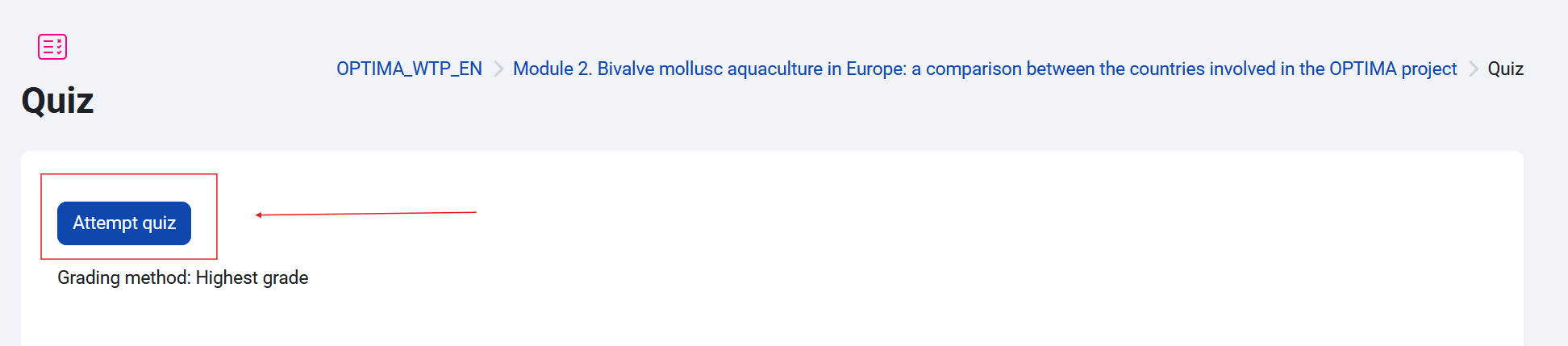
Fig. 7. Start a quiz.
Once you click "attempt quiz," the platform will open the first page with the first question (image below).
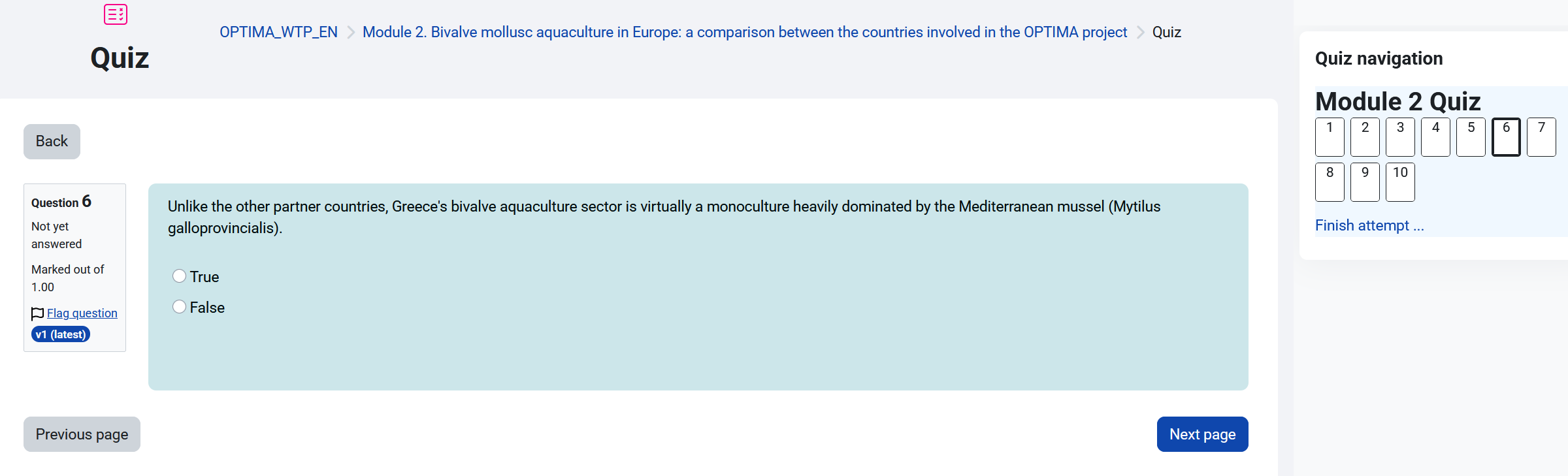
Fig. 8. Start to complete a quiz.
At the end of the test, a grade will be given that will allow the student to pass the module and declare it understood.