Reading text
| Site: | Optima Project |
| Course: | Workers' course - ΕΝ |
| Book: | Reading text |
| Printed by: | Guest user |
| Date: | Saturday, 3 October 2026, 12:22 AM |
Table of contents
- Introduction
- 2.1 Main differences between the countries involved in the project
- 2.2 Issues and solutions related to the problems present in the countries involved in the project: diseases, predators, alien species, sea temperature, climate change, sea storms
- 2.2.1 Problems related to the pathogens in each country: detection methods, solutions, and associated mortality
- 2.2.2 Problems related to the presence of marine biotoxins in each country
- 2.2.3 Problems related to the presence and the types of the other pollutants in each country (heavy metals, escherichia coli)
- 2.2.3 Problems related to potential predators or impacting alien species in each country
- 2.3 Bureaucratic aspects in different countries: obtaining and renewing concessions area, quality labels or certifications
- 2.3.1 What types of certifications or quality labels are most common in each country? How are these certifications and labels obtained: easy or difficult process?
- 2.3.2 In the country existed state-owned sea concessions? If yes, how can you obtain it in each country? Are they renewed? And how long do they last?
- 2.4 National and European regulations, directives, and legal procedures relating to bivalve mollusc aquaculture: EU regulations, food safety directives, classification of aquaculture production areas
- 2.4.1 European "Hygiene Package": Presentation of the fundamental (EU) Regulations establishing hygiene and health rules
- 2.4.2 Official Controls and National Implementation: The Role of Supervision
- 2.4.3 Regulations for the export of juvenile bivalve molluscs used for reintroduction into the marine environment in other EU countries: risk of introducing alien species or diseases
Introduction
This training module aims to provide a detailed and comprehensive overview of bivalve mollusc aquaculture in Europe, placing particular emphasis on comparisons between the OPTIMA project partner countries.
The bivalve molluscs farming sector is a cornerstone of European aquaculture: it makes a significant contribution to food security, the supply of high-nutrient proteins, and the livelihood of coastal communities. As a production sector characterized by an extremely low environmental impact and, conversely, often capable of providing important ecosystem services, its promotion is aligned with the European ecological transition strategies (Blue Growth).
By following this training course, participants will acquire fundamental knowledge and skills to fully understand the similarities and the main sectoral differences found in the five European countries participating in the OPTIMA consortium (Italy, Spain, France, Greece, and Ireland).
The information provided covers the different species farmed, the various farming techniques, the characteristics of the farming site in each country, the health and climate challenges, administrative management, and the regulatory framework, all of which provide a fundamental overview for the management and development of the sector.
2.1 Main differences between the countries involved in the project
Bivalve mollusc aquaculture in Europe is not a homogeneous sector; on the contrary, it is highly diversified based on the geographic, oceanographic, and historical conditions of each country.
The OPTIMA project partners are from five European countries: Spain, France, Italy, Ireland, and Greece. These five countries have unique territorial and cultural characteristics that are reflected in the choices regarding the type of species farmed and the farming methods adopted, both to ensure greater sustainability of the sector and to maximize yield in often very different marine environments: the Atlantic Ocean and the Mediterranean Sea.
In its first phase, the project analyzed, as can be seen in the table below, the main differences and similarities that emerged between the five countries mentioned above in relation to three key characteristics of the bivalve mollusc farming sector:
- the different types of species farmed;
- the different farming techniques;
- the different farming
|
COUNTRIES |
ITALY |
SPAIN |
IRELAND |
FRANCE |
GREECE |
|
SPECIES FARMED |
Mytilus Galloprovincialis Ruditapes philippinarum Magallana gigas Ostrea edulis Tapes decussatus |
Mytilus Edulis Mytilus Galloprovincialis Ruditapes philippinarum Tapes decussatus Magallana gigas Ostrea edulis |
Mytilus Edulis Magallana gigas Ostrea edulis Ruditapes philippinarum Pecten maximus |
Mytilus edulis Mytilus galloprovincialis Magallana gigas Ostrea edulis Veneridae spp. Cerastoderma spp. |
Mytilus Galloprovincialis Ruditapes philippinarum Magallana gigas Ostrea edulis |
|
FARMING TECHNIQUES |
Mussels offshore longline Mussels on poles in the lagoon Clams on the bottom Floating biventìa system Oysters cemented on ropes Lanterns Baskets in long-line offshore Floating pouches in lagoons |
Mussels in bateas Mussel offshore longline (farming lines) Oysters cemented on ropes Clams on the bottom Oysters in bags |
Mussels offshore longline Mussels on the bottom Oysters in bags Oysters in roll-bags |
Oysters in bags on trestle Mussels bouchots Suspended rope-grown Clams or cookles on the bottom Tables similar to the spanish bateas both for oysters and mussels |
Mussels offshore longline Poles in the lagoon similar to bouchots On the bottom Clams on the bottom |
|
MAIN FARMING SITES |
Bivalve farming is widespread especially along the Adriatic coast, with a greater concentration in the North Adriatic. Other important production areas are located in Ionian Sea (Taranto gulf); Tyrrhenian Sea: Campania Region, La Spezia gulf, Gaeta, Follonica. In Sardinia the production areas are located in the gulf of Olbia and Oristano, for what concerns mussels and oysters, while European and Philippina Clams are farmed in the lagoon ponds in the south of the island. |
Bivalve farming is concentrated above all in Galicia, which produces 97% of the total amount of the national production. Other autonomous communities where bivalves are farmed with much smaller production (3000 tons/y): Catalonia, Valencian community, Andalusia, Balearic Islands, Asturias and Cantabria. In Galicia there are almost 4900 facilities dedicated to the bivalves farming: -Bateas: 3626 (3387 are dedicated to mussel farming, the rest are dedicated to other bivalves, mainly oysters/pectins, or to the pre-baiting of clams); -Farming lines: 22 (all dedicated to mussel farming); -Farming parks: 1202 (clams, cockles and razor clams); -Hatcheries: 11 (clam and oyster seed). |
Bivalve farming is concentrated mainly along the west coast, from the Belgian border to the Spanish border. Here, oysters are the most farmed (95% of the total farmed in bags on racks), but also mussels (Mytilus edulis) especially Bouchots (95% between Charente-Maritime and Pas de Calais) and more rarely (5%) in offshore facilities with rope longline (Marennes-Oléron, Bay of Brest). On the west coast, there are also small clam and cockle farms on the seabed (Pays de la Loire region) and small oyster farms on the seabed in the Bay of Quiberon and Bay of Mont-Saint-Michel dedicated to mussel farming); -Farming parks: 1202 (clams, cockles and razor clams); -Hatcheries: 11 (clam and oyster seed). (5% of total production). In the Mediterranean area the most farmed species are the mussels M. galloprovincialis, farmed in offshore systems with longlines or in Bateas similar to the Spanish ones but anchored to the ground. |
Bivalve farming is widespread in all coastal regions with suitable bays. Concerning oysters, the largest production is located in the Southeast and North regions. The suspended rope-grown mussels production (Mytilus edulis) is located along the western seaboard but is concentrated also in the sheltered bays of the South. The production of the seabed farmed mussels is concentrated in the Southeast (Wexford port) and northeast (Carlingford Lough), with almost 97% of the total amount. The seeds are collected with seasonal workers in the Southwest (Castlemaine Harbour) and sold to nearby finishing units. The seabed farming of native oysters (Ostrea edulis), King Scallops (Pecten maximus) and Clam (Ruditapes philippinarum) has resumed on a smaller scale in specific sites along the coast. |
Bivalve farming is located in the following farming sites: - Gulf of Thermaikos (80%), - Gulf of Kalloni, - Gulf of Saronikos, - Gulf of Maliakos, - Gulf of Amvrakikos Nestos estuaries. Mussels and oysters are farmed in the Makrigialos and Chalastra regions in long-line offshore farming facilities. In Igoumenitsa, the oysters are mainly produced, also in this case in long-line offshore farming facilities. In Lamia, mussels are produced in offshore long-lines. Clams are grown mainly in lagoons with purely natural processes, without enrichment of nutrients. |
Table n. 1 - Situation of the bivalve farming sector in the 5 countries involved in the project
2.1.1 Main species farmed in each country, quantities produced, and spatial distribution within the country
By analyzing the species farmed in the five countries participating in the OPTIMA project consortium, substantial differences emerge.
In Spain, the sector is almost entirely dominated by the Mediterranean mussel (Mytilus galloprovincialis). The Iberian nation is the European leader of mussel production with impressive volumes exceeding 200,000 tonnes per year. Production is heavily concentrated in the region of Galicia (in the northwest of the country), where the "rías" (deep coastal inlets, particularly the Rías Baixas such as Arousa, Pontevedra, and Vigo) offer an exceptionally fertile environment, rich in nutrients brought by ocean upwelling currents. In addition to mussels, Spain also boasts smaller but significant oyster production, including the Pacific cupped oyster (Magallana gigas) and the prized native flat oyster (Ostrea edulis). Moving to the Mediterranean coast (Catalonia, the Ebro Delta, and the Valencian Community), there are further mussel and oyster production hubs operating in the open sea or in sheltered bays.
In France, production stands out for being strongly oriented towards oyster farming and very well distributed along the coast. The leading species is the Pacific cupped oyster, which alone reaches volumes of approximately 80,000 tons per year. This is complemented by the historic and highly valuable niche production of the flat oyster (Ostrea edulis). Mussel farming is equally important: both the Atlantic mussel (Mytilus edulis) is farmed, with approximately 45,000 tons annually, and the Mediterranean mussel (Mytilus galloprovincialis), which contributes approximately 10,000 tons. The geographical distribution covers the entire Atlantic coast (from the Belgian border to Spain, including the major centers in Brittany, Normandy, Pays de la Loire, and Nouvelle-Aquitaine) and the Mediterranean coast (Occitania, where the Thau Estuary stands out). Minor production in France also includes sea truffles, clams, and scallops.
Italy stands out for its strong production dualism. On the one hand, mussel farming (Mytilus galloprovincialis) dominates, widespread throughout the peninsula but with centers of absolute excellence along the Adriatic coast (Emilia-Romagna, Marche, Veneto, and Puglia, with the renowned Taranto hub) and along the Tyrrhenian coast in Liguria (Gulf of La Spezia). On the other hand, venericulture, or the farming of the Philippine clam (Ruditapes philippinarum), is dominant, a sector in which Italy holds the undisputed European leadership. This production is concentrated almost entirely in the fragile lagoonal and transitional ecosystems of the Northern Adriatic (Po Delta, Sacca di Scardovari, Sacca di Goro, Venice Lagoon, Marano Lagoon, and Grado). In recent years, the farming of the Pacific cupped oyster has also become increasingly popular and significant, reaching high production volumes, with the most promising centers located in Sardinia, in the lagoons of the Po Delta, and in La Spezia.
Ireland focuses primarily on the production of high-quality oysters (Magallana gigas and smaller quantities of Ostrea edulis) and Atlantic mussels (Mytilus edulis). Although production is smaller than that of giants like France or Spain, it is characterized by high quality standards and is largely destined for export to demanding markets. The spatial distribution cleverly exploits the complex coastal morphology: for oysters, the largest production units are located in the southeast and northern regions. For mussels, suspended rope production is concentrated in the sheltered bays of the south, southwest, and west, while bottom culture (on the seabed) is mainly concentrated in the southeast (such as Wexford Bay) and the northeast.
In Greece, bivalve aquaculture is virtually synonymous with mussel farming (Mytilus galloprovincialis), almost a monoculture. The country produces tens of thousands of tons annually, concentrated heavily in the northern peninsula. The absolute best areas are the Thermaikos Gulf (particularly in the regions of Makrigialos and Chalastra), the Amvrakikos Gulf, and, to a lesser extent, the Maliakos Gulf. These areas are crucial because, unlike the crystal-clear but nutrient-poor waters of the south and the Aegean islands, they benefit from the vital supply of freshwater and nutrients flowing into the sea from Greece's mainland rivers (such as the Axios and Aliakmon), which provides the necessary nourishment for the rapid growth of bivalves. Oysters and other species currently represent marginal production, although efforts are underway to diversify.
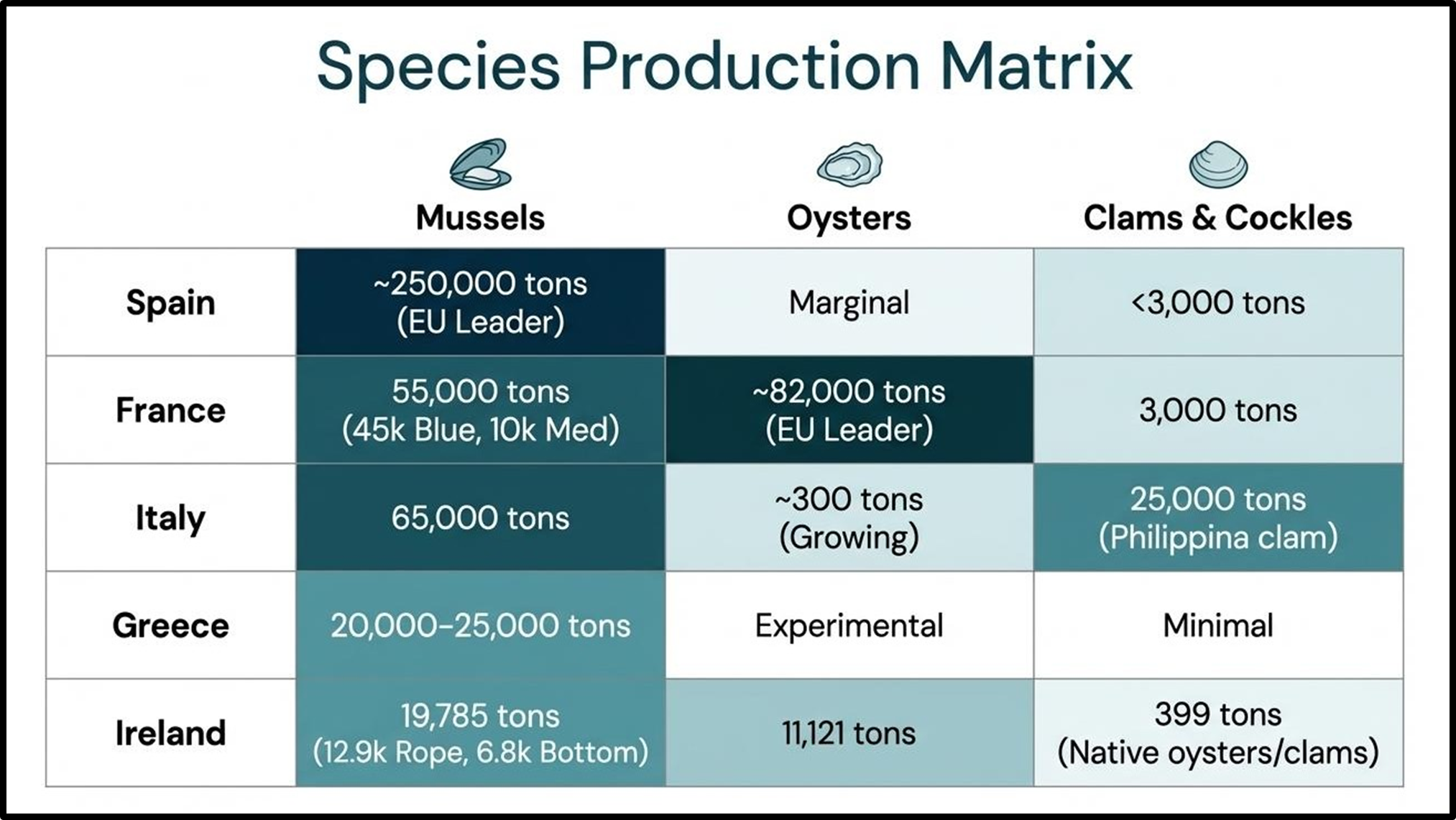
Fig. 9 - Main species farmed in the 5 countries involved in the project
2.1.2 Farming techniques and their distribution across the country in the different countries of the project
Farming techniques are a direct reflection of the marine and oceanographic conditions (tide height, water depth, exposure to waves) that can be found in the 5 partner countries.
Spain is Europe's giant in mussel farming, with production focused almost entirely on the Mediterranean mussel (Mytilus galloprovincialis). Spain's success is based on a perfect combination of unique oceanographic conditions and a traditional yet highly efficient farming technique: the batea.
Almost all Spanish production comes from Galicia's Rías Baixas, deep coastal inlets where upwelling (the rising of nutrient-rich deep waters) creates an exceptionally productive environment. The batea is a kind of floating raft, rectangular or square in shape (often 20 x 20 m), made of a sturdy lattice of wooden beams (traditionally eucalyptus, due to its resistance to saltwater) supported by large floats. Up to 500 ropes, typically 10 to 12 m long, hang vertically from this structure, baited with mussels. To prevent the weight of the growing mollusks from causing the batea to slide to the bottom, the ropes are punctuated with plastic or wooden pegs.
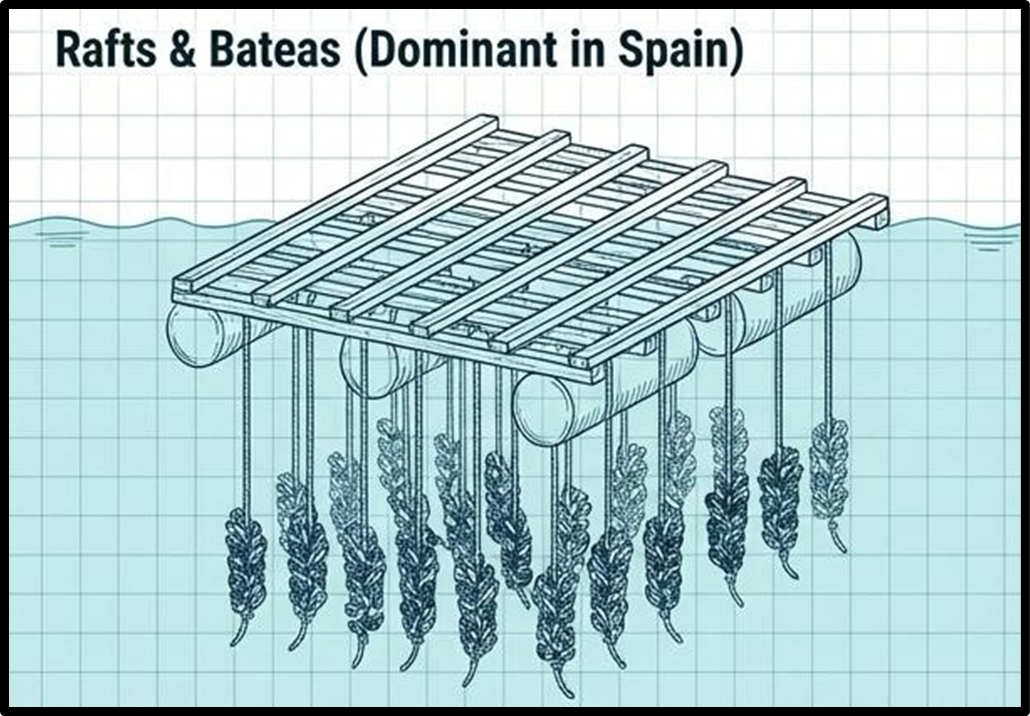
Fig. 10 - Galician Bateas - Typical composition of a bateas
The production cycle unfolds as follows: farmers collect the juveniles (mexilla) by scraping them directly from the rocky cliffs or by collecting them from "collector ropes". The juveniles are then wrapped around the ropes using a thin biodegradable cotton net. Halfway through the growth cycle, when the mussels become too large and dense, they are thinned: the ropes are lifted and the mussels are shelled, selected, and re-bagged onto a larger number of ropes to ensure maximum access to phytoplankton, allowing for some of the fastest growth rates in the world (8-12 months to reach commercial size). This Galician ecosystem produces a product that represents the pride of Spanish aquaculture. Mejillón de Galicia is a true symbol of Spanish identity, and was one of the first seafood products in Spain to obtain European Protected Designation of Origin (PDO) recognition in 2007. The PDO specifications, rigorously managed by the Regulatory Council of the Mejillón de Galicia PDO (partner in the OPTIMA project), are extremely stringent. To bear this label, the mussel must be farmed exclusively on registered and authorized farms within the Galician estuaries covered by the specifications. Furthermore, the purification and processing phases for marketing must take place within authorized centers in the same geographical area. The PDO mark guarantees superior and unmistakable organoleptic quality, resulting from the specific phytoplankton diet of the estuaries: the flesh of the Galician mussel is turgid, intensely orange in color, and has a very high pulp yield. Each batch sold under this mark is traced with a numbered identification label, which guarantees European consumers not only its origin, but also compliance with strict food safety standards, environmental sustainability, and the protection of the artisanal knowledge of the thousands of Galician families who have been working the bateas for generations.
Beyond Galicia, there are other important bivalve production centers on the Mediterranean coast (Catalonia, the Ebro Delta, and the Valencian Community). In these areas, the limited availability of sheltered areas and the lack of upwelling force farmers to use different systems. In addition to modified bateas (such as those located within the port of Valencia), long-line offshore installations, similar to those in Italy, are used, which better withstand the swell of the open sea.
France boasts the most advanced oyster industry in Europe, with production split between the Atlantic coast (wide tidal ranges) and the Mediterranean coast. This diversity has given rise to highly specialized farming techniques. Along the Atlantic coast (Brittany, Normandy, Nouvelle-Aquitaine), the wide tidal range has favored the intertidal technique of poches sur tables. Oysters (Crassostrea gigas) are placed in net bags (poches) and placed on metal frames (tables) anchored to the seabed. The tidal cycle exposes the oysters to air twice a day: this thermal and physical shock (trompage) forces the animals to hermetically close their valves, a process that strengthens the adductor muscle, which is essential for preserving the oyster above water during the marketing phase.
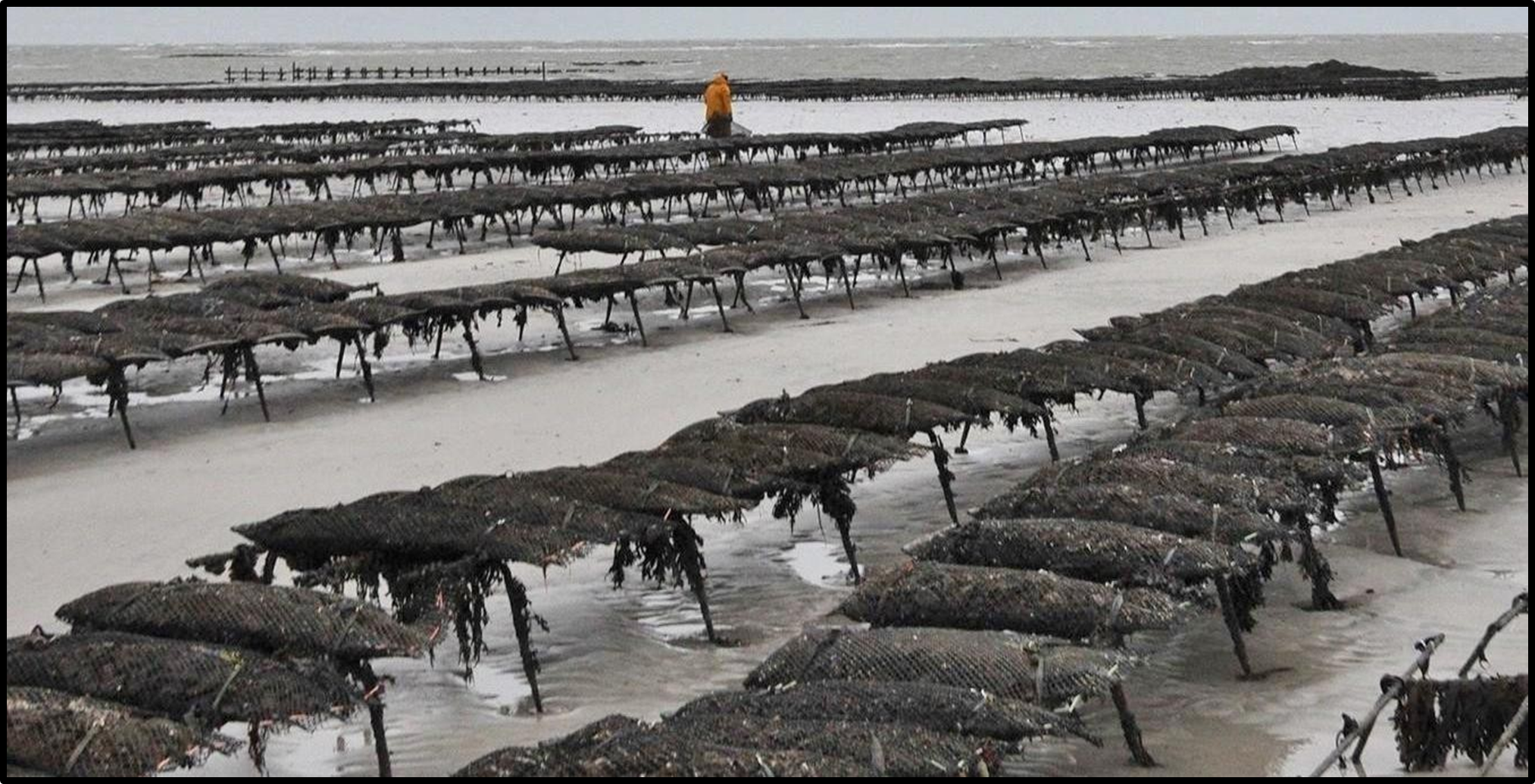
Fig. 11 - Bags of oysters on trestle
When it comes to mussels, France is world-famous for its "bouchots". These consist of long rows of tall wooden poles (often oak or pine) driven deeply into the sand of the Atlantic intertidal zone. Juvenile mussels are caught on coconut fiber ropes, which are then spiraled around the poles. To protect the mussels from benthic predators (such as crabs), the base of the poles is often covered with a smooth plastic collar (called a Tahitian collar). A type of mussel farmed on "bouchots", like the Galician and Scardovari mussels, enjoys a Protected Designation of Origin (PDO) and is renowned for its small size, clean shell, and strong flavor.
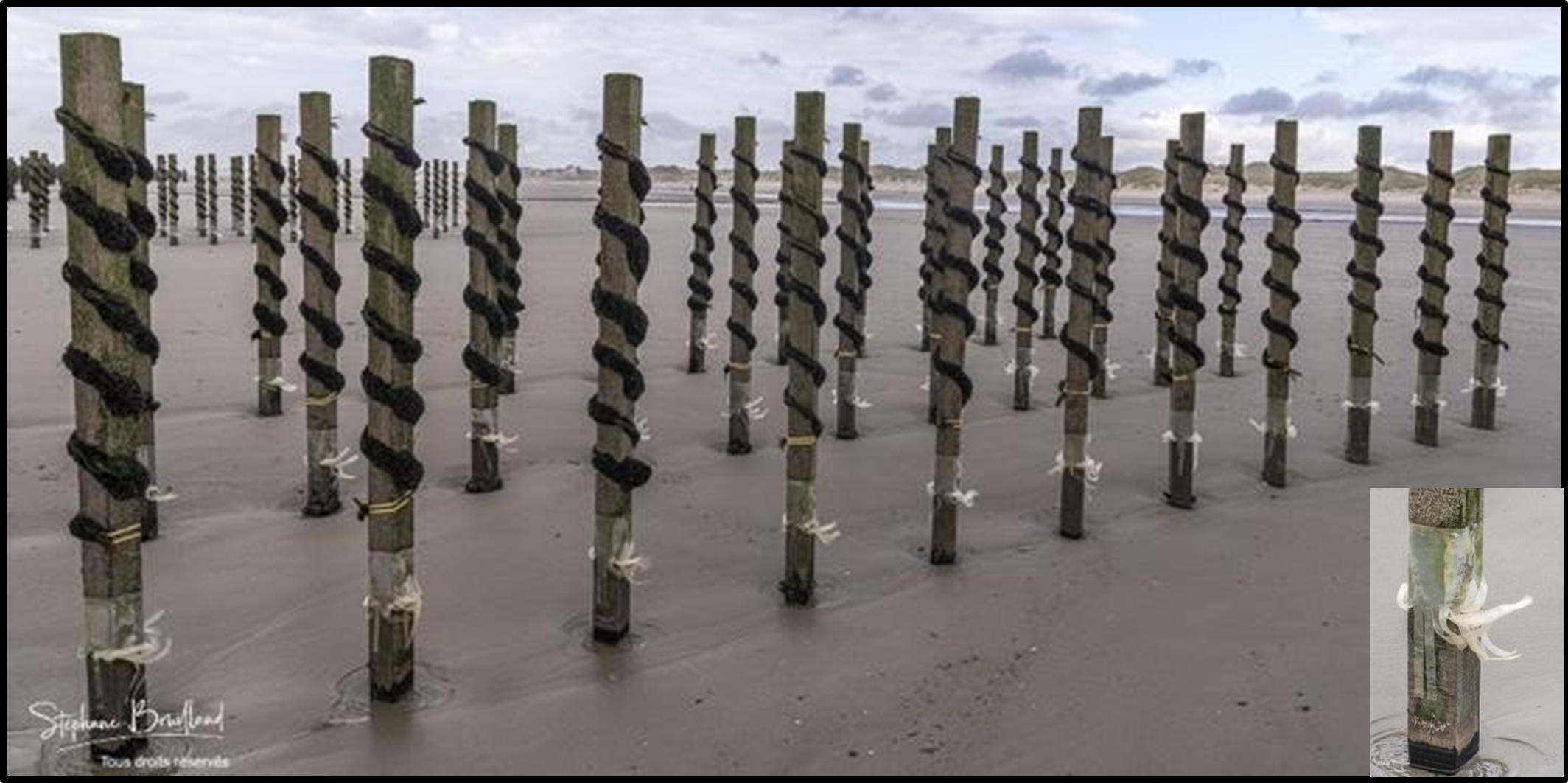
Fig. 12 - Francia, baia della Somme, Quend-Plage, cozze Bouchot. Le cozze Bouchot possono essere dotate di protezioni in plastica alla base per impedire ai granchi di arrampicarsi e predare le cozze. © Stéphane Bouilland
In the French Mediterranean (particularly in the Thau Étang in Occitanie), the lack of significant tides has necessitated the use of suspended systems similar to longlines. For oysters, the sophisticated technique of collage (rope cementation) is used. Individual oysters are manually glued, one by one, to a rope using a biological cement or resin. The ropes are then hung from floating structures positioned in the sea. To replicate the effect of ocean tides, farmers use winch systems (including automated or solar-powered ones) to cyclically lift the ropes out of the water (artificial flooding), thus ensuring a final product of exceptional quality.
In Ireland, the bivalve aquaculture industry is extremely diverse and adapts to the complex morphology of the region. The sector skillfully combines intertidal systems along rugged coastlines with systems in the open sea or in deep fjords, making excellent use of the protection offered by bays and loughs. Irish production is clearly divided between oyster farming and mussel farming, with profoundly different techniques depending on the species and the environment.
Oyster farming in Ireland focuses primarily on the Crassostrea gigas, alongside a small but historically significant indigenous production of the European flat oyster (Ostrea edulis), famous in areas like Galway Bay. The dominant technique is intertidal farming, which takes advantage of the wide tidal ranges of the Atlantic Ocean. Farmers use the trestles and bags system (metal tables and bags): the oysters are placed in rigid plastic mesh bags and placed on iron structures raised about half a meter above the sandy or muddy seabed. This technique requires intense physical labor, strictly dictated by the rhythms of the moon and the tides. During low tide, the oysters emerge, allowing operators to access the facilities using tractors to turn and shake the bags (preventing the oysters from growing misshapen), encouraging the breaking of the more fragile edges of the shell (pruning) and giving the oyster a more harmonious shape.
New types of bags exploit the presence of buoys, incorporated into the bag, which facilitate movement as the tide changes: in this way, the oysters are moved within the bag without the need for an operator. This movement process, combined with exposure to air and sun, "trains" the oyster's adductor muscle, which learns to remain hermetically sealed. The result is a product with a prolonged shelf life and extraordinary organoleptic quality, highly prized and sold on international markets.
Atlantic mussel (Mytilus edulis) farming in Ireland uses two distinct cultivation methods: bottom culture and rope culture.
Bottom-farming, widely practiced in large, shallow bays with suitable seabeds (such as Castlemaine Harbour in the southwest or Lough Foyle in the north), represents a form of semi-natural aquaculture. It relies on catching juveniles (seed) from natural beds, which are then transported and "seeded" at controlled densities in protected concessions within bays. Here, phytoplankton-rich currents ensure growth. After approximately 18–24 months, the mussels are harvested using vessels equipped with specialized dredges. This high-volume production technique is often sold in bulk to European processing plants, but it is highly exposed to natural fluctuations in seed and attacks by benthic predators such as starfish and crabs.
Rope-farming, practiced along the rugged southwest and west coasts (Bantry Bay or Killary Harbour Fjord), takes advantage of deep waters sheltered from violent storms. The systems used are longlines, floating systems of ropes supported by buoys. It is precisely in this area that Ireland has brought about a true technological revolution. In recent decades, to maximize efficiency and increase sustainability, Irish farmers have comprehensively adopted an advanced technology: the so-called New Zealand technique or Continuous Rope System. Unlike the traditional longline system, which uses individual "awns" (cylindrical, disposable plastic nets hung individually from the row), the New Zealand system uses a single, long rope (often a "fuzzy" rope, with filaments to aid the mussels' grip). The rope is passed around the upper waterline, creating a continuous series of loops that descend to the depths and then ascend, running along the entire length of the row.
The adoption of the New Zealand system in Ireland has transformed the industry, bringing enormous operational and environmental benefits. Irish vessels are equipped with crane-mounted hydraulic star-wheels, capable of grabbing the continuous rope and lifting it out of the water. This allows the vessel to advance along the line and perform continuous and automated inspection, thinning, washing, or harvesting operations directly on the vessel's deck, dramatically reducing the time and laborious manual effort required to manage and untie hundreds of individual nets.
Another key advantage is the environment aspect. The New Zealand system almost completely eliminates the need for traditional plastic net "socks," which in other parts of Europe represent a cost and a significant source of waste, given the potential loss of material in the event of storms. In the continuous rope system, the juvenile mussels are secured along the main rope by wrapping them in a thin biodegradable cotton mesh. This cotton dissolves in the sea within a few weeks, just enough time for the mussels to adhere to the rope through the byssus, a rope that will then be reused cycle after cycle for years.
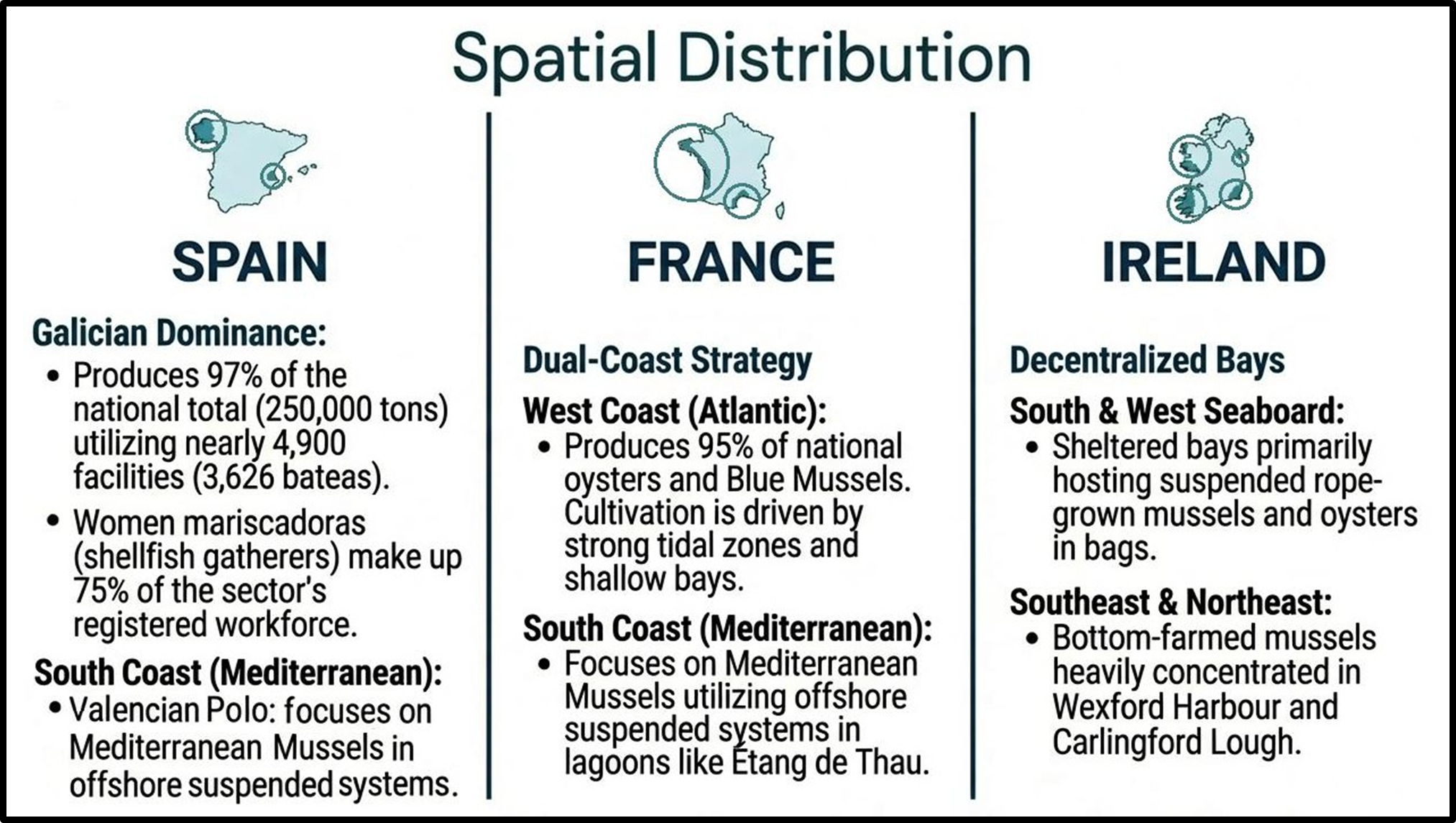
Fig. 13 - Main bivalve mollusc farming areas in Spain, France and Ireland.
In Italy, the Mediterranean's coastal configuration (linear shorelines, lack of fjords) and low tidal range have pushed the industry to develop offshore farming technologies and maximize the use of lagoon environments.
The dominant mussel farming technique in Italy is the offshore long-line (Fig. 6). Mussels are farmed in facilities designed to withstand strong winter storms, although even the most intense can still damage the structure. The facilities consist of a sturdy main cable (the beam), sometimes hundreds of meters long, held in place by enormous concrete blocks laid on the seabed and supported at a constant depth by floating buoys. From the main beam hang the "reste" (tubular cylindrical nets similar to socks) filled with mussels. To escape the kinetic energy of surface waves and summer temperature fluctuations, the main rope is kept submerged at a depth of 3-4 meters, although this does not guarantee the product's safety from strong seas or high temperatures. During the production cycle, the awns must be periodically removed from the water for reclamation: the grown mussels are shelled and reintroduced into larger-meshed nets. This operation was once entirely manual, but is now facilitated by modern vessels equipped with innovative on-board machinery (awn haulers, shellers, and awning machines).
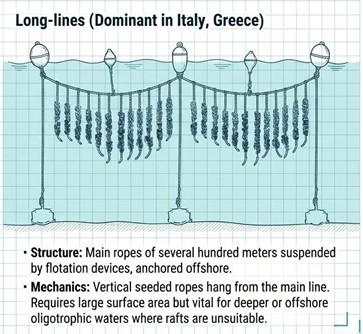
Fig. 14 - Long line system model
Italy is a EU leader in Philippine clams farming (Ruditapes philippinarum), a sector concentrated in the large lagoons of the Northern Adriatic (Po Delta, Sacca di Goro, Sacca di Scardovari, and the Venice Lagoon). Here, the technique is on-bottom farming. Farmers operate under concessions in carefully delineated bodies of water. The cycle begins with cleaning the seabed and sowing the juveniles (often from hatcheries or nursery areas), which burrow into the sandy-muddy substrate. To protect the young bivalves from predators such as
crabs or sea bream, the sowing areas are often covered with large protective nets placed on the seabed. Harvesting is a highly mechanized phase. While traditional manual rakes are still used in some areas, the preferred tool is the "idrorasca"
(or lagoon hydraulic dredge). This sophisticated machine, mounted on the bow of flat-bottomed boats, sprays pressurized water jets onto the substrate to liquefy the sand, allowing a metal grid to advance, collecting the clams without crushing their shells.
Despite being an extremely efficient harvesting method, the use of the idrorasca is subject to very strict regional regulations to prevent excessive alteration and resuspension of lagoon sediments, in a constant balance between productivity and the protection of extremely fragile ecosystems.
In addition to clam farming, these same lagoon ecosystems are home to a flagship sector of Italian aquaculture. Within the Po Delta, the Sacca di Scardovari is renowned not only for its clams, but is also historically famous for the production of the Scardovari Cozza DOP (Mytilus galloprovincialis). This mussel represents a unique achievement at the national level, having been the first in Italy to be awarded the prestigious European Protected Designation of Origin (PDO) label (obtained in 2013).
In this unique environment, the meeting of the freshwaters of the Po River and the saltwater of the Adriatic Sea creates a shallow brackish basin (averaging 3 meters) characterized by an exceptional concentration of nutrients and phytoplankton. Given the shallow depths, the farming technique differs from the offshore long-line system described above. In the Scardovari Sacca, fixed lagoon systems are used, consisting of long rows of poles driven directly into the soft seabed, connected by ropes (beams) from which the mussel pods (cylindrical stockings) are suspended.
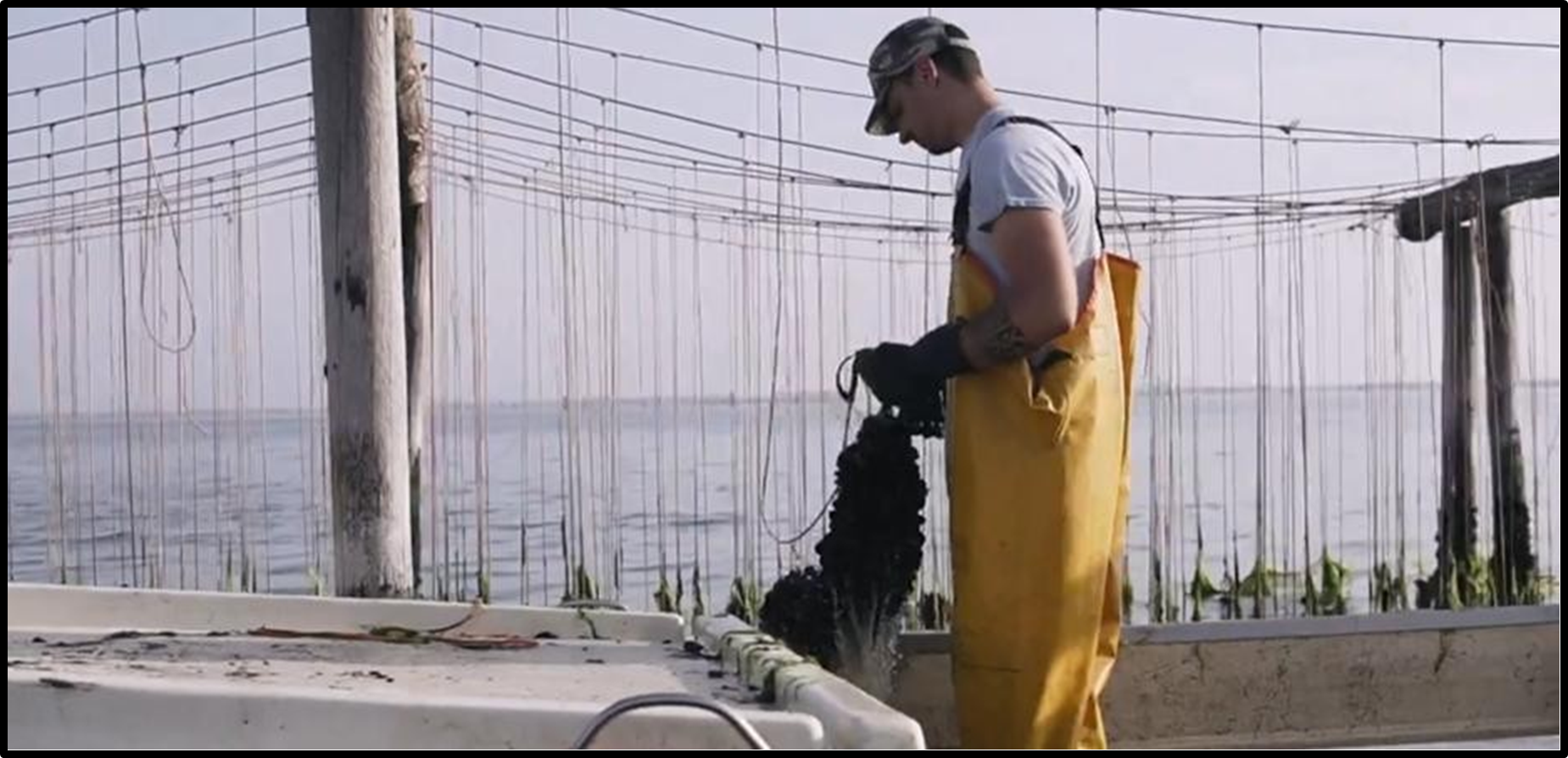
Fig.15 - Farming of the "Scardovari mussel" in the lagoon, one of three in Europe with the DOP label.
In Greece, bivalve aquaculture is characterized by a highly specialized approach, almost a monoculture: the sector is entirely dominated by the farming of the Mediterranean mussel (Mytilus galloprovincialis). The Greek industry exploits the oceanographic characteristics of specific semi-enclosed gulfs located in the north of the country, but is undergoing rapid technical and spatial evolution to survive modern climate challenges. Unlike the rugged southern coastline and the nutrient-poor islands, over 80-90% of Greek mussel farming is concentrated in the Thermaikos Gulf and, to a lesser extent, in the Amvrakikos and Maliakos Gulfs. These basins are the biological engine of Greek aquaculture because they receive a massive influx of freshwater and nutrients from major continental rivers (such as the Axios, Loudias, and Aliakmon). This mixture of waters creates an ideal brackish, estuarine environment for phytoplankton proliferation, ensuring extremely rapid mussel growth rates.
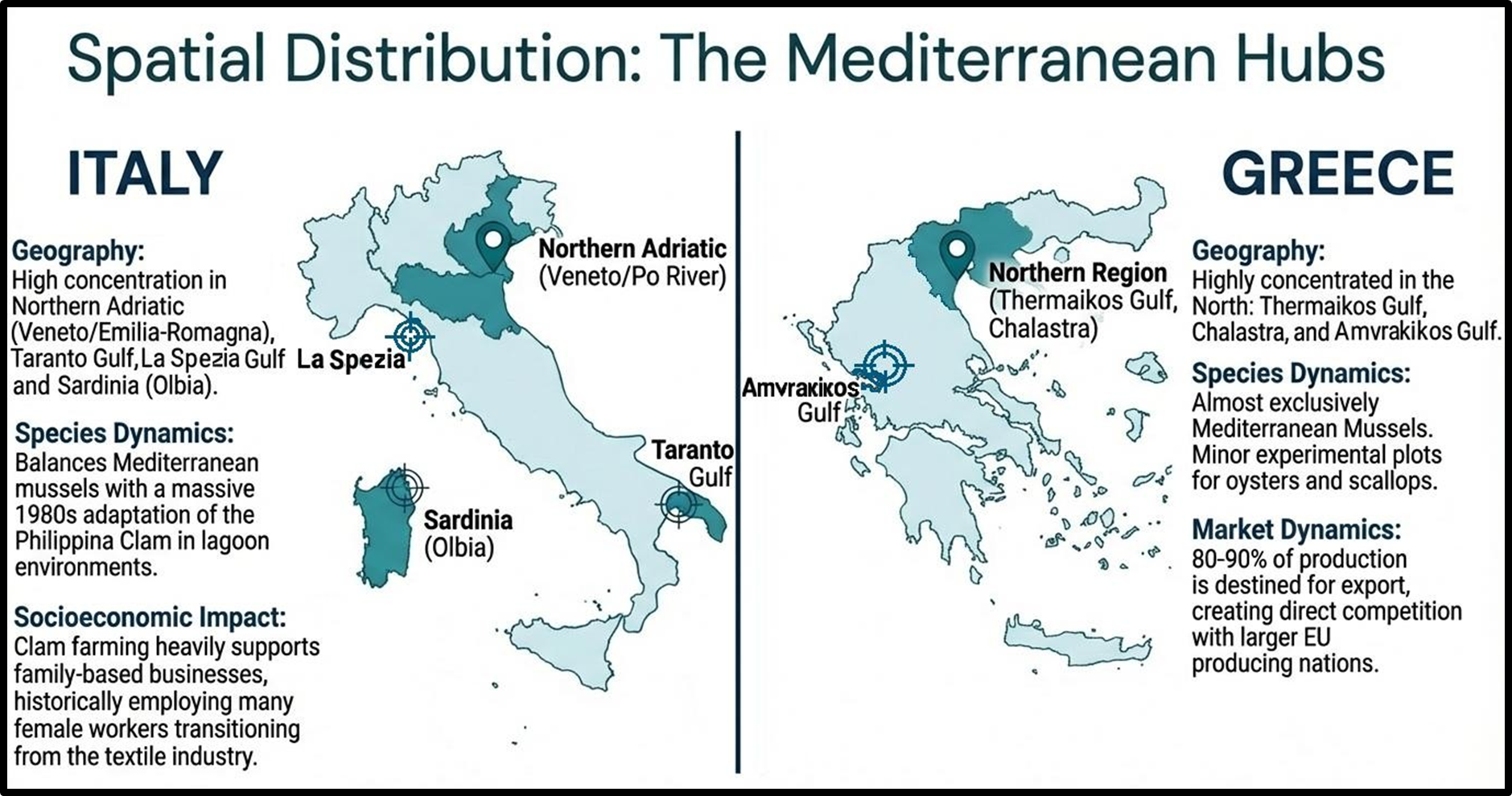
Fig. 16 - Main bivalve mollusc farming areas in Italy and Greece.
Technologically, Greece has almost exclusively adopted the long-line system (suspended lines), adapting it from the Italian model. The standard setup consists of long horizontal lines supported at the surface or subsurface by large floating plastic buoys, firmly anchored to the seabed by concrete moorings. From these main beams hang vertically the awns, within which the mussels grow by filtering the water. The Greek production cycle relies heavily on the natural capture of juveniles (the seed): in autumn or spring, farmers lower special collecting lines onto which the pelagic mussel larvae settle spontaneously. Once reached the appropriate size, the mussels juveniles are shelled and stuffed into the mussel nets for growth. Just as in Italy, the cycle requires an operation (changing the net as the mussels grow), which are now partially mechanized on board dedicated vessels.
The current unique feature of Greek farming is its migration to the open sea. Historically located very close to the coast and in relatively shallow and sheltered waters, Greek farms are suffering the devastating impact of climate change. Prolonged summer heatwaves cause coastal waters to frequently exceed 28-30°C, causing dramatic mass deaths due to heat stress and anoxia. To save the sector, the national strategy is to relocate long-line farms to the open sea, where the seabed is deeper, the currents stronger, and the summer temperatures less extreme. This technological transition requires much more robust facilities to withstand wave action. To facilitate this shift and reduce growing conflicts over coastal use (the seaside tourism industry), the Greek government is implementing a complex marine zoning system based on the AZA (Allocated Zones for Aquaculture) guidelines. These zones aim to group farms into dedicated, well-regulated marine parks, providing them with the necessary infrastructure to operate safely away from the coast.
2.2 Issues and solutions related to the problems present in the countries involved in the project: diseases, predators, alien species, sea temperature, climate change, sea storms
The bivalve mollusc aquaculture sector, operating in an open and dynamic environment like the marine and/or oceanic environment, is exposed to a series of environmental, biological, and climatic threats that severely test the resilience of businesses. For starters, ongoing climate change is acting as a catalyst for many of these problems, making adaptation strategies urgently needed at the European level.
Other significant issues facing the sector include disease, predators, and alien species, which in recent years have had an incalculable impact on all types of farmed bivalves.
2.2.1 Problems related to the pathogens in each country: detection methods, solutions, and associated mortality
Viral, bacterial, and parasitic diseases are among the primary causes of mortality and economic loss for the bivalve farming sector.
Among the countries analyzed by the project, in France and Ireland, the oyster sector has suffered major problems due to the oyster virus (OsHV-1 µVar), which causes mortality rates of up to 80-100% in juvenile Crassostrea gigas during the summer months, when water temperatures exceed 16°C. More recently, adult oysters have been affected by Vibrio aestuarianus, a Gram-negative bacterium responsible for high mortality in Pacific oysters and often associated with summer mortality events. Regarding the flat oyster (Ostrea edulis), the parasites Bonamia ostreae and Marteilia refringens have almost eliminated historical Irish production.
Health challenges are also crucial in the project's other partner countries, varying according to the main farmed species. In Spain, Bonamia and Marteilia infections have severely limited the historic flat oyster production in Galicia. The common mussel (Mytilus galloprovincialis), although considered a more hardy and resistant species, is often attacked by parasites such as the copepod Mytilicola intestinalis and must contend with bacterial outbreaks of the Vibrio genus, which can cause high mortality in the larval stage or in weakened specimens.
In Italy, the health alert directly affects not only mussels (prone to Marteilia and opportunistic bacteria), but above all clam farming, particularly the European clam Ruditapes philippinarum, a national excellence. Clams are threatened by pathogens such as the protozoan Perkinsus olseni, responsible for perkinsosis, which causes severe tissue inflammation, and the bacterium Vibrio tapetis, responsible for Brown Ring Disease, which attacks the shell and stunts its growth.
In Greece, where bivalve molluscs farming focuses almost exclusively on mussels, health issues have become inseparable from climate concerns. Increasingly prolonged and frequent summer heatwaves cause severe physiological and thermal stress in mollusks; this condition, in addition to causing the byssus to break and the mussels to fall to the bottom, causes immunosuppression and paves the way for deadly systemic infections by opportunistic pathogenic bacteria (especially Vibrio spp.), triggering devastating mass mortality events for local producers.
Pathogen detection methods rely primarily on molecular biology techniques (real-time PCR) and histological tests conducted by national reference laboratories. Current solutions do not provide cures (impossible in the open sea) but focus on mitigation: genetic selection of resistant strains in hatchery, modifications to husbandry practices (lowering baskets deep enough to avoid temperature fluctuations), and rigorous biosecurity measures to prevent the movement of infected animals.
2.2.2 Problems related to the presence of marine biotoxins in each country
Harmful algal blooms (HABs) are a widespread, cyclical, and economically significant problem in all OPTIMA project countries. Microalgae such as dinoflagellates and diatoms produce natural toxins that bivalves, as filter-feeding organisms, rapidly accumulate in their tissues, particularly in the digestive gland (hepatopancreas). The main syndromes are DSP (Diarrhetic Shellfish Poisoning, caused by okadaic acid from algae of the Dinophysis genus), PSP (Paralytic Shellfish Poisoning, caused by saxitoxins of the Alexandrium genus, potentially lethal to humans), and ASP (Amnesic Shellfish Poisoning, caused by domoic acid from diatoms of the Pseudo-nitzschia genus). The presence of biotoxins does not harm or kill the shellfish, but makes it temporarily unfit and highly dangerous for human consumption. Detection methods have gradually evolved from traditional (and controversial) mouse bioassays to much more precise, rapid, and safe chemical methods, such as liquid chromatography coupled to mass spectrometry (LC-MS/MS).
Current solutions, unfortunately, do not include purification (toxins are not eliminated in standard breeding facilities) and consist of temporary halts to harvesting and marketing. Work is underway on early warning systems based on hydrodynamic modeling, satellite imagery, and the presence of environmental DNA detected by sensors or oceanographic buoys. These systems can predict blooms and allow farmers to anticipate harvesting before the toxin arrives or, where possible, move their facilities to other areas or further offshore.
Analyzing the phenomenon in the five OPTIMA partner countries, specificities emerge related to oceanographic dynamics and regulatory approaches:
In Spain, the Galician mussel farming sector has historically lived with the threat of algal blooms. The spectacular upwelling dynamics (upwelling of nutrient-rich deep waters) that make the rias so productive are the same ones that, under certain wind and temperature conditions, trigger massive blooms of Dinophysis (DSP) and, less frequently but with greater alarm, of the algae responsible for PSP. The Galician monitoring system (managed by INTECMAR) is considered one of the most advanced and responsive in the world, with almost daily sampling. However, once the collection ban is triggered, it can last for months, causing losses of tens of millions of euros.
In France, the national phytoplankton and phycotoxin monitoring network (REPHY), managed by IFREMER, closely monitors over 300 points along the coast. Toxic blooms affect both Atlantic production areas (DSP and ASP) and Mediterranean basins such as the Thau Stream, where Alexandrium blooms (PSP) have previously caused prolonged shutdowns of oyster and mussel production. Here too, the economic impact for farmers is high, especially if the alerts coincide with periods of peak commercial demand.
In Italy, the problem particularly affects the coastal strip of the Middle and Upper Adriatic. The presence of okadaic acid biotoxins along the Adriatic coast is increasingly frequent: high concentrations of toxins in the phytoplankton on which bivalves feed can cause temporary closures of plants. It is increasingly common for lagoons and offshore areas where clam and mussel farming is concentrated to be subject to harvesting bans due to exceedances of DSP (often linked to Dinophysis blooms favored by eutrophication and nutrient input from the Po River) and, to a lesser extent, ASP. Local health authorities immediately close the areas as soon as legal limits are exceeded in official sampling, reopening them only after 2 consecutive compliant results within 48 h.
In Greece, the Gulf of Thermaikos, which accounts for almost all of the national mussel production, is a particularly vulnerable area. As a semi-enclosed basin, it is affected by reduced water exchange and the massive input of nutrients from agricultural sources. Here, DSP events tend to be particularly severe during spring and autumn, forcing Greek authorities to implement prolonged closures of farming areas. This pushes farmers to seek offshore areas where currents better disperse toxic phytoplankton.
In Ireland, despite having some of the cleanest waters in Europe, complex ocean currents regularly carry toxic blooms to oyster beds. Ireland is also the country where a fourth syndrome, azaspiracid poisoning (AZP), was first identified. The Irish approach is characterized by the extremely strict and rapid implementation of food safety protocols, under the auspices of the Sea Fisheries Protection Authority (SFPA). Unlike other countries that wait for the results of routine environmental sampling, Ireland has regulations mandating the immediate ban on the sale of oysters and bivalves upon the first reported case of human illness linked to their consumption (such as a norovirus outbreak, food poisoning, or suspected biotoxins). If health authorities record even a single case of infection linked to a specific oyster bed, the area is immediately closed as a precaution, pending thorough virological or toxicological investigations. This zero-tolerance approach is essential to protecting the reputation and premium brand of Irish oysters in international export markets (mainly Asia and France), but it exposes local oyster farmers to extremely high commercial risks, potentially leading to the complete closure of their farms due to sudden and unpredictable health alerts.
2.2.3 Problems related to the presence and the types of the other pollutants in each country (heavy metals, escherichia coli)
In addition to natural biotoxins, anthropogenic pollution poses a serious threat to bivalve farming. Chemical pollution includes heavy metals (cadmium, lead, mercury) from industrial waste, and more recently, pollution related to microplastics and PFAS (perfluoroalkyl substances). However, the most daily and structurally impactful problem for the supply chain is microbiological pollution of fecal origin, traced by the indicator bacterium Escherichia coli. During heavy rainfall, overloaded sewer systems and agricultural runoff release enormous quantities of pathogens (including Salmonella, Norovirus, and Hepatitis A) into coastal ecosystems. The primary solution requires the use of purification centers (CDMs), where bivalves are kept for hours or days in tanks of constantly sterilized seawater (often by UV light or ozone) to purify themselves by filtering clean water before being released for sale.
Analyzing the context of partner countries, the challenges related to pollutants take on strong territorial connotations.
In Italy, the impact of anthropogenic pollution is a particularly sensitive issue, both for the lagoon areas of the North (such as the Po Delta and the Venice Lagoon, where agricultural and urban runoff causes frequent peaks of E. coli) and for the coastal areas of the South. An emblematic case at the European level is that of the Mar Piccolo of Taranto, in Puglia, a historic basin for mussel (Mytilus galloprovincialis) farming. Here, the proximity to heavy industrial hubs (steel and shipbuilding) has in the past caused serious problems with the bioaccumulation of persistent organic pollutants (such as dioxins and PCBs) and heavy metals in the tissues of bivalves. To protect public health, health authorities (ASL) have had to implement extremely stringent monitoring plans, sometimes prohibiting harvesting or requiring the transfer of juveniles to cleaner waters (Mar Grande) to complete the growth cycle safely.
In Spain, the driving force of aquaculture is concentrated in the Galician estuaries, extraordinarily productive yet vulnerable ecosystems. Despite the excellent water exchange provided by the Atlantic Ocean, strong human and urban pressure along the coasts requires constant monitoring of E. coli levels. This forces the sector to strictly classify production areas and make extensive use of purification centers. Moving to the Spanish Mediterranean coast (for example, in the Valencian Community), environmental studies highlight growing attention to the accumulation of heavy metals (such as lead and cadmium) in coastal sediments resulting from port traffic and historical discharges. Bivalves, acting as bioindicators, reflect this pollution, requiring monitoring to ensure that products remain well below the legal limits imposed by the EU.
In Greece, mussel farming is predominantly carried out in large, semi-enclosed gulfs in the north of the country, such as the Thermaikos Gulf. These areas benefit from the freshwater supply of large rivers (such as the Axios and Aliakmon), which is essential for feeding the bivalves. However, these same rivers carry the residues of intense inland agricultural activity to the sea, carrying pesticides, chemical fertilizers, and fecal bacterial burdens, especially during periods of heavy rainfall. Furthermore, in semi-enclosed basins, the problem of microplastics is emerging forcefully. Suspended mussels filter large quantities of microplastic particles (often resulting from the degradation of nets and plastic equipment used for farming, as well as from urban wastewater), raising new concerns both for the physiological well-being of the mollusc itself and for the chronic exposure of end consumers to these emerging contaminants. In France, bivalve farming (with a strong focus on oyster production) is often located in semi-enclosed basins, estuaries, or coastal lagoons (such as the Arcachon Basin in the Atlantic or the Étang de Thau in the Mediterranean), which are extremely vulnerable to human pressure. The most acute and recurring problem, particularly during the winter season and in conjunction with heavy rainfall, is norovirus contamination. Overloading the sewer systems of coastal municipalities frequently leads to the discharge of inadequately treated urban wastewater directly into production areas. Because traditional purification plants struggle to effectively eliminate viruses rather than bacteria, these contaminations force prefectures to impose frequent and sudden preventative harvest bans, causing immense economic damage to the sector, especially during peak consumption periods such as the Christmas holidays. Furthermore, agricultural runoff from vast inland watersheds contributes to nitrate and pesticide pollution, making integrated coastal water management a priority national challenge.
Despite boasting marine waters generally considered among the most pristine in Europe—a key commercial factor for export-oriented production of premium oysters—Ireland is not immune to these critical issues. Farming areas, mostly located in sheltered bays and loughs (fjords) along the rugged Atlantic coast, are sensitive to inputs from surrounding waterways. The intense and frequent rainfall typical of the Irish climate causes massive runoff, carrying agricultural fertilizer residues and livestock waste into the sea, as well as causing spills from local sewer systems and often undersized domestic septic tanks. This generates temporary peaks in microbiological contamination (Escherichia coli), which pose a constant threat to the health classification of production areas. Simply downgrading a bay from Class A to Class B forces breeders to bear the additional costs and logistical time required for stabling and the related passage through purification centers, significantly impacting profit margins and the competitiveness of companies.
2.2.3 Problems related to potential predators or impacting alien species in each country
Predation and the ecological and economic impact of harmful species are rapidly growing problems throughout Europe. To fully understand the phenomenon, it is essential to distinguish between two fronts: on the one hand, the pressure exerted by local (native) predators, with which the sector has historically coexisted; on the other, the new threats posed by invasive (non-native or alien) species. Global warming, combined with the intensification of maritime traffic (which can transport larvae or adult organisms in ballast water or on the hulls of ships), is profoundly altering the balance of coastal ecosystems, in some cases favoring the rapid establishment of highly competitive alien species.
In Italy, the sector faces problems particularly concerning alien species, but native predators can also cause significant damage. Regarding native threats, offshore and coastal mussel farming often finds it difficult to coexist with the common gilt-head bream (Sparus aurata), which can feed on mussels in large quantities. The powerful jaws of local sea bream literally shatter the shells of growing mussels, forcing farmers to incur extremely high costs to cover the awns with heavy, predator-proof nets. Along the Adriatic, these problems are usually caused by sea turtles (Caretta caretta), which often feed on bivalves. In this case, predation, also due to the turtles' strong, leathery beaks, can lead to the rupture of the plastic bag containing the mussels, resulting in the loss of the entire portion of product.
An even more significant problem is caused by a non-native species: the blue crab Callinectes sapidus. This alien species, native to the Atlantic coasts of the United States, is literally decimating clam (Ruditapes philippinarum) farms in the northern Adriatic. The blue crab preys mercilessly on both juvenile and adult clams, its strong claws capable of cutting through the bottom nets that increasingly cover the product. Furthermore, this species reproduces exponentially, benefiting from the absence of local natural antagonists.
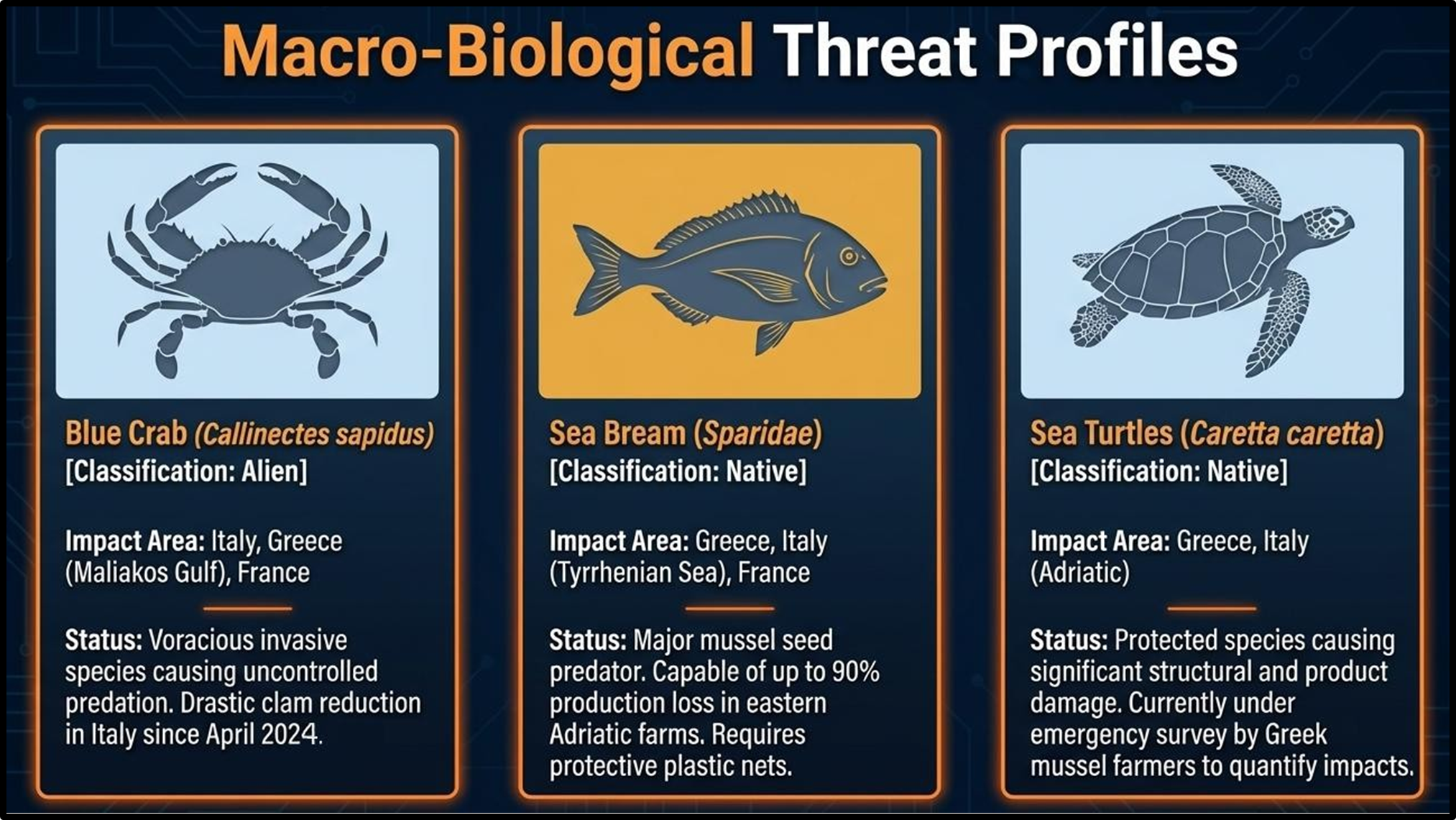
Fig. 17 - Main predators of molluscs in Italy and Greece
Also in Greece, mussel farming faces intense predation pressure, currently predominantly indigenous. Just as in Italy, the long rows of mussels suspended in the rich Greek gulfs provide an easily accessible food source for large schools of wild sea bream and local sea turtles. The only feasible defense is to place the mussels within protective nets. However, Greek authorities and farmers are also raising the alert level for non-native species, monitoring the progressive spread of alien species such as the blue crab in their seas, which threatens to extend its damage to Greek ecosystems.
In Spain, in the productive Galician estuaries, damage to mussel farms is clearly divided between natural predation and invasive biofouling. Mussels farmed on bateas have historically been preyed upon by native species such as starfish (Asterias rubens) and various local coastal fish species. However, the most insidious problem in this area today is linked to the expansion of non-native encrusting species, particularly Asian tunicates (such as Styela clava) and specific invasive macroalgae. These alien organisms do not act as direct predators, but rather engage in vital spatial and trophic competition with the bivalves: by settling en masse on the culture ropes, they slow the mussels' growth and, combined with their own weight, eventually break the ropes, causing them to fall to the seabed.
In France and Ireland, nations with a strong oyster farming tradition, threats take different forms in intertidal ecosystems, but they reflect the same divide. On one side are native predators: oysters farmed in pouches are traditionally targeted by starfish, native green crabs (Carcinus maenas), and seabirds, whose impact is mitigated using traditional methods. On the other, the sector is plagued by parasites and non-native competitors. A serious problem in France (and a constant risk for Ireland) is posed by predatory alien gastropods, the so-called "oyster drills," most notably the invasive Asian species
Ocinebrellus inornatus, which can pierce the oyster shell to consume its soft tissue. Another serious alien plague, now endemic to Brittany and Normandy, is the crepidula (Crepidula fornicata): this mollusc of North American origin does not directly prey on bivalves, but behaves as a fierce spatial competitor, forming dense, stratified colonies that alter the benthic ecosystem and suffocate the oysters.
2.3 Bureaucratic aspects in different countries: obtaining and renewing concessions area, quality labels or certifications
Administrative red tape, across Europe, is one of the main limiting factors for the development and stability of the bivalve farming sector. Farmers, predominantly organized into family-run microbusinesses or small cooperatives, are faced with a complex and multifaceted regulatory system that develops along two fundamental lines, both crucial to the economic sustainability of their business.
On the one hand, there is a growing need, driven by market dynamics, to obtain and maintain certifications relating to product quality, traceability, and sustainability. These certifications are now a prerequisite for accessing large-scale retail channels and high-value international markets.
On the other hand, relationships with public administrations, both centrally and locally, play a crucial role in the assignment and renewal of maritime state concessions, which are essential for the operation of production activities.
Administrative procedures, associated costs, and timelines for issuing and renewing concessions and certifications differ significantly among the five OPTIMA project partner countries, reflecting the specificities of their respective legal, administrative, and historical frameworks. The procedures for obtaining and renewing quality certifications in the bivalve farming sector are based on a complex European regulatory framework that includes requirements for food safety, traceability, and sustainability.
Access to these certifications requires the implementation of self-monitoring systems, audits by accredited bodies, and periodic audits to maintain compliance. Regarding maritime concessions, the start of aquaculture activities is subject to the issuance of authorizations by the competent authorities.
The periodic renewal of concessions is conditional on continued compliance with regulatory and environmental requirements. The duration of concessions varies among Member States, often promoting longer timelines to incentivize investment in the sector, with the possibility of renewal upon expiration.
2.3.1 What types of certifications or quality labels are most common in each country? How are these certifications and labels obtained: easy or difficult process?
The modern market demands products that guarantee not only hygiene and health safety, but also a strong connection to the territory of origin, through quality brands, and proven respect for ecosystems, through sustainability certifications. In this context, bivalve aquaculture represents a particularly virtuous model from an environmental standpoint compared to other forms of farming.
These organisms grow naturally, without the use of artificial feed, drugs, or antibiotics, feeding exclusively on the phytoplankton present in the marine environment through filtration. Furthermore, bivalves play a fundamental role as "environmental engineers," providing important environmental services. Their biofiltration activity helps reduce eutrophication and decrease the organic load in coastal waters. Furthermore, their presence can promote the formation of natural habitats and reefs, especially in areas like the Adriatic, characterized by sandy bottoms and limited hard substrates.
These structures become true biodiversity hotspots, promoting the reproduction and survival of numerous marine species. Finally, the formation of calcareous shells contributes to carbon dioxide (CO2) sequestration. Although the quantification and direct monetization of these ecosystem services (for example, through carbon credits or nitrogen removal) are still in the process of regulatory development at the European level, the intrinsic sustainability of this production system is now recognized and valued through environmental certifications such as ASC (Association for the Protection of the Environment) or the organic label. However, obtaining these certifications is generally a complex, lengthy, and costly process. It requires adapting facilities, implementing complete digital traceability systems, preparing operating manuals, and undergoing inspections or audits by independent third-party bodies, with costs borne entirely by the producers.
In Spain, the main reference is the "Mejillón de Galicia" PDO, which protects the quality of mussels farmed in traditional bateas (farms). Although it is a well-established brand, the Regulatory Council's control system is extremely rigorous and requires complete traceability of juveniles (mexilla), as well as processing at authorized centers.
The Regulatory Council's goal is to maintain and promote the Protected Designation of Origin for Galician Mussels, as well as monitor and promote their quality. An organic label is also available in Spain, under the supervision of the Galician Organic Agriculture Regulatory Council (CRAEGA). The main current challenge is accessing international sustainability certifications such as MSC and ASC, which are required to officially certify the supply chain's low environmental impact. For small producers, the costs of independent audits are often prohibitive, which is why associations, consortia, and producer organizations are frequently used to share the burden of the process.
As a consumer, France is strongly tied to the concept of territory, and therefore, labels of origin are particularly important. Among the best-known are the PGI "Huîtres Marennees-Oléron" and the AOC "Moules de Bouchot de la Baie du Mont-Saint-Michel." Since May 2013, Bouchot mussels have been awarded the Traditional Speciality Guaranteed Certification. In addition to their prestige, the Label Rouge, which certifies superior organoleptic quality, and the organic certification (AB-Agricolture Biologique), which recognizes the absence of chemical inputs and a natural farming cycle, are also widely available.
The main challenge in France is the extremely strict adherence to specifications. In the case of organic certification, for example, the challenge lies in demonstrating compliance throughout the entire production cycle, including natural juveniles, as well as the constant maintenance of waters classified as excellent (Class A).
In Italy, the promotion of territorial brands prevails, as demonstrated by the Cozza di Scardovari, the first to obtain the PDO, and other emerging products such as the Cozza Tarantina. On the sustainability front, several cooperatives, especially in the Northern Adriatic, are gradually obtaining ASC and organic certifications. According to SINAB data, the organic aquaculture sector has approximately 70 operators, largely concentrated in shellfish farming. The main production areas are Veneto (approximately 28 operators) and Emilia-Romagna (approximately 20 operators). However, the diffusion of certifications in the sector remains limited. Specifically, organic certification, while representing an opportunity to enhance product value, still accounts for a marginal share of total production due to high compliance costs and the complexity of the regulatory framework. Furthermore, the Italian mussel farming sector is characterized by growing pressure towards sustainable practices, primarily related to environmental impact management and the adoption of circular economy models. Despite this, the sector's development is hampered by supply chain fragmentation and bureaucratic complexity. Organic and ASC certifications require in-depth environmental analyses, such as benthic impact assessments, as well as compliance with stringent social and environmental standards. Furthermore, advanced water quality and microbiological risk monitoring systems are required, which are essential for ensuring food safety and compliance with international standards. This creates an administrative and financial burden that is difficult for individual cooperatives to sustain without adequate specialized support. There are also additional barriers to certification adoption, including operator perceptions and limited access to financial and innovative tools, despite growing market interest in certified and sustainable products.
Ireland has a sector highly oriented towards the export of premium products and innovation in production processes. The aim is to increase resource efficiency, strengthen the "social license to operate," improve food quality and safety, and enhance sustainability credentials. In this context, the Irish aquaculture sector relies on two important benchmarks: the national Origin Green program, promoted by Bord Bia, and the Certified Quality Aquaculture (CQA) standard developed by BIM (Bord Lascaigh Mhara). Origin Green is the only state-run food sustainability program in the world, perfectly aligned with the narrative of the ecosystem services provided by oysters and mussels. Launched in 2012 and extended to primary aquaculture producers since 2015, the program stands out because it requires member companies to define measurable objectives across the various sustainability pillars, which must be met to maintain certification. Additionally, certification by the Marine Stewardship Council (MSC), one of the most globally recognized labels for sustainable fishing and seafood, has certified Irish mussel farming as sustainable since 2019. This allows producers to access the MSC label, with benefits in terms of reputation, product visibility, and access to new markets to attract new consumers. Irish mussels certified under the Quality Seafood Scheme must meet specifications relating to meat content, shell appearance, flavor, and texture. The Irish Quality Mussel Scheme is the first fully integrated shellfish certification system in the world to be accredited according to EN45011, the international standard for product quality certification. Thus, a growing share of companies in the sector have adopted these practices, allowing us to monitor the diffusion of production innovation as a percentage of all active companies. However, the main challenge lies in maintaining standards: since quality depends directly on the natural conditions of the water, even temporary pollution episodes, such as those caused by heavy rainfall and agricultural or sewage runoff, can lead to the immediate suspension of certification, resulting in significant economic losses.
In Greece, the mussel farming sector is lagging behind in the development of European-recognized certifications of origin. In the absence of established PDO or PGI, international market pressure is pushing the adoption of food safety standards (ISO 22000, IFS, and BRC) and environmental certifications such as ASC. The main challenge in Greece is the limited cooperation among producers. Many farmers operate independently and perceive certifications as a bureaucratic and costly burden, rather than a tool for valorization.
This limits the sector's ability to organize into consortia capable of sustaining costs and effectively promoting the product's environmental benefits on international markets. Furthermore, unlike the rather flexible policy framework in Europe, mussel farming is heavily influenced by the state concession system, which limits farm size to less than three hectares, a condition that negatively impacts economic sustainability. This institutional rigidity, combined with high financial risk and limited access to credit, hinders the sector's growth and industrialization. Consequently, the adoption of certification systems and quality labels is also limited, as it requires investment and more advanced organizational structures.
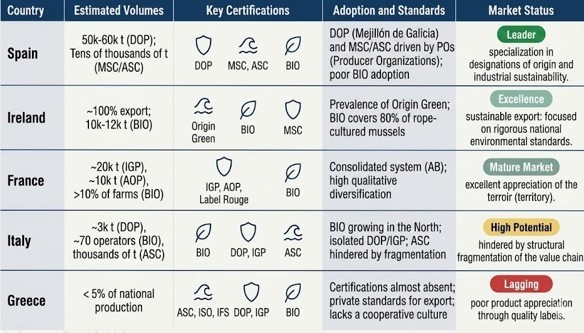
Fig. 18 - Comparison between the main European countries by type of certification and state of market development.
2.3.2 In the country existed state-owned sea concessions? If yes, how can you obtain it in each country? Are they renewed? And how long do they last?
Access to aquaculture, including mussel farming, is generally regulated through concession and licensing systems that grant operators temporary rights to use public waters and maritime property. These instruments are part of a common European framework geared towards environmental sustainability and integrated coastal zone management, but are predominantly regulated at the national or subnational level, resulting in marked heterogeneity across countries. In this context, public concessions of marine space systematically exist across European Union countries, even when they take different names (licenses, authorizations, and permits). The underlying principle is uniform: marine space is a public good, and its use for productive activities is subject to the issuance of an administrative title. Obtaining these concessions generally requires complex procedures, involving multiple levels of government and including environmental assessments, health checks, and compliance checks with maritime spatial planning. The timeframes are often significant: on average, more than twelve months, and in the most complex or litigation-prone cases, even more than twenty-five months, with particularly critical situations, such as in Ireland, where the authorization process can drag on for many years. The duration of concessions is limited in time and represents one of the most variable elements among national regulations. Generally, they are multi-year periods, often around ten years, but without a uniform European standard. Renewal is not automatic and is subject to verification of compliance with established operational and environmental conditions. While this structure ensures a high level of resource protection, it also introduces elements of uncertainty that can impact the investment capacity and economic stability of the sector.
In Italy, the system of mussel farming concessions is characterized by a multi-level organization. Although these assets are state-owned maritime property, the operational management of the concessions is primarily entrusted to the Regions, which regulate the use of marine areas designated for aquaculture and coordinate authorization procedures. Obtaining a concession is achieved through an administrative process that involves submitting a project, verifying its compatibility with coastal planning, and conducting an environmental impact assessment. The stakeholders involved are primarily the Regions, responsible for planning and managing aquaculture activities, coastal municipalities, and, in port areas, the Port System Authorities, which may be granted responsibilities for state-owned concessions. These authorities are supported by the Port Authorities, with technical oversight and safety functions, while the Ministry provides general regulatory guidance. Concessions have a fixed term, generally multi-year, and renewal is not automatic but subject to verification of compliance with the established conditions, a factor that contributes to uncertainty for operators.
In Spain, the system is also decentralized, with responsibilities assigned to the Autonomous Communities. In the case of mussel farming, particularly developed in regions such as Galicia, access to the marine space is granted through concessions that combine the right to occupy state-owned land with authorization to carry out production activities. Although procedures vary from region to region, they involve well-defined technical and environmental requirements. Here too, concessions are temporary and renewable only after verification of conditions.
In Greece, the system is traditionally more centralized and characterized by greater regulatory rigidity. Obtaining licenses is subject to complex administrative procedures that, especially in the past, have involved numerous competent authorities, contributing to lengthy decision-making times. The organization of marine space is based on the identification of so-called Allocated Aquaculture Zones (AZAs), areas identified through maritime planning to concentrate and regulate aquaculture, reducing conflicts with tourism, fishing, and the environment. Their identification falls under the jurisdiction of the State, specifically the Ministry of Environment and Energy of Greece and the Ministry of Rural Development and Food of Greece. Concessions for the operation of activities can be issued within these zones, while the development of new facilities is severely limited outside them. Yet, marine aquaculture continues to face difficulties in accessing new areas. Rising sea temperatures and extreme events are significantly impacting the productivity of mussel farming. This is leading to increased interest in relocating facilities to deeper and offshore areas. However, the current configuration of AZAs severely limits the possibility of expanding into new areas, hindering the sector's adaptation.
In France, the system regulating bivalve farming is based on a centralized model in which the state issues concessions on public maritime property within a regulatory framework defined by the French Rural and Maritime Fisheries Code. This system is supported by a two-tier interprofessional organization: the Comité national de la conchyliculture (CNC), which provides national representation and consultation with public authorities, and the Comités régionaux de la conchyliculture (CRC), which operate at the production area level, supporting local management of the sector. While they do not have direct authority to issue concessions, these bodies play an important role in coordinating the sector. Although the regulatory framework is uniform nationwide, significant differences emerge between coastal areas, particularly between the Atlantic and Mediterranean, related to environmental characteristics, availability of space, and production models. In the Mediterranean basin, greater pressure on coastal ecosystems and the limited availability of suitable areas make the system more constrained than in the Atlantic regions, where morphological and hydrodynamic conditions allow for a greater expansion of activity.
In Ireland, the licensing system is characterized by the particularly complex and lengthy authorization procedures and is considered among the most structured and rigorous in Europe. The start of mussel farming operations is subject to obtaining an aquaculture license, issued by the Irish Department of Agriculture, Food and the Marine, and a foreshore license, required for the occupation of public marine areas designated for the facility. These authorizations are complemented by in-depth environmental assessments, including environmental impact analyses and impact assessments, especially when the activities affect protected areas or Natura 2000 sites. Licenses are issued for fixed periods and are not automatically renewed, but are subject to a reassessment of environmental and operational conditions.
Despite significant differences between countries, the system of maritime concessions for aquaculture in the European Union has common elements: the public nature of the resource, temporary allocation of use rights, complex procedures, and renewal subject to review. The main differences concern the degree of centralization, the duration of the concessions, and the predictability of administrative processes, factors that directly impact the development and competitiveness of the sector.
2.4 National and European regulations, directives, and legal procedures relating to bivalve mollusc aquaculture: EU regulations, food safety directives, classification of aquaculture production areas
The regulatory framework for bivalve mollusc aquaculture in the European Union is characterized by a high degree of articulation and integration between food law, environmental legislation, and health control systems. At the European level, the discipline is based on a coordinated set of regulations that define the general principles of food safety, the hygiene and health conditions of production, and official control mechanisms throughout the supply chain. The safety of mussel farmed products depends significantly on the environmental conditions of the production areas and the quality of monitoring systems (EFSA, 2015; FAO, 2023). In particular, at the European level, the legal framework is based on Regulation (EC) No. 178/2002, which establishes the general principles of food law in the European Union, introducing the concept of primary responsibility of the food business operator and the risk-based approach. This is the basis for Regulations (EC) No. 178/2002 and (EC) No. 178/2002. Regulation (EC) No. 852/2004, which defines general food hygiene requirements and mandates the application of procedures based on the HACCP principles, and Regulation No. 853/2004, which establishes specific requirements for foods of animal origin, devoting a specific section to live bivalve molluscs and the hygiene and health conditions for their placing on the market. A central role in the governance system is played by Regulation (EU) 2017/625 on official controls along the agri-food chain, which strengthened and harmonized inspection and verification procedures by competent authorities in the Member States. This regulation, together with Implementing Regulation (EU) 2019/627, defines the operational procedures for monitoring bivalve mollusc production areas, including sampling methods, classification criteria, and continuous health surveillance. A key element of the European regulatory system is the classification of production areas, which is the main risk management tool for bivalve molluscs. This classification is based on monitoring fecal contamination, measured by the concentration of Escherichia coli in mollusc tissue, used as a reference microbiological indicator. Based on the levels detected, areas are divided into three health classes: A, B, and C, each of which determines the marketing conditions and required post-harvest treatments.
Class A areas have the lowest levels of contamination and allow the direct marketing of molluscs for human consumption, provided they meet the required health standards.
Class B areas have intermediate levels of contamination and require molluscs to undergo purification or relaying before marketing, while Class C areas, characterized by higher levels, allow harvesting only after extended relaying periods or equivalent treatments.
The threshold values are defined quantitatively: for example, for class A, at least 80% of samples must have concentrations less than or equal to 230 E. coli per 100 grams of tissue, while for class B the limit rises to 4,600 E. coli for 90% of samples, and for class B it reaches 46,000 E. coli per 100 grams of tissue. This system is accompanied by microbiological criteria for the final product, established by Regulation (EC) No. 2073/2005, which also uses E. coli as a benchmark for the food safety of the finished product.
From a procedural standpoint, the classification of areas requires the performance of preliminary health surveys, which include the identification of sources of contamination, the analysis of anthropogenic pressures and seasonal variations, as well as the definition of sampling and continuous monitoring plans.
Competent authorities must also keep updated lists of classified areas to ensure product traceability throughout the supply chain, ensuring that this system is closely linked to the official controls required by European legislation.
At the national level, the regulatory framework is characterized by strong integration between European provisions and internal administrative responsibilities, often spread across multiple levels (national, regional, and local).
Competent authorities are responsible for implementing official controls, classifying areas, and issuing authorizations, in compliance with European requirements but with discretion in organizing monitoring systems and administrative procedures.
2.4.1 European "Hygiene Package": Presentation of the fundamental (EU) Regulations establishing hygiene and health rules
For a bivalve mollusc farmer, the "Hygiene Package" (EC Regulations 852/04, 853/04, and 625/17) isn't just a list of prohibitions, but the instruction manual for running a modern and competitive business.
Which is the fundamental change? Responsibility for food safety has shifted from the authorities directly in the employer's hands.
Today, as an employer, you are also a Food Business Operator (FBO), you don't just have to wait for the certification body that will check your company. You must be a risk manager:
- Dynamic HACCP: Your self-monitoring plan can't be a static document. It must integrate environmental data (rainfall, temperatures, currents) to predict crises before the product becomes non-compliant.
- Shelf- life Validation: It's your responsibility to demonstrate that the product remains safe until it reaches the consumer's table. Proper management of the shelf-life reduces returns and increases customer confidence.
A self-monitoring plan isn't just a document binder, it's your company's "black box". For a bivalve mollusk farmer, the structure must be streamlined yet rigorous, focusing on what actually happens in the sea water, at the shipping center or in the purification center.
Here's a practical example of how you should structure your self-monitoring plan (HACCP Manual):
- Company data and description of the activity
- Company data: Company name, ASL code, health
- Site description: Concession coordinates, water classification (Zone A or B), and farming type (e.g., long-line, bags on tables).
- Flow diagram: Map of the mollusk's journey, from sowing to harvesting, packaging, and shipping.
- Prerequisites: Good Manufacturing Practices (GMP) Good Hygiene Practices (GHP) Before HACCP, you must ensure basic These are the foundations of your home:
- Maintenance: Condition of boats, boxes and
- Staff hygiene: Employee training, clothing, and handwashing
- Water potability: Essential, if you use groundwater for washing or
- Pest control: Rodent control plan and insect monitoring in groundwater
- Hazard analysis and Critical Control Point (CCP) identification: Identify what can go For bivalve molluscs, the main dangers are:
- Biological: Salmonella, coli, Norovirus.
- Chemical: Heavy metals,
- Physical: Plastic fragments, sand, net Example of Critical Control Point (CCP):
CCP 1: Acceptance/Harvest. If molluscs are farmed in a temporarily declassified area or with algal biotoxins exceeding the limit, the hazard cannot be eliminated subsequently.
- The Monitoring System (Operational Table)
For each hazard identified, you need to establish how you will control it:
|
Phase |
Hazard |
Critical Limit |
Monitoring (What/How) |
Corrective Action |
|
Collection |
Algal biotoxins |
Limiti di legge (Reg. 853/04) |
Controllo bollettini ufficiali e analisi campioni |
Sospensione raccolta e vendita |
|
Depuration |
Bacterial count |
E. coli < 230 MPN/100g |
Analisi microbiologica prodotto finito |
Extension of purification times |
|
Shipping |
Traceability |
Complete label |
Verification of identification mark |
Lot blocking and relabeling |
Within the framework already defined by EU legislation, the European "Hygiene Package" represents the instrument through which legislative principles are translated into operational practices along the supply chain. Rather than introducing new obligations, it defines the shift from a prescriptive approach to a system based on responsibility and continuous verification, more clearly separating the areas of food safety, animal health, and official controls, requiring an active role from operators in implementing safety measures. This shift is particularly reflected in the need to integrate HACCP systems with verification and validation procedures based on actual production data. In the aquaculture sector, these requirements translate into a product safety system dependent on the control of residues of pharmacologically active substances, the management of contaminants, and the implementation of national monitoring plans. Specifically, the programs established by European legislation require Member States to conduct systematic checks on residues present in animals and products of animal origin, with the obligation to report the results and activate alert systems in the event of non-compliance. In the specific case of bivalve molluscs, the operating system is based on an integration of environmental control and final product verification. In addition to the classification of production areas, the legislation requires the adoption of harmonized microbiological criteria, defined by Regulation (EC) No. 2073/2005, which establish sampling limits and methods to ensure safety throughout the product's shelf life. Operators conduct periodic analyses, manage non-compliance through corrective actions, and, in the most serious cases, withdraw or recall products from the market. Regarding official controls, the European system provides a structured approach based on audits, inspections, and document checks. The competent authorities must ensure that establishments are authorized, traceable, and compliant with hygiene and health requirements, also verifying the effective implementation of HACCP procedures and food safety management systems. These controls include sampling and analysis activities performed by laboratories accredited according to international standards, ensuring the reliability and comparability of results.
European legislation requires the implementation of specific control programs for the management of biological risks, particularly those related to zoonoses and microbiological contamination, through harmonized sampling plans across Member States with the aim of reducing the prevalence of pathogens. This approach is particularly important in the aquaculture sector, as environmental conditions can favor the spread of pathogens and contaminants. For bivalve molluscs farming in particular, this requires dynamic risk management that combines water classification, microbiological monitoring, residue management, and rapid response systems for non-compliance. The effectiveness of the system depends not only on compliance with established limits, but also on the ability to implement continuous monitoring based on data, traceability, and coordination between operators and competent authorities.
2.4.2 Official Controls and National Implementation: The Role of Supervision
The European Union's official control system underwent a profound overhaul with the entry into force of Regulation (EU) 2017/625, becoming one of the most advanced models of multilevel regulatory governance in the agri-food sector to date. The regulatory framework integrates controls relating to food safety, feed, animal health, and plant protection into a single legal framework, with the aim of ensuring consistent, effective, and risk-based application of EU law throughout the entire supply chain. Implementation at the national level is carried out by competent authorities, and Member States are responsible for carrying out official controls. Supervision at the national level ensures coordination between central authorities and local bodies, verifying the uniformity of procedures and the quality of inspection activities. At the European level, the Commission, through audits, inspections, and system analyses, oversees the effectiveness of national authorities, helping to ensure harmonized application of the rules. At the operational level, supervision is structured along two complementary dimensions: an ex-ante evaluation, aimed at verifying the appropriateness of control systems before their implementation, and ex-post monitoring, aimed at the timely identification and correction of non-compliance. Although the primary responsibility for compliance lies with food business operators, the public control system is ultimately responsible for protecting consumer health and ensuring transparency in the single market, ensuring such adequacy through corrective measures such as administrative sanctions and verification and monitoring actions.
In Italy, the system is characterized by Regulation (EU) 2017/625, which has led to a significant process of regulatory and organizational adaptation, strengthening internal supervision mechanisms through the formalization of control procedures and the introduction of tools such as the "second expert opinion" (SEO) for managing technical disputes. The introduction of this right, guaranteed to food business operators, allows companies to challenge the results of official controls. Territorial variability in the application of procedures persists, necessitating the strengthening of central coordination mechanisms.
In Greece, the management of official controls is characterized by greater institutional fragmentation. The implementation of the European framework has contributed to strengthening central coordination, but critical issues remain related to operational coherence and the ability to ensure uniform supervision across the territory. In this context, the role of European audits and the Commission's control mechanisms is particularly important in supporting the progressive improvement of national administrative capacities.
Spain, on the other hand, has a semi-centralized model, in which the autonomous communities play a significant operational role, while the central authority, the Agencia Española de Seguridad Alimentaria y Nutrición (AESAN), ensures coordination and alignment with the European regulatory framework while maintaining a high degree of territorial autonomy.
In France, the official control system is highly centralized and primarily entrusted to the Directorate General of Food (DGAL). The French administration relies on a clear chain of command, in which supervision is closely integrated with control planning and risk management, reducing fragmented decision-making.
A different model is represented in Ireland, where the Food Safety Authority of Ireland (FSAI) plays a central coordination and supervision role. The Irish system is characterized by a strongly embedded institutional structure and a clear assignment of roles among competent authorities, with a level of uniformity in the execution of official controls.
Supervision emerges as a structural element of the official control system, as it ensures consistency between the European and national levels, strengthening the accountability of competent authorities and regulatory effectiveness.
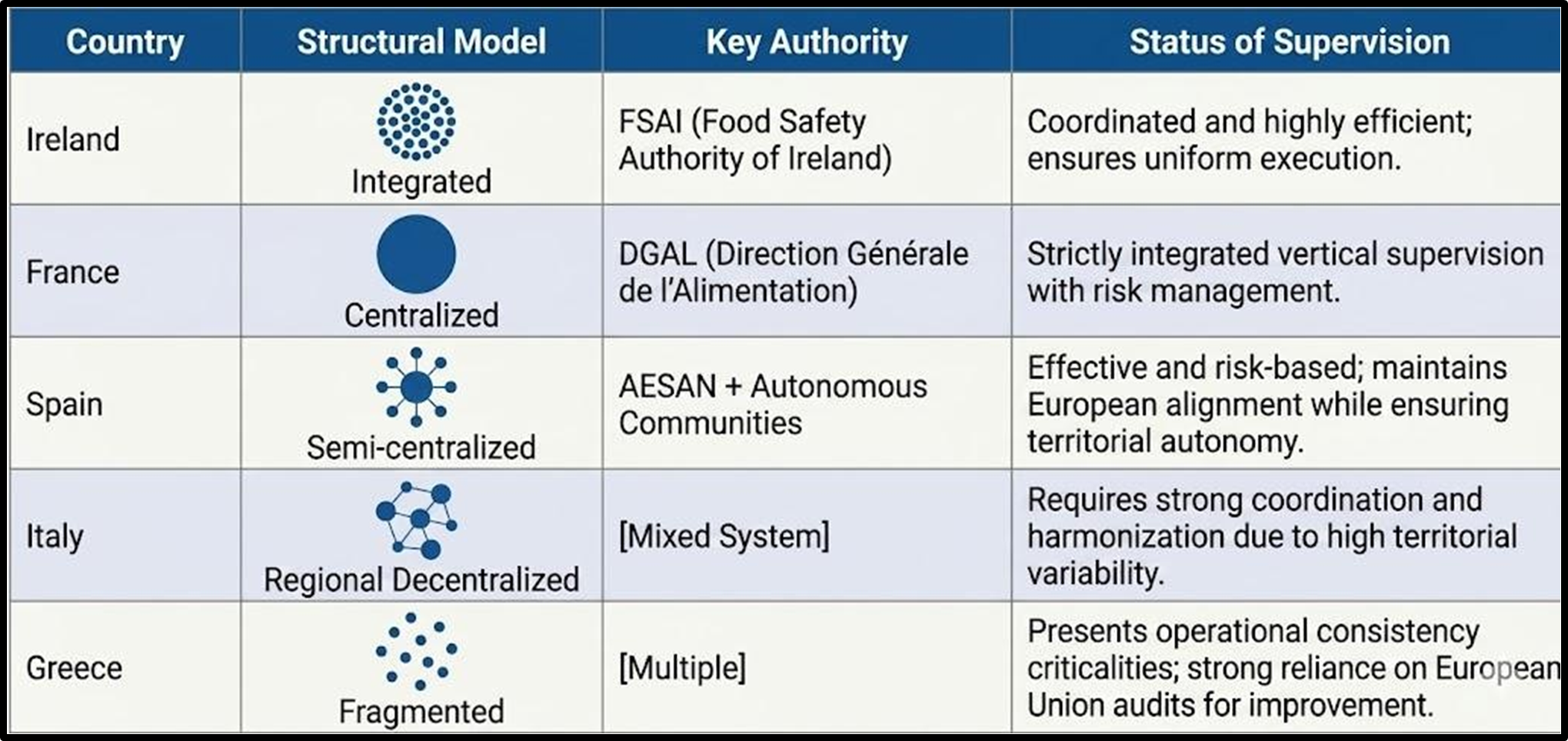
Fig. 19 - Comparative analysis of the official control supervision systems in the OPTIMA project countries
2.4.3 Regulations for the export of juvenile bivalve molluscs used for reintroduction into the marine environment in other EU countries: risk of introducing alien species or diseases
The transboundary movement of juvenile bivalve molluscs intended for reintroduction or restocking in marine environments of other European Union Member States is regulated by Regulation (EU) 2017/625 on official controls and Regulation (EU) 2016/429, known as the Animal Health Law, which governs the prevention and control of transmissible animal diseases. These instruments are complemented by Regulation (EC) No. 708/2007, which regulates the use of non-native and locally absent species in aquaculture at the European level. Bivalve molluscs, as filter-feeders, are particularly susceptible to the accumulation and transmission of pathogens, including bacteria, viruses, and parasites, acting as vectors for associated alien species. The translocation and reintroduction of juvenile stocks represents one of the main routes of unintentional introduction of non-native organisms into European marine systems. This risk is also widely recognized in the guidelines developed by the International Council for the Exploration of the Sea (ICES), which emphasize the need to adopt preventive assessment procedures, quarantine measures, and monitoring systems to limit the ecological impacts of translocations. This likelihood is further amplified by the difficulty of ensuring complete traceability of intra-Community operations and the variability in the application of control measures between Member States. European legislation explicitly recognizes the health risks associated with the spread of bivalve molluscs diseases, listing diseases such as bonamiosis caused by the protozoan Bonamia ostreae, which affects flat oysters (Ostrea edulis), marteiliosis caused by a protozoan called Marteilia refringens, which affects flat oysters and mussels (Mytilus spp.), and other infections that pose a significant threat to wild populations and aquaculture stocks.
To mitigate these risks, the European regulatory system provides for the classification of production areas and specific health requirements for the movement of live molluscs, precisely to limit the cross-border spread of these pathogens. Regulation (EU) 2017/625 strengthens the role of official controls along the supply chain, assigning the responsibility of verifying the health and environmental compliance of movements to the competent authorities of the Member States. In this context, European-level supervision, exercised through audits and verification systems, helps ensure a certain degree of harmonization, while not completely eliminating operational differences between different national systems.
From an ecological risk perspective, the movement of juvenile bivalves not only involves the transfer of the target species but can also include a series of unintentional associated organisms, increasing the risk of introducing alien species into new environments. This aspect is particularly relevant in reintroduction and restocking programs, where the objective of ecological restoration can be compromised by unforeseen side effects related to insufficient health control measures.
Furthermore, critical issues related to traceability and regulatory practices persist among Member States, resulting in significant regulatory inconsistencies across countries. The European Union includes molluscs among the substances requiring mandatory controls and declarations, but this is not implemented or only partially implemented in other countries. In this context, characterized by health and environmental risks associated with the movement of bivalve molluscs, the need to ensure effective traceability has led to the adoption of shared digital tools at the European level, such as the TRACES (Trade Control and Expert System) system. This is the European Union's official IT infrastructure for recording the movements of live bivalve molluscs within and outside the EU.
Its primary function is to ensure complete traceability of batches throughout the supply chain, allowing authorities to monitor the origin, destination, and health status of mussels. The use of TRACES for intra-Community trade in live bivalve molluscs is mandatory under the regulatory framework defined by Regulation (EU) 2017/625 on official controls and Regulation (EU) 2016/429. However, in some specific situations, such as bivalve molluscs intended exclusively for relaying, TRACES notification requirements may not be mandatory. The IT platform allows for the digitization of health certificates and their electronic validation. Operators are required to notify the competent authorities of shipments in advance, generally 24 to 48 hours before departure, to allow for official controls.
The use of TRACES contributes to transparency and security in trade, ensuring document traceability throughout the supply chain. Countries such as Italy, Greece, France, Ireland, and Spain use the same TRACES system and operate within a harmonized regulatory framework. This ensures a high level of structural and procedural uniformity among the countries considered, without any substantial regulatory or functional differences. The only difference would be the data quality, which depends on the national systems.