Reading text
| Site: | Optima Project |
| Course: | Mentors Course - EN |
| Book: | Reading text |
| Printed by: | Guest user |
| Date: | Friday, 2 October 2026, 10:28 PM |
Table of contents
- 1.1 The Erasmus+ fund and its characteristics: the OPTIMA project - funding line, objectives and results
- 1.2 OPTIMA Project Results
- 1.3 Being able to transmit the project information to the learners
- 1.4 Being able to deliver the training programs foreseen by the OPTIMA project through the e-learning platform produced by the project
1.1 The Erasmus+ fund and its characteristics: the OPTIMA project - funding line, objectives and results
The European aquaculture sector faces a unique set of challenges and opportunities. While demand for sustainable and healthy seafood is growing, the sector, particularly the bivalve mollusc sector, faces environmental pressures, market fluctuations, and the need for continuous innovation. In this dynamic landscape, the OPTIMA project stands out as a significant initiative aimed at strengthening the skills and knowledge of shellfish farmers across Europe.
The European bivalve farming sector, which primarily includes mussels, oysters, and clams, plays a key role in food security and coastal economies. Bivalve farming is known for its low environmental impact, as the farmed species filter feed through water and therefore do not require external feed, potentially providing ecosystem services. Furthermore, bivalve farming does not involve the use of pharmaceuticals or antibiotics, which can contaminate the surrounding environment and reduce product quality.
Never the less the sector have to face with some problems:
Environmental issues: the impacts of climate change, such as rising temperatures and ocean acidification, directly affect the growth, health, and survival of bivalves. Harmful algal blooms (HABs) can also lead to production closures or product mortality.
Production inefficiencies: Despite its potential, the technological development of the European bivalve sector lags behind other aquaculture segments. Challenges include seed availability, predators, and disease outbreaks.
Market barriers, farming areas, and regulations: the sector faces challenges related to market demand for certain products, competition for marine space, and complex administrative procedures for obtaining licenses and authorizations.
Knowledge gaps: there is a continuous need to update farmers' knowledge regarding best farming practices, disease management, and issues related to overheating, predators, and alien species. Furthermore, there is a lack of knowledge among workers and entrepreneurs in the sector regarding the ecosystem services provided by this type of farming. It's no secret that bivalve farming, rather than impacting the marine environment, could potentially benefit it. For example, it could help eliminate eutrophication thanks to the filter-feeding potential of these mollusks, create new habitats and biodiversity hotspots on the hard substrates associated with this type of farming (farming structures and farmed products), and finally, store carbon dioxide in the calcium carbonate shells that would otherwise be lost to the environment.
Need to promote the product: the products resulting from this type of aquaculture, healthy, green, and with zero (if not positive) impact, should be better promoted and advertised by farmers to a public opinion that is often unaware of all the qualities listed above and often turns a nose up at the mention of "farmed product" and "aquaculture." However, in the case of bivalve molluscs, the difference between farmed and wild-caught, in terms of nutritional properties and quality, is practically zero.
Europe has recognized the above challenges, issuing in 2021 a text containing "Strategic Guidelines for a More Sustainable and Competitive EU Aquaculture 2021-2030", which will help promote sustainable growth, resilience, social acceptance, and greater innovation in this sector. These guidelines emphasize the importance of diversifying global aquaculture production toward low-trophic species such as bivalves and algae, supporting research, and simplifying administrative and legislative frameworks.
It is in this context that the OPTIMA "Good Practices in Mollusc Aquaculture" project, co-funded by the Erasmus+ program, plays a central role. Launched in October 2023 and scheduled for completion in April 2026, OPTIMA directly addresses the need to improve training and skills in the bivalve aquaculture sector. By focusing on training and skills development, OPTIMA aims to directly contribute to the EU's broader objectives for a more sustainable, competitive, and resilient aquaculture sector.
Equipping farmers with the latest knowledge and tools will enable them to adopt more efficient and productive practices, better respond to market needs, and address the complexities of climate change. The project's emphasis on e-learning and digital mentoring is particularly relevant in a sector where hands-on work often limits access to traditional training.
The OPTIMA project's approach helps bridge this gap, ensuring that valuable skills and knowledge reach those who need them most, ultimately contributing to the long-term viability and growth of bivalve farming in the EU.
1.1.1 Characteristics of Erasmus+ funds
The Erasmus+ program is the European Union's flagship program for education, training, youth, and sport, aiming to promote mobility and transnational cooperation. Erasmus+ projects are open to EU Member States and associated countries (including some non-EU countries) and cover a wide range of target groups, including students, teachers, researchers, youth workers, and institutions.
Figure n.1 - Erasmus+ project logo.
To fully understand the broad scope and diverse opportunities offered by the Erasmus+ program, it is essential to understand its three main Key Actions (KAs) (KA1, KA2, KA3). Each KA is designed with specific goals and targets different types of beneficiaries and activities, collectively contributing to personal, professional, and institutional growth across Europe and beyond.
KA1 is the pillar of the Erasmus+ program focused on transnational mobility opportunities for individuals. Its primary purpose is to provide students, learners, trainees, and staff with the opportunity to learn, train, or teach in other countries. This contributes to personal and professional development and the acquisition of new skills and perspectives.
Key points of KA1:
Focus: movement of individuals for periods of study, traineeships, teaching, training, or volunteering.
Who can participate (as a beneficiary of funding): organizations (schools, universities, vocational training institutions, youth organizations, etc.) that submit projects to send or host participants. The funding goes to the organization, which then manages the mobility.
Types of activities (examples):
- Higher Education: Study periods (the classic Erasmus program), student internships, faculty and staff mobility (teaching or training).
- Vocational Education and Training (VET): Mobility for trainees, apprentices, and VET students, mobility for VET staff (courses, job shadowing, teaching).
- School Education: Student mobility (short or long-term), mobility of school staff (courses, job shadowing, teaching).
- Adult Education: Adult learner mobility, mobility of adult education staff.
- Youth: Youth exchanges, mobility of youth workers, youth participation activities.
Action KA2 is dedicated to transnational cooperation and innovation development. Its aim is to support the design, transfer, and implementation of innovative practices and collaboration between different organizations in all sectors of education, training, youth, and sport. It aims to create tangible, long-term results that go beyond individual mobility.
The main projects (sub-actions) include:
- Cooperation partnerships
Objective: to strengthen collaboration between organisations across Europe to improve innovation and knowledge sharing.
📆 Duration of the project: 12 to 36 months
💰 Available budget: €120,000, €250,000 or €400,000
Funding: covers staff costs, project management, travel, events and materials.
Eligible applicants: public or private organisations in the fields of education, training, youth or sport.
Minimum partnership: at least 3 organisations from 3 different Erasmus+ countries
👉 Financial lines:
VET (Vocational Education and Training)
ADULT (Adult Education)
SCHOOL (School Education)
HE (Higher Education - University)
YOUTH (Youth, youth organisations, NGOs)
SPORT (Projects for the development of sport at local and European level)
- Small-Scale Partnerships (KA210)
Objective: Reaching less experienced or less administratively capable organizations with narrower objectives.
Partners: Minimum 2 organizations from 2 different countries.
📆 Duration: 6-24 months.
💰 Budget: Lump sum of €30,000 or €60,000.
- Partnerships for Excellence
These projects aim to support excellence and innovation in specific sectors, with a focus on the recognition of qualifications and the development of centers of excellence.
Centres of Vocational Excellence (CoVEs):
- Objective: Create cooperation platforms between VET providers, businesses, research centers, and local authorities to develop innovation and expertise at the regional level.
- Sectors: Vocational Education and Training (VET).
Erasmus+ Teacher Academies:
- Objective: Provide professional development opportunities for teachers, strengthen the European dimension in teacher training, and facilitate mobility.
- Sectors: School education and, in part, higher education (initial teacher training).
- Innovation Alliances
Objective: to promote cooperation between higher education institutions, companies and vocational education providers to drive innovation and entrepreneurship.
📆 Duration of the project: 24 to 36 months
💰 Maximum budget: €1,000,000 or €1,500,000
Funding: covers project management, training, research and technological development
Eligible applicants: higher education institutions, vocational training centres, companies, research institutions
Minimum partnership: at least 4 organisations from 4 Erasmus+ countries
👉 Financial lines:
VET (Vocational Education and Training)
HE (Higher Education - University)
- Capacity building projects in the field of youth and education
Objective: to support non-EU countries in modernising their education, training and youth work through international cooperation.
Key features:
📆 Duration of the project: 12 to 36 months
💰 Variable budget: depends on the project and the number of partners, often between €100,000 and €400,000.
Funding: Covers capacity building, training and knowledge sharing activities
Eligible applicants: educational institutions, youth organisations, NGOs, public bodies
Minimum partnership: at least 3 organisations from 3 different countries (including at least one non-EU country)
👉 Financial lines:
VET (Vocational Education and Training)
ADULT (Adult Education)
SCHOOL (School Education)
YOUTH (Youth, youth organisations, NGOs)
HE (Higher Education - University)
Action
Involved sectors
Duration
Maximum budget/project
Cooperation Partnerships
VET, ADULT, SCHOOL, HE, YOUTH, SPORT
12-36 months
125.000€/ 250.000€/ 400.000€
Small-Scale Partnerships (KA210)
VET, ADULTS, SCHOOLS, YOUTH, HIGHER EDUCATION, SPORT
6-24 months
€30,000 / €60,000
Alliances for Innovation
VET, HE
24-36 months
1.000.000€/ 1.500.000€
Capacity Building
VET, ADULT, SCHOOL, HE, YOUTH
12-36 months
100.000€/ 400.000€
Table n.1 - Types of the Erasmus financial lines.
KA3 is the program's most strategic action, aiming to support policy cooperation and system-wide reforms in the European Union. It focuses on promoting structured dialogue, gathering data and knowledge, and testing new policies.
Key points of KA3:
Focus: contribute to the development and implementation of policies and reforms at the European level, influencing the system as a whole.
Who can participate: often public authorities (national, regional), research centers, think tanks, large European networks, and organizations promoting dialogue with young people (e.g., "European Youth Together"). Many actions are centrally managed by the European Commission (EACEA).
Types of activities (examples):
- Policy Experiments: projects that test and evaluate the effectiveness of new policies on a small scale before possible wider implementation.
- Data Collection and Analysis: studies, surveys, and reports to provide evidence to support policy decisions.
- Stakeholder Dialogue: events, conferences, and platforms to facilitate discussion between policymakers and industry stakeholders.
- European Policy Instruments: support for tools such as the European Qualifications Framework (EQF), Europass, and quality assurance systems.
- European Youth Together: projects that promote youth participation and dialogue between youth organizations at the European level.
- Objectives: contribute to the modernization and adaptation of education, training, youth, and sport systems to current and future challenges, based on data and evidence.
Objectives: Contribute to the modernization and adaptation of education, training, youth, and sport systems to current and future challenges, based on data and evidence.
1.1.2 OPTIMA project
The OPTIMA project was submitted under the Erasmus+ KA220 "Cooperation Partnerships" funding line. These partnerships aim to connect and collaborate with partners from different countries to facilitate the exchange of best practices and information.
The project stems from the need for adequate training in the bivalve aquaculture sector, capable of improving the workforce's skills to address ongoing changes and meet the sector's sustainable development needs.
The project's primary objective is to provide training models for bivalve mollusc farmers, creating effective training programs to strengthen the skills and develop the knowledge of workers and entrepreneurs in the sector.
For this reason, the consortium includes three of Europe's largest bivalve mollusc producers: the French National Committee for Bivalve Mollusc Culture (CNC), the Irish Farmers Association (IFA), and the Spanish producer of Galician PDO mussels (CRMG). These partners include a project coordinator from Italy with scientific expertise and technical assistance for farmers, the scientific research center M.A.R.E. Soc. Coop a r.l.; an Italian company specializing in VET training (DEMETRA FORMAZIONE S.R.L.); a Spanish company specializing in European project management and quality certification (SGS TECNOS); and a Greek company (IDEC) specializing in communication and the creation of online e-learning platforms.
By analyzing the needs of the sector and the target market and comparing the situations present in each of the five countries involved in the project, the consortium aims to develop a training offering capable of meeting the needs of companies in the following areas:
- Development of new, more efficient and environmentally friendly farming techniques through the exchange of best practices between EU countries;
- Diversification of production with the use of new species;
- Achievement of quality certifications, particularly PDO and organic;
- Good practices to prevent potential marine pollution from bivalve mollusc farming;
- Increasing farmers' knowledge and awareness of the ecosystem services provided by bivalve mollusc farming:
- Increasing public and consumer awareness of the quality and sustainability of bivalve molluscs and the environmental services they provide.
- Increasing awareness and understanding of the pathogens and diseases affecting farmed species, as well as greater knowledge of alien species and the issues associated with them;
The project involves the use of web technologies and digital tools to streamline training and support bivalve mollusc farmers' learning. Distance learning and e-learning can break down barriers of time, space, and cost, sometimes offering more suitable alternatives than in-person courses for aquaculture professionals. Online digital training could prevent farmers from interrupting production activities to attend training courses. Farmers would therefore be free to connect from home or work, without taking time away from their work and still being able to access video material even when absent.
The objective of the OPTIMA project is, first and foremost, to increase farmers' knowledge and awareness of the environmental aspects of bivalve mollusc farming. The training course therefore aims to introduce topics such as the ecosystem services provided by farmed bivalve molluscs and the simultaneous low impact of shellfish farming activities.
Another objective of the course will be to introduce bivalve farmers from the five European countries involved in the project to foreign practices. This will require close collaboration between mollusc farmers, tutors, and researchers. Comparing the different practices and alternative farming techniques adopted by the various consortium member countries can be a valuable tool for developing a long-term strategy for the sustainable development of aquaculture, increasing production, and addressing local challenges that currently seem intractable.
One of the key elements contributing to all of the above will be the implementation and improvement of training offerings, disseminated through digital e-learning platforms, for aquaculture workers throughout Europe. This can be achieved through online learning led by mentors trained in digital transformation. It will therefore be essential to train mentors in the sector in the use of distance learning and online platforms to maximize their potential and ensure that mentors are capable of developing and conducting online courses remotely, leveraging the opportunities offered by this type of training and creating a new professionalization called "digital mentoring."
For what concerns workers, on the other hand, it will be equally essential to create an updated training program that addresses the new challenges posed by the blue economy. This program must be easily accessible, even to less-skilled workers, and therefore should include supporting images and videos accessible to these groups.
1.1.3 Importance of training for the bivalve aquaculture farmer
According to the European Union, the aquaculture sector will be the driving force behind ensuring the food of the future. (EU Aquaculture: State of Play - Anne Altmayer; Samy Chahri Members' Research Service PE 762.336 - June 2024)
Fisheries are increasingly in crisis due to several factors, including declining fish stocks, pollution, climate change, and the presence of alien species. For this reason, the fish and bivalve mollusc production sectors will increasingly turn to farmed products to cope with the now well-defined decline of the fishing fleet. However, to play a key role in the food of the future, the aquaculture sector must evolve, particularly the bivalve mollusc sector.
Workers and entrepreneurs must be trained on the various issues affecting the sector, such as the diversification of farmed species, the use of new, increasingly efficient and environmentally sustainable farming techniques, the use of new technologies such as sensors or satellites, obtaining certifications, and raising awareness of the ecosystem services provided. All this can be achieved through training courses designed by industry experts and also through the exchange of best practices between countries.
Very often, bivalve farmers have little or no knowledge of the sector in other European countries, especially regarding the farming techniques used, the species farmed, and the certifications available. They are well-versed in their local situation but lack an overall, European vision of the bivalve aquaculture sector.
Having this broad vision is becoming increasingly important, however, also due to the increasing exchange of products between farmers in different countries, whether simply linked to the supply of juvenile fish or forced by climate change (the movement of farmed products from warmer to colder seas).
In any case, training bivalve farmers requires tutors, mentors, and teachers. These professionals must be aware of the characteristics of the bivalve farming sector at the local and European levels, and must also be familiar with the new training tools offered online, which could be well-suited to the needs of the sector, characterized by workers often working at sea and with little time available for in-person training.
Among the new tools related to online training and new "digital mentors" are platforms for delivering courses, those for organizing online meetings, and tools for sharing data and documents, such as Google Drive.
In addition, concepts related to new training techniques, e-learning, virtual reality, and gamification should be highlighted.
It is with this in mind that the OPTIMA project has decided to implement, as its first project outcome, a training program for mentors working in the bivalve mollusc aquaculture sector. The mentor training program will focus primarily on new distance learning and teaching techniques to ensure that the sector's workforce receives high-quality training using this new approach that breaks down barriers of time and space. Secondly, the program will address the pedagogy associated with this type of distance learning methodology.
1.2 OPTIMA Project Results
The project's primary objective is to raise the qualification levels of both aquaculture professionals (the farmers themselves) and their mentors.
This goal is achieved through an innovative e-learning training model, leveraging digital platforms and video content.
The main activities of the OPTIMA project include:
- Background Study: Conduct detailed studies on bivalve mollusc farming in the project countries, covering farming techniques, environmental impact, and quality labels.
- Benchmarking Study: Integrate the results of the five national context studies into a comprehensive benchmarking report. This foundational document will help identify common challenges, best practices, and innovative solutions in the participating regions, providing a consolidated view of the sector's current status and future potential.
- Bibliographic study: A critical and in-depth review of the scientific literature and existing publications related, first, to the important ecosystem services provided by bivalve mollusc farming and, second, to the potential environmental impacts that may arise from this type of farming.
The primary objective was to build a solid and up-to-date knowledge base, essential for implementing sustainable management practices and adopting strategies to mitigate potential environmental impacts.
Ecosystem services include, but are not limited to, water filtration and the resulting reduction in eutrophication, carbon sequestration from the environment, and the creation of structural habitats due to the hard substrates generated by bivalve mollusc assemblages. Potential environmental impacts, on the other hand, may include alterations in bathymetry and sediment composition, as well as ecological interactions with local biotic communities.
-
- Training program development: Creation of customized e-learning programs for operators and tutors, with a focus on best practices in shellfish aquaculture.
- Digital tools and videos: Development of a platform for mentors and students to share the project's training course and production of informative videos covering the status of bivalve mollusc farming, the main farmed species, certifications, and best farming practices in the five consortium countries.
- Dissemination: Reach out to a broad audience, including aquaculture farmers, aspiring young people, policymakers, and industry associations, to ensure widespread adoption of improved practices.
1.2.1 Benchmarking Study and Bibliographic Study
These two studies were developed during the first phase of the OPTIMA project. The objective of the Benchmarking Study was to gather all existing information from project partners and stakeholders in the bivalve mollusc farming sector regarding the farming techniques used, the species farmed, the certifications obtained, the best practices applied, and the various issues present in the five countries involved in the project. The Bibliographic Study, on the other hand, aimed to consult existing literature to gather information on the ecosystem services and environmental impacts of bivalve mollusc farming.
1.2.2 Training programme for mentors
The OPTIMA project will train both mentors and workers, but first of all the project will focus on the mentors.
The training program for mentors is structured in 4 modules including module zero. The 4 modules are the following:
- The Erasmus+ fund, the OPTIMA project and its expected results, the European bivalve mollusc aquaculture scenario;
- Digital learning environment: from the traditional to the virtual classroom;
- Digital collaboration spaces: sharing information with students;
- Organizing digital distance learning;
The mentor training program aims to educate mentors on two main aspects: the first relates to new technologies applied to training and some innovative ways of delivering online training courses.
The second relates to the pedagogical approach to be adopted with industry workers during the course.
1.2.3 E-learning platform
The e-learning platform for online training was designed by the project partner IDEC and allows students and teachers to use the training programs and videos produced during the project. Its features and how to use it will be explained later in a specific chapter of Module 1.
1.2.4 Training programme for workers and entrepreneurs
It is, perhaps, the most important output of the project: the training program for workers and entrepreneurs in the bivalve mollusc farming sector.
This training program represents the project's main output and will be used to disseminate all the information gathered during the background study in each country and subsequently in the benchmarking study.
1.2.5 Videos
During the project, "national videos" will be filmed and produced in all five consortium countries (Italy, Spain, France, Greece, Ireland).
The goal is to produce a final video that combines the five videos produced in each country, providing a sort of in-depth overview of the current state of the bivalve mollusc aquaculture sector in Europe.
The video will present the differences across the five countries by considering: the farming techniques, the best practices, the products and processes certifications obtained in the country, the common and uncommon challenges, and the solutions implemented. It will highlight the strengths and highlight the weaknesses of the bivalve mollusc aquaculture sector in each participating country.
1.3 Being able to transmit the project information to the learners
When a mentor prepares to lead a training course, the first thing they need to do is understand their audience.
It's therefore essential to remember that our course's target audience will be bivalve mollusc farmers, people who often spend much of their time at sea and who have extensive hands-on experience and a deep understanding of the dynamics of the industry.
However, these learners may not have a high level of formal education, even though their technical and practical skills will be high given their field experience.
Consequently, the course must be tailored to reflect this reality. It will be essential to use clear and direct language and provide content that is immediately applicable and relevant to their work. Let's now look at how to best approach this type of student.
1.3.1 Approach with the training course users
In order to effectively convey the project's information to course participants, a targeted and interactive approach will be essential. This will ensure that the content is relevant and meets the specific needs of farmers, avoiding boredom.
The training program should begin with an assessment of students' knowledge of the characteristics of the bivalve mollusc farming sector in other European countries.
This approach, on the one hand, will allow mentors to immediately capture the attention of students, who are certainly interested in learning about the realities and characteristics of other countries with similar situations and similar key farmed species.On the other hand, it will allow mentors to clearly understand the students' level of knowledge about the main topics of the course and tailor the type and detail of information to be provided to them.
The bivalve mollusc farming sector in Europe exhibits significant differences between countries, each with its own history, traditions, farming techniques, key farmed species and regulations.
There are countries that are leaders in mussel production, others that specialize in oysters, and others that excel in clam farming or other species.
These differences not only arouse curiosity among students, but also represent a tremendous opportunity for mutual learning.
Understanding how European colleagues address similar or different challenges can inspire new solutions and innovative practices.
Furthermore, the mentors could ask the students which aspects of bivalve mollusc farming they believe should be developed to ensure future improvements in the sector in their country.
Once this information is gathered, tutors can verify whether these aspects are already included in the training program. This will help tutors fill any gaps or emphasize topics already present and considered crucial by students.
It is also essential to address the differences in the development of bivalve mollusc farming among different EU countries and the existing competition on the European market. Some market dynamics, situations, species, and farming techniques in other EU countries may be unfamiliar to farmers.
Understanding these dynamics will help students contextualize the information and develop a more complete and realistic view of the bivalve mollusc farming landscape in the EU.
1.3.2 Use of simple and clear images and infographics
For a better understanding of the differences and specificities of bivalve molluscs farming sector in Europe, the course will integrate visual tools such as comparative tables or videos.
This approach will be particularly effective for an audience accustomed to the practicality and immediacy of information.
Below there a table that could be an example of how key data coming from the five countries will be presented, allowing for comparison of different realities and identifying potential mutual learning or collaboration:
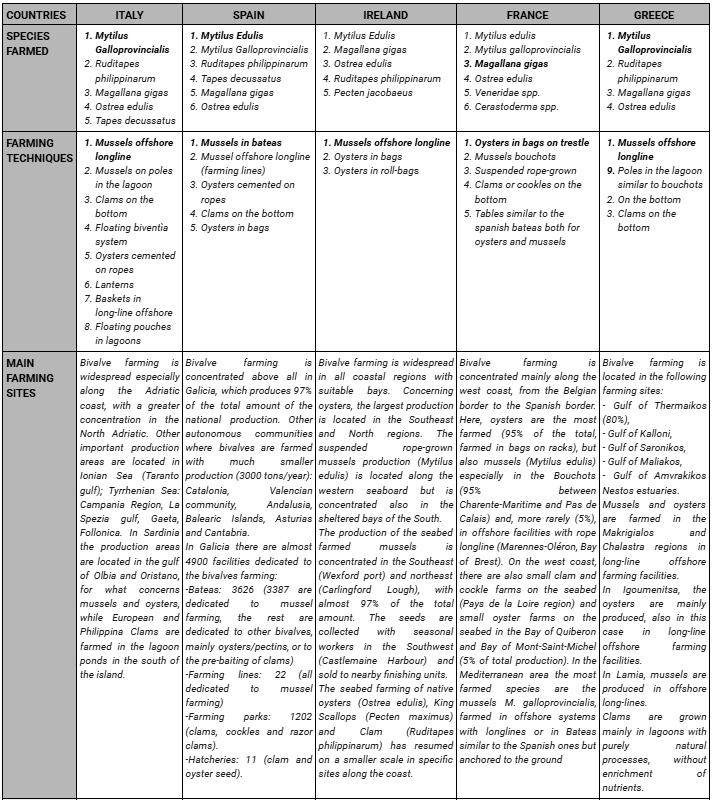
Table n.2 - Situation of the bivalve farming sector in the 5 countries involved in the project
In addition to tables of this type, summary tables were created during the preliminary Benchmarking Study for each country involved in the project, not only relating to the structural and geographical characteristics of the sector, but also to the problems and difficulties in terms of disease, mortality, product marketing, training, certification etc. These tables present 4 levels of intensity relating to the problems addressed: “not present”; “not so common”; “common”; “very common”.
These tables are also useful to give to the student an immediate overview of the state of bivalve mollusc aquaculture in their country (very orange and red = state with major problems - very green and dark green: sector with few problems).
In the table below there is an example relating to Italy.
Example of a table related to the Italian problems related to bivalve farming sector
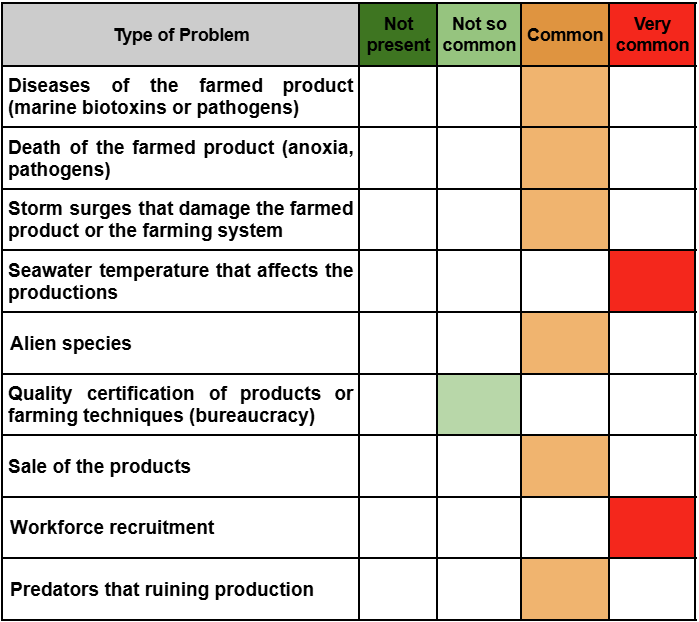
Table n.3 - Italian situation related to the problems that affects bivalve molluscs aquaculture
1.4 Being able to deliver the training programs foreseen by the OPTIMA project through the e-learning platform produced by the project
This section is designed to assist teachers and mentors in using the OPTIMA Training Platform effectively. It covers the basic features needed for everyday teaching tasks, such as uploading PDF files, creating quizzes, and organizing course materials. Whether you're getting started with the use of a Moodle training platform or just need a quick refresh, this section aims to make your experience with the platform smoother and more efficient.
1.4.1 How to handle and use the OPTIMA Training Platform
Overview
OPTIMA Training Platform is a dedicated e-learning platform tailored for the aquaculture sector, providing specialized training resources, interactive modules, and up-to-date industry knowledge to support the professional development of workers, students, and stakeholders in the field.
Designed to address the unique challenges and practices of aquaculture, the platform offers courses on topics such as bivalve molluscs health management, sustainable farming techniques, water quality monitoring, and regulatory compliance. With a user-friendly interface and multilingual support, OPTIMA Training ensures accessible and flexible learning opportunities for users across different regions and experience levels.
The course provided on the OPTIMA Training Platform is fully prepared and ready for use, requiring no additional setup or configuration from instructors or mentors.
Mentors can begin delivering the content immediately, with their main role being to monitor learner progress and provide guidance where needed. The main focus of this section is thus to serve as a practical reference for those who may wish to adjust the training materials, such as updating course content, modifying quizzes, or adding supplementary resources.
While the course functions effectively in its current form, after the end of this section the instructors and mentors will have the necessary tools and instructions to adapt and enrich the material, should they choose to tailor it to their specific audience or training context, thus ensuring the sustainability of the course.
Getting Started – Accessing the Platform
To access the platform, please visit https://learn.optima-erasmusproject.eu/ and log in using the credentials provided to you by your national contact. Upon successful login, you will have full access to a wide range of resources, tools, and course materials specifically developed to support your teaching activities and professional development.
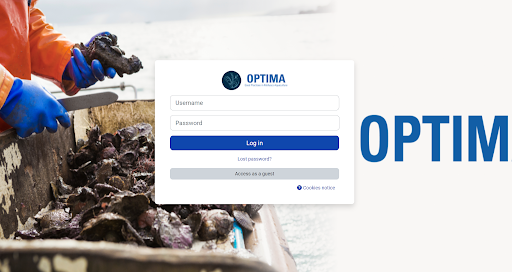
Navigating the Dashboard
The dashboard displays all courses you are enrolled in, recent activity, and navigation menus.
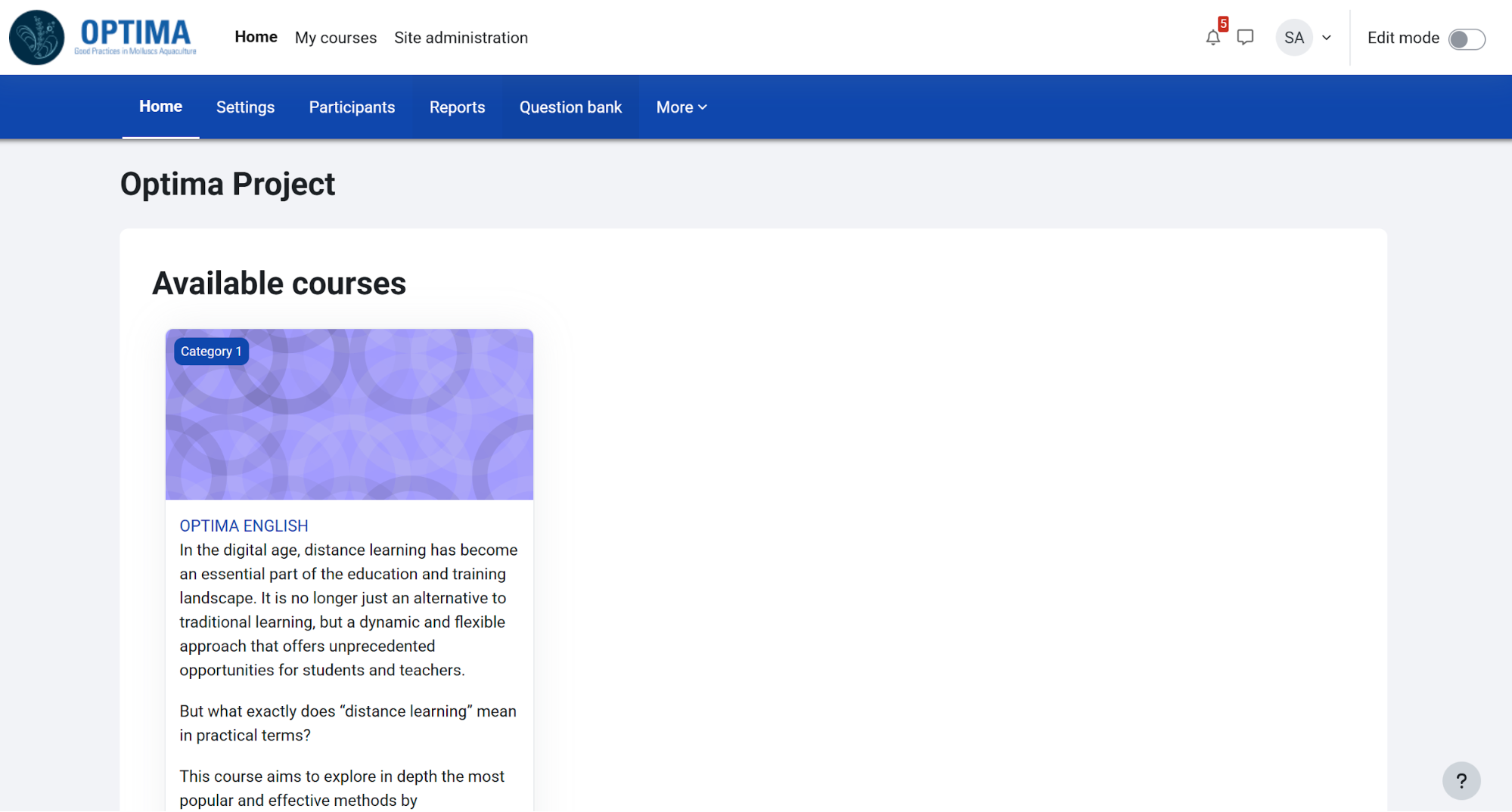
Course Structure – Course Categories and Modules
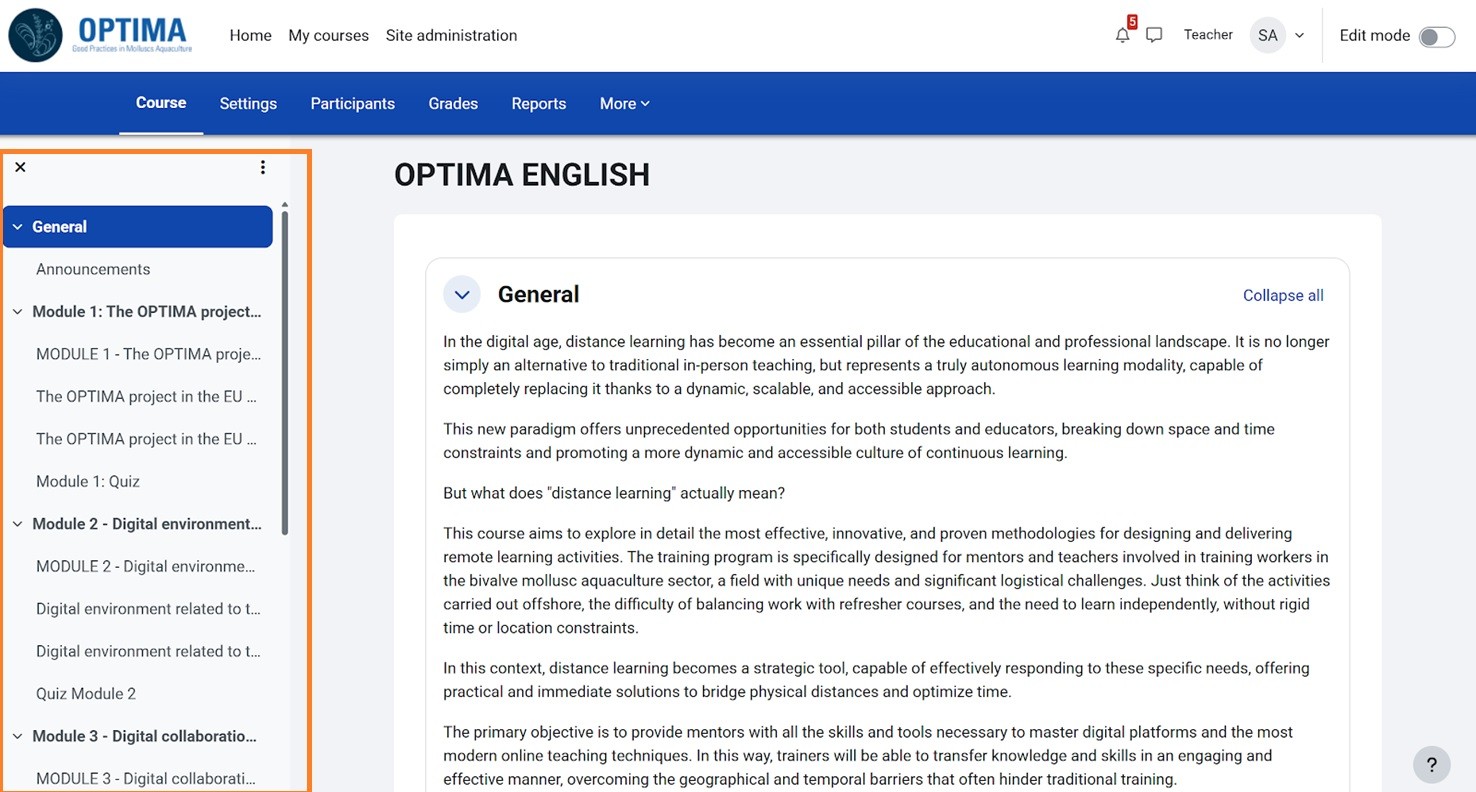
In the platform the courses are organised into categories and modules. Each module is preceded by a small description of the topics covered, the objectives and the learning outcomes.
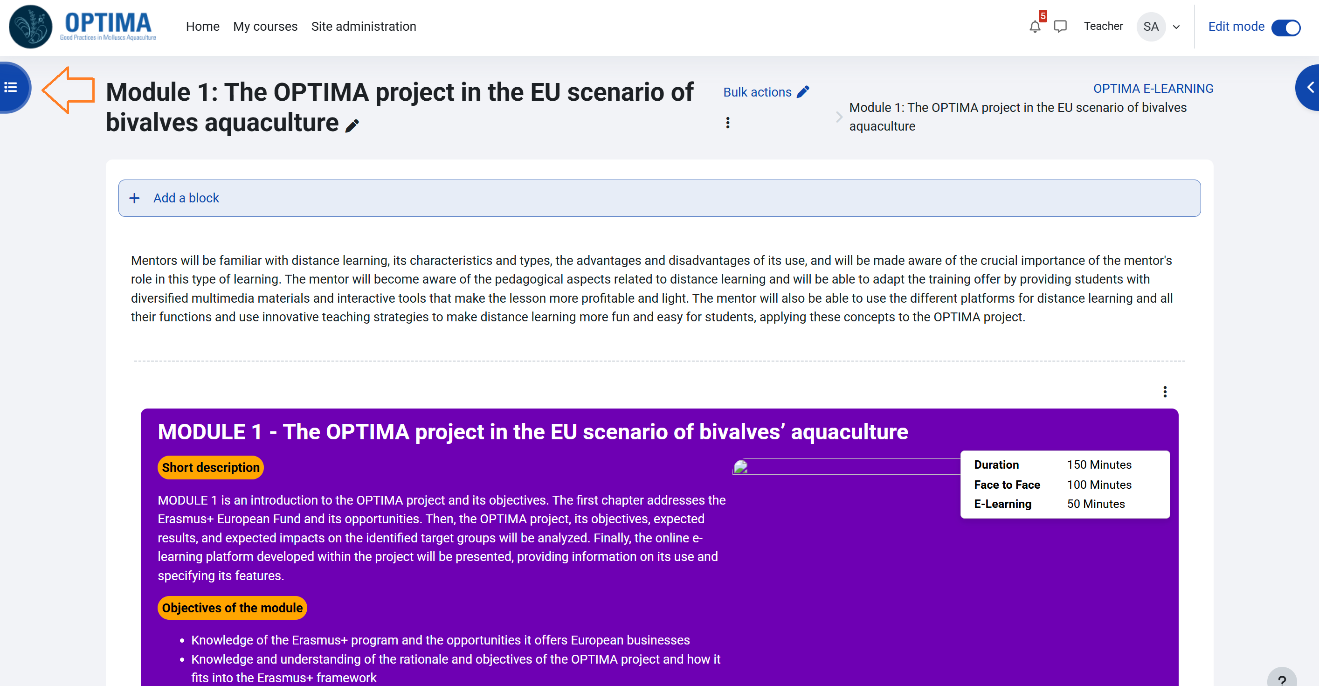
Learners can find all the modules in the menu that appear on the left of the webpage by clicking on the button in the upper part of the webpage (on the left too).
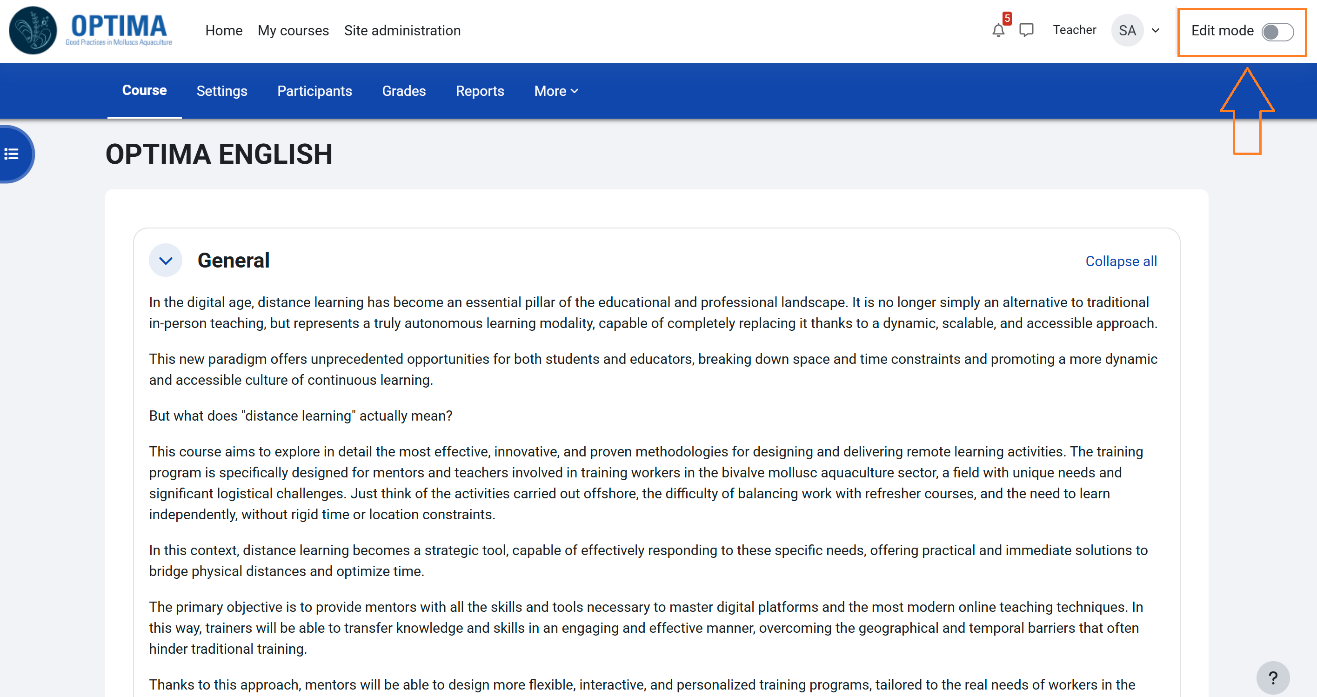
Turning Editing On/Off
To manage a course, turn editing “on” by using the button at the top right of the course webpage.
Adding Resources
Resources such as files, URLs, books, tags, etc. can be added to the platform. Mentors can also upload documents such as lecture slides, manuals, or external links.
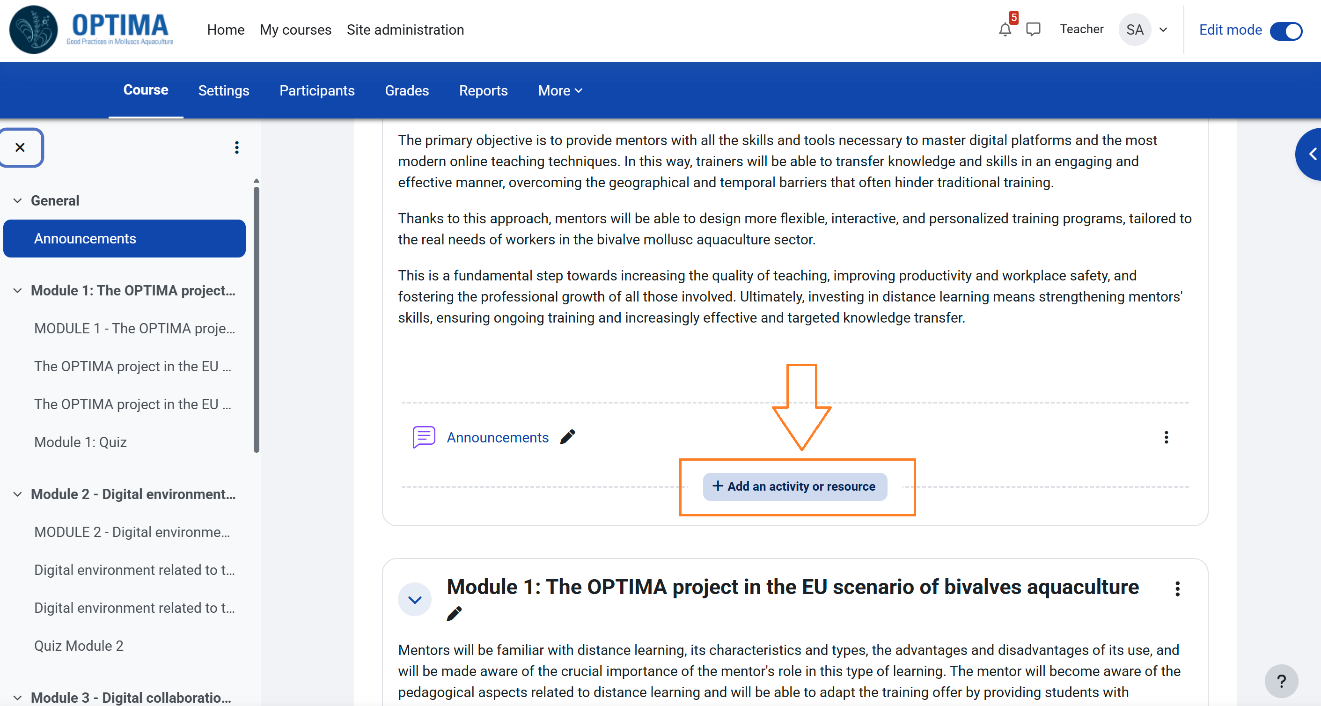
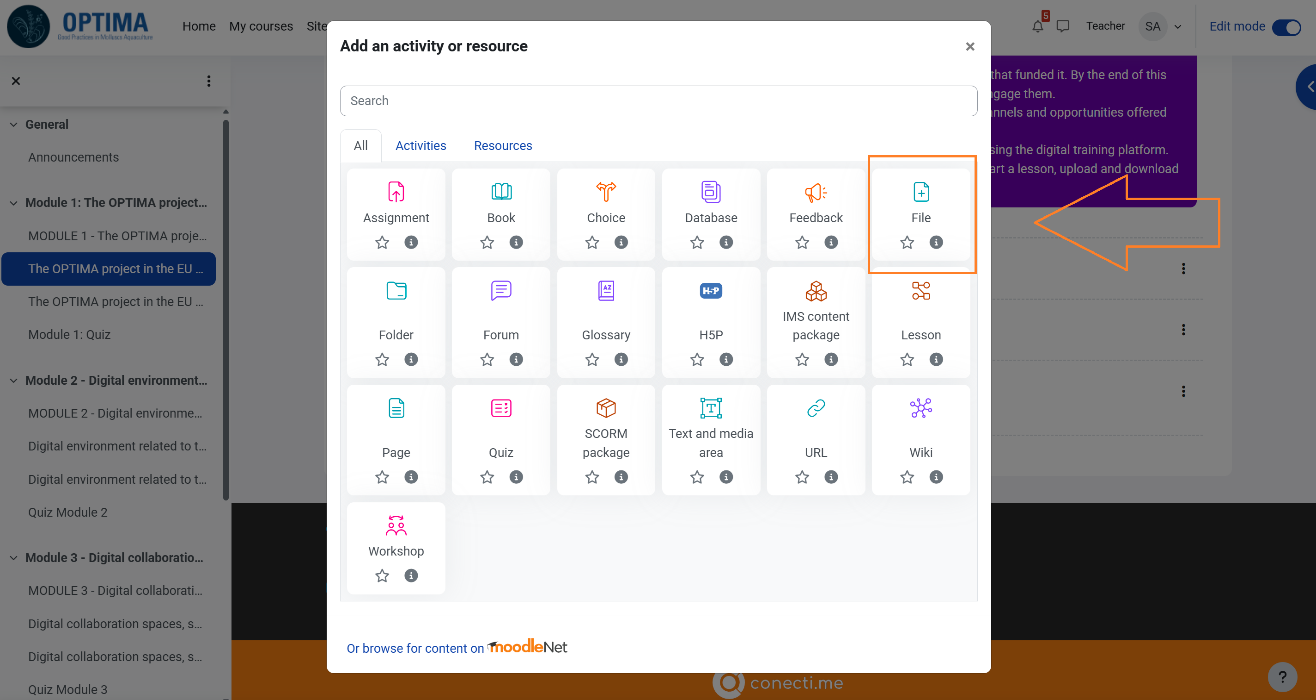
Accessing Course Materials
Teachers can access resources such as PDFs or videos.
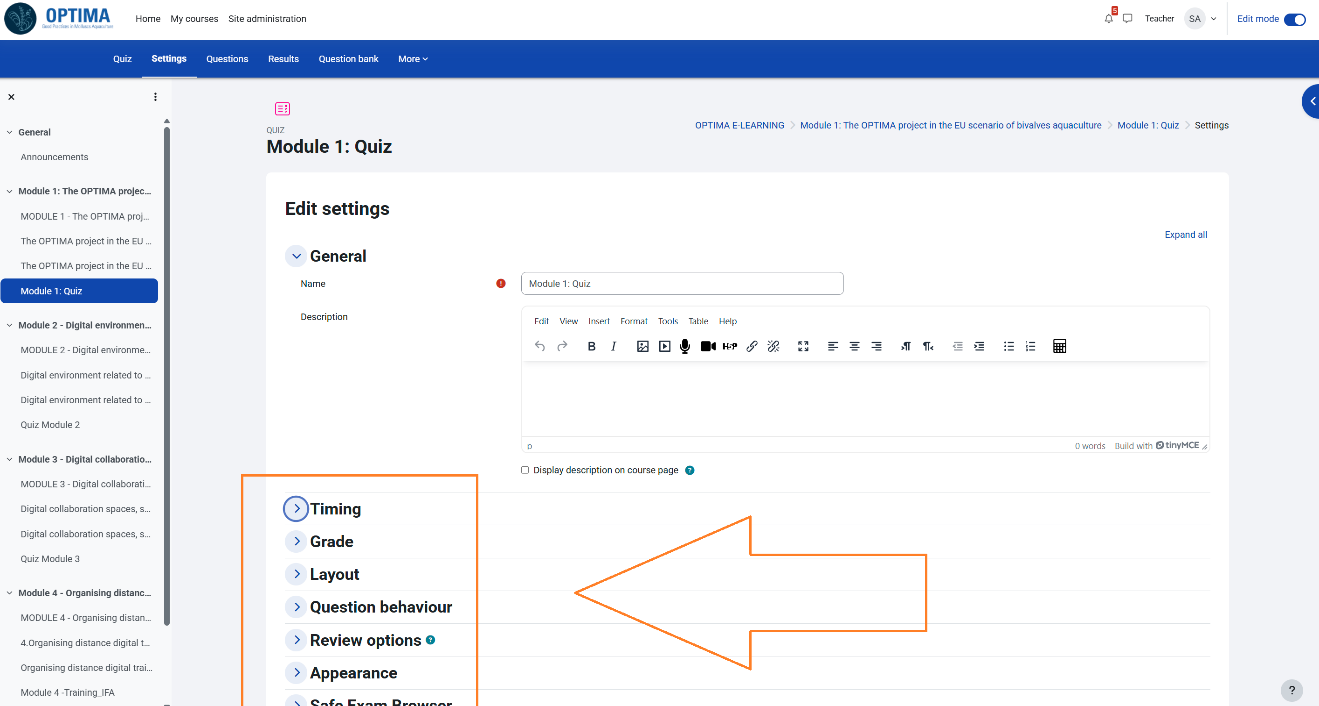
Assessment & Feedback – Designing Quizzes
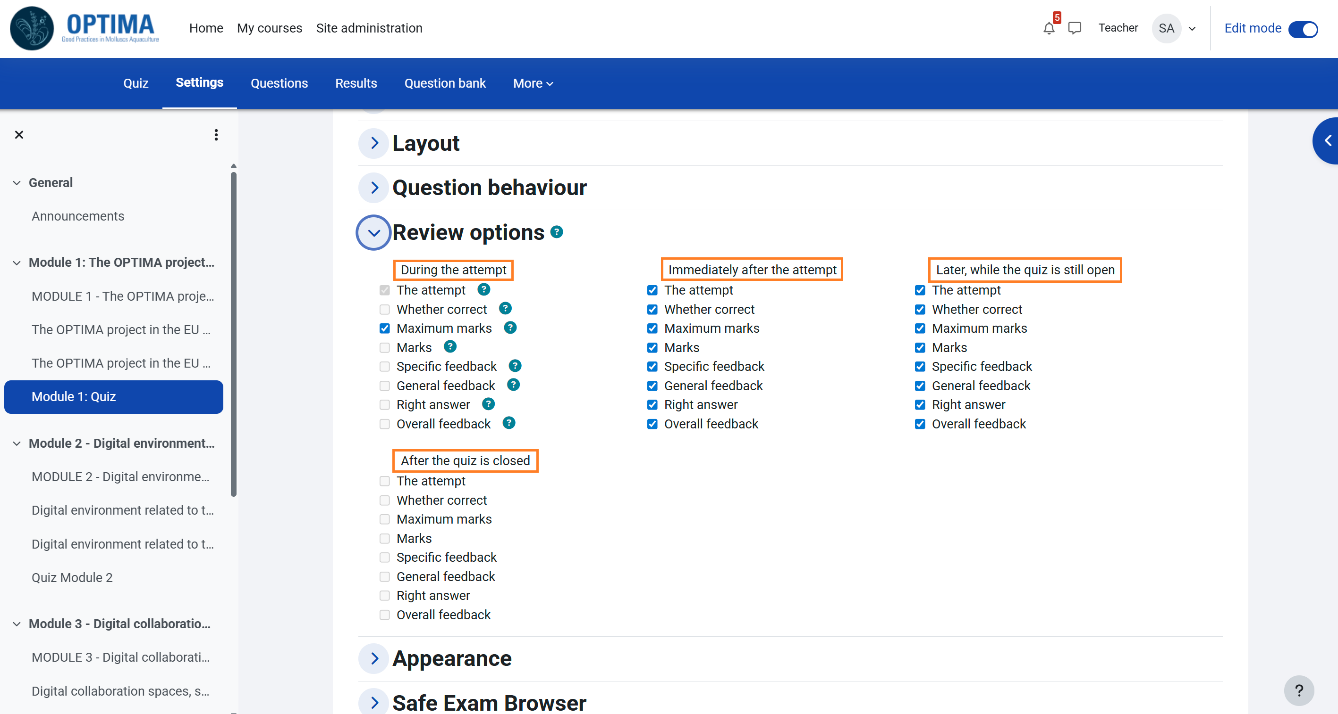
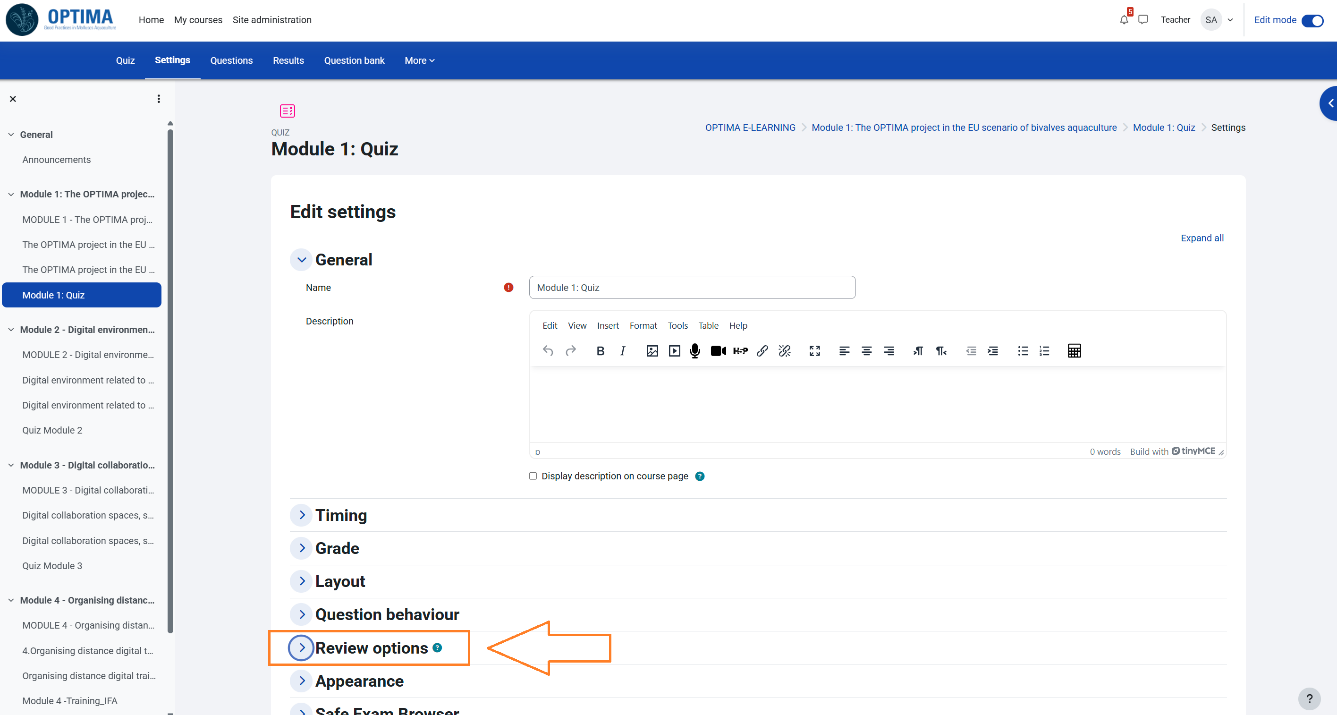
Quizzes are designed to evaluate students' knowledge and comprehension. Educators may develop multiple-choice, short answer, or essay-style questions and have the flexibility to modify the allotted time for completion.
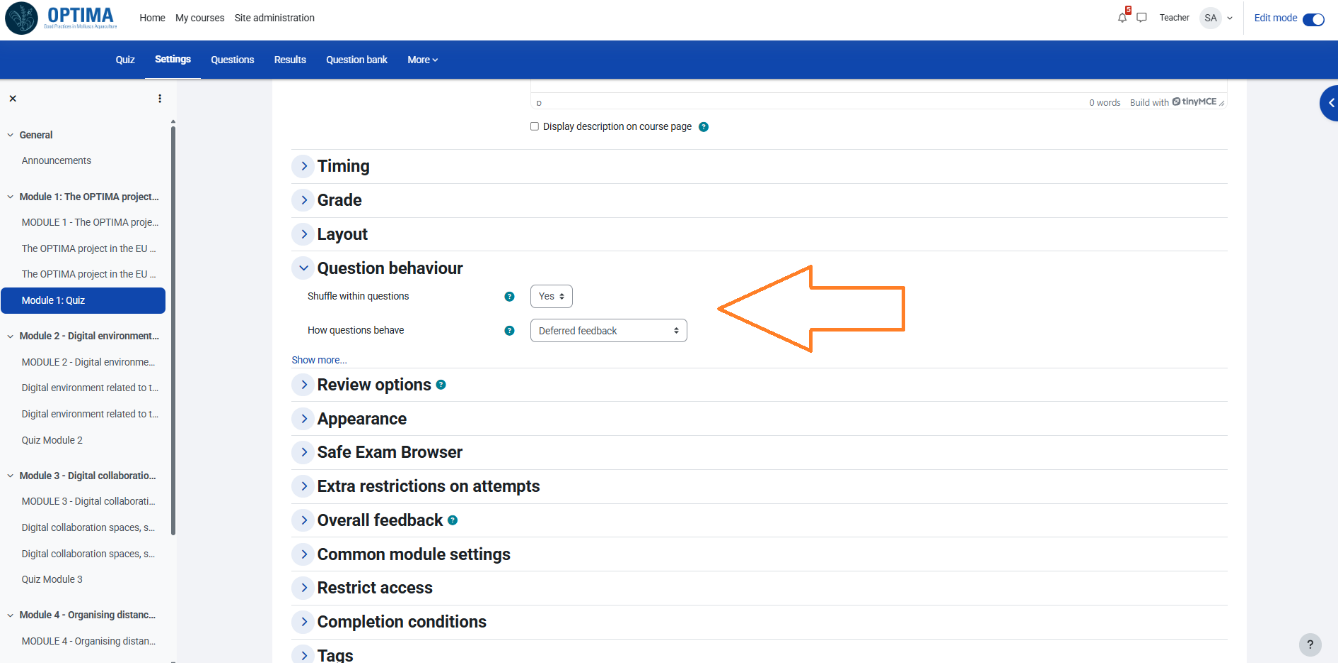
Educators can also configure question behaviour and manage key aspects of quiz review, including participant attempts.
Monitoring Student Progress – Activity Completion
Moodle has many helpful features that make it easier for teachers to keep an eye on how students are performing throughout a course. It shows whether or not each student has completed things like assignments, quizzes, forum posts, or other activities, which helps teachers get a better sense of who’s staying on track and who might need extra support.
1.4.2 Exercises with platforms
Managing Your Course – Adding Activities
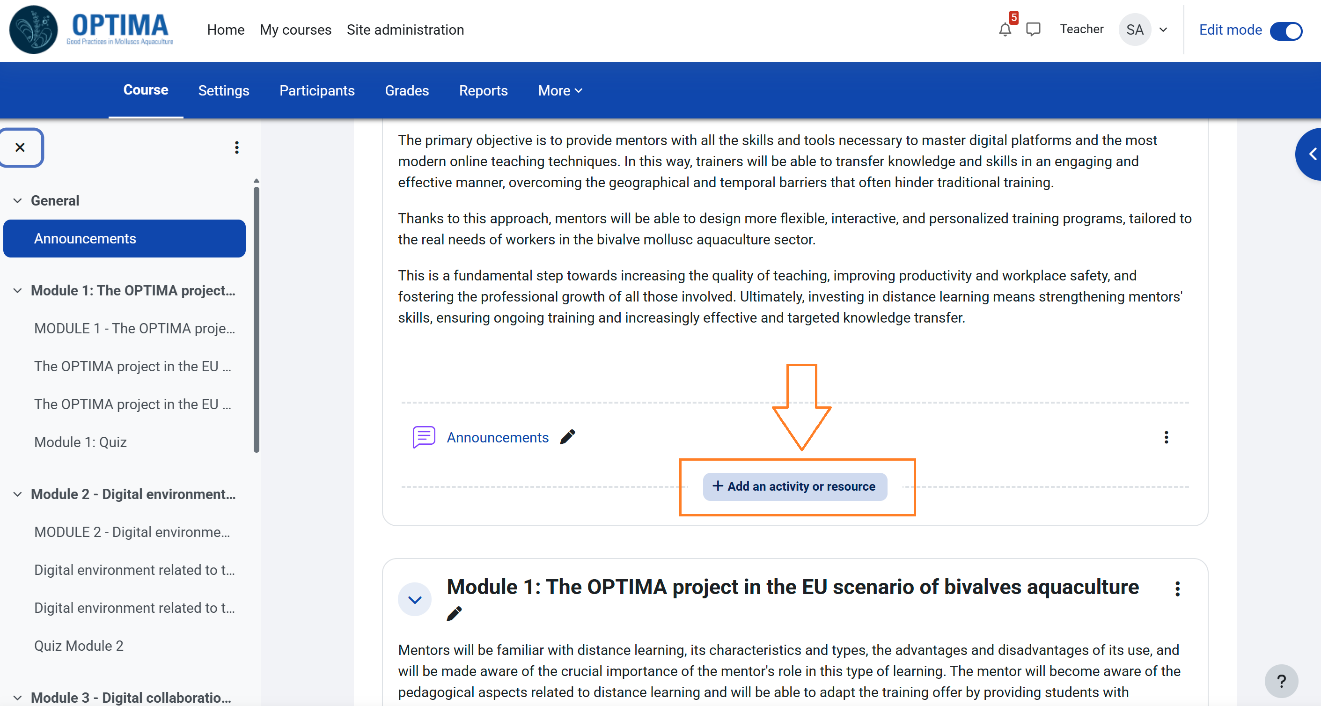
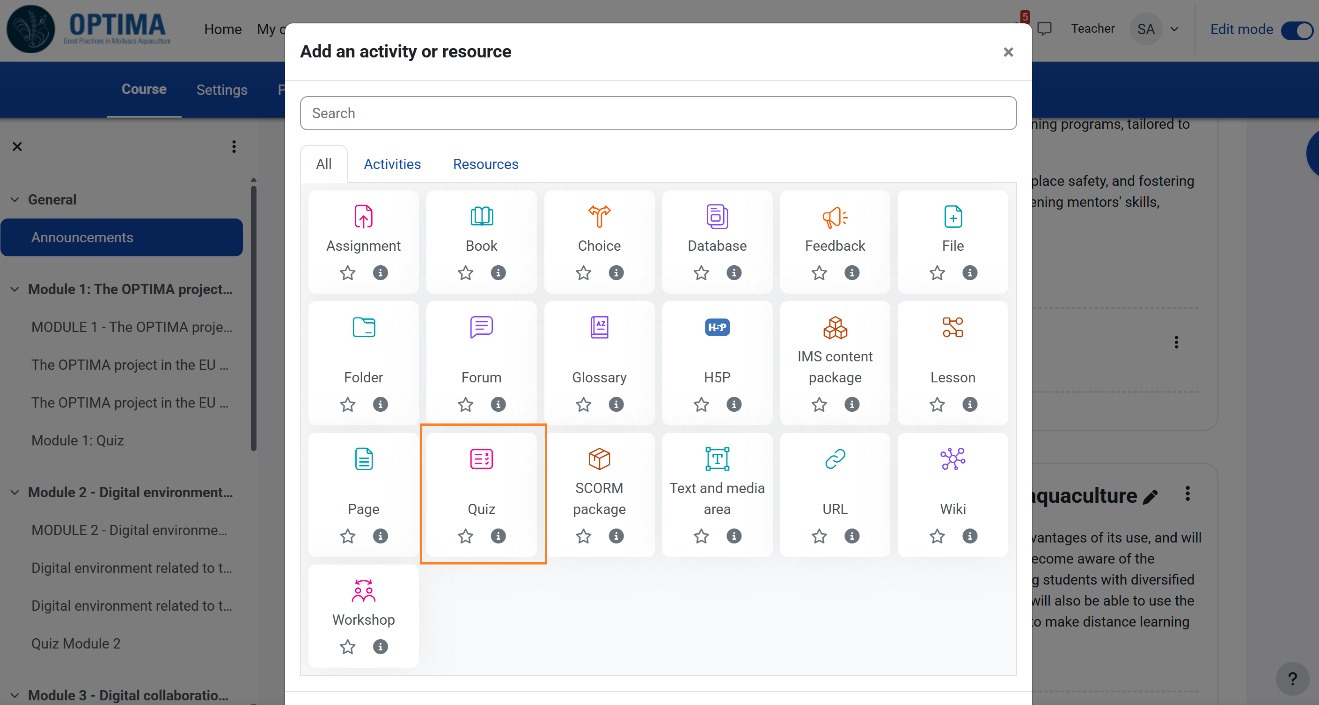
Activities such as assignments, quizzes, and lessons engage learners and assess understanding. Instructors can add an Activity by clicking on the button “Add an activity or resource”, while having turned “Editing On”.
Practical Exercise: Adding a File
Task: Upload a PDF module titled 'Shellfish Farming Best Practices' to your course.
Step-by-Step Solution:
1. Go to your course page and click 'Turn Editing On'.
2. In the desired section, click 'Add an activity or resource'.
3. Select 'File' and click 'Add'.
4. Enter the name (e.g., 'Shellfish Farming Best Practices').
5. Drag and drop the PDF file into the 'Select files' area (or use the file picker).
6. Add a description if necessary.
7. Click 'Save and return to course'.
8. The file now appears as a clickable link in your course.
Practical Exercise: Adding a Video
Task: Embed a YouTube video on oyster farming into your course.
Step-by-Step Solution:
1. On your course page, click 'Turn editing on'.
2. In the chosen section, click 'Add an activity or resource'.
3. Select 'URL' and click 'Add'.
4. Enter the name (e.g., 'Oyster Farming Video').
5. In the 'External URL' field, paste the YouTube video link.
6. (Optional) Add a description with viewing instructions.
7. Under 'Appearance', select 'Embed' if available.
8. Click 'Save and return to course'.
9. The video link (or embedded player) is now accessible to learners.
Practical Exercise: Creating a Quiz
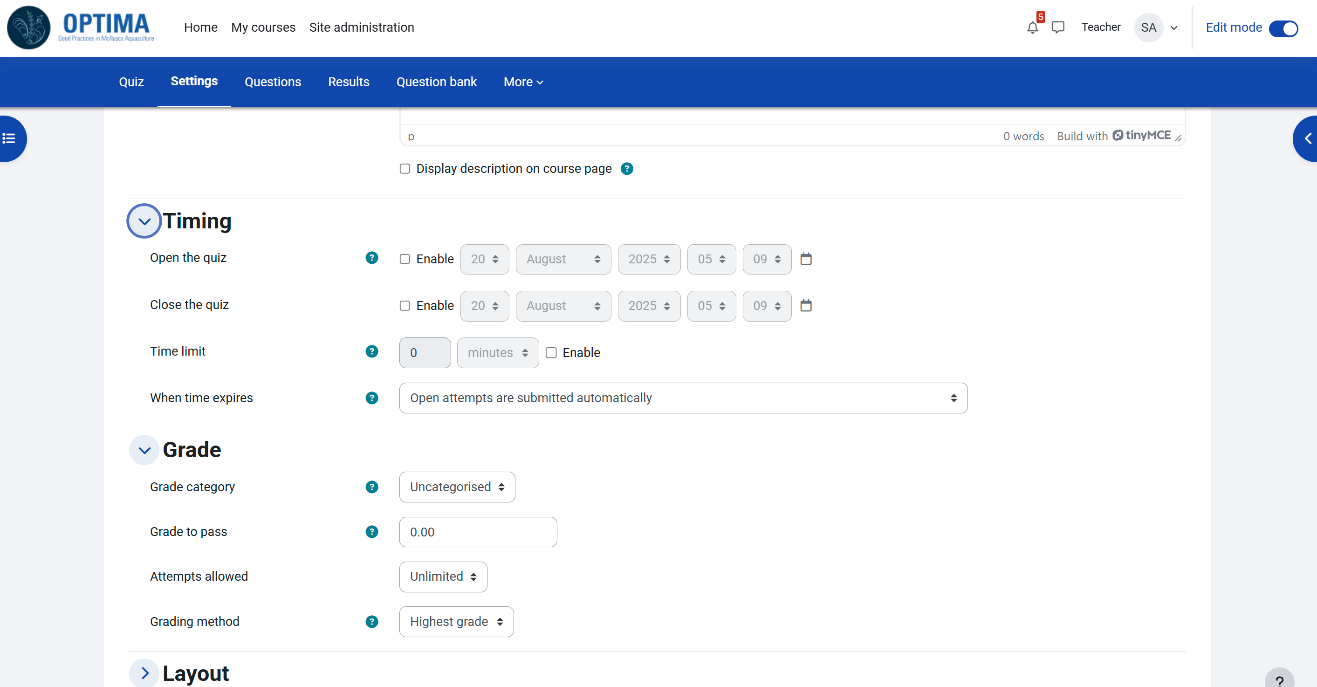
Task: Create a short quiz in your course to test learners’ understanding of mollusc aquaculture. The quiz should include at least 3 multiple-choice questions.
Step-by-Step Solution:
1. Navigate to your course homepage and click 'Turn editing on'.
2. In the section where you want the quiz, click 'Add an activity or resource'.
3. Select 'Quiz' and click 'Add'.
4. Enter a name (e.g., 'Quiz on Mollusc Farming Basics') and a description.
5. Under 'Timing', set the opening and closing dates (optional).
6. In 'Grade', set the maximum grade for the quiz (e.g., 10 points).
7. Click 'Save and return to course'.
8. Now, click the quiz link, then select 'Edit quiz'.
9. Add a new question → choose 'Multiple Choice'.
10. Enter the question text and answer choices, marking the correct one.
11. Save and repeat for more questions.
12. Preview the quiz to check functionality.
Support & Resources – Technical Help
If you experience any technical difficulties or have questions while using the platform, you can contact the OPTIMA support team for assistance. They can be reached by email at info@learn.optima-erasmusproject.eu. The team will respond as soon as possible to help resolve your issue or provide the necessary information. You may also find helpful information and step by step guides in the detailed Moodle Documentation available at https://docs.moodle.org/500/en/Main_page.