Reading text
| Suíomh: | Optima Project |
| Cúrsa: | Mentors Course - EN |
| Book: | Reading text |
| Printed by: | Guest user |
| Date: | Friday, 2 October 2026, 10:28 PM |
Table of contents
- 2.1 Knowing about distance/online learning and the pedagogy related to it
- 2.1.1 Concrete examples of distance learning delivery methods (e-learning, blended learning, virtual classroom)
- 2.1.2 Most common difficulties related to distance learning: motivation, isolation, technical difficulties
- 2.1.3 Main differences between in-person and remote mentoring, the role of facilitator and the importance of participant engagement
- 2.1.4 Pedagogies associated with distance learning: AGILE, ADDIE, etc.
- 2.2 Understanding the different platforms for online training and their functionalities
- 2.3 Knowing how to adapt the training materials to the distance/online training and adopting multimedia tools to enrich the educational experience
- 2.3.1 Use of engaging content: texts, videos, audio, infographics and storytelling techniques.
- 2.3.2 Using interactive activities: quizzes, discussions, games, hands-on exercises to encourage active learning.
- 2.3.3 Microlearning: dividing content into micro-lessons to encourage learning
- 2.3.4 Cooperative learning: the importance of creating sub-rooms by dividing the class into subgroups to encourage the exchange of ideas and problem solving or to do exercises
2.1 Knowing about distance/online learning and the pedagogy related to it
In the digital age, distance learning has become an essential part of the education and training landscape. It is no longer a simple alternative to traditional learning, but a dynamic and flexible approach that offers unprecedented opportunities for students and teachers. But what exactly does "distance learning" mean in practical terms?
It is not about complicated online lessons, but about practical tools that will allow you to learn from the comfort of your home, office or even your boat, at the times that are most convenient for you.
2.1.1 Concrete examples of distance learning delivery methods (e-learning, blended learning, virtual classroom)
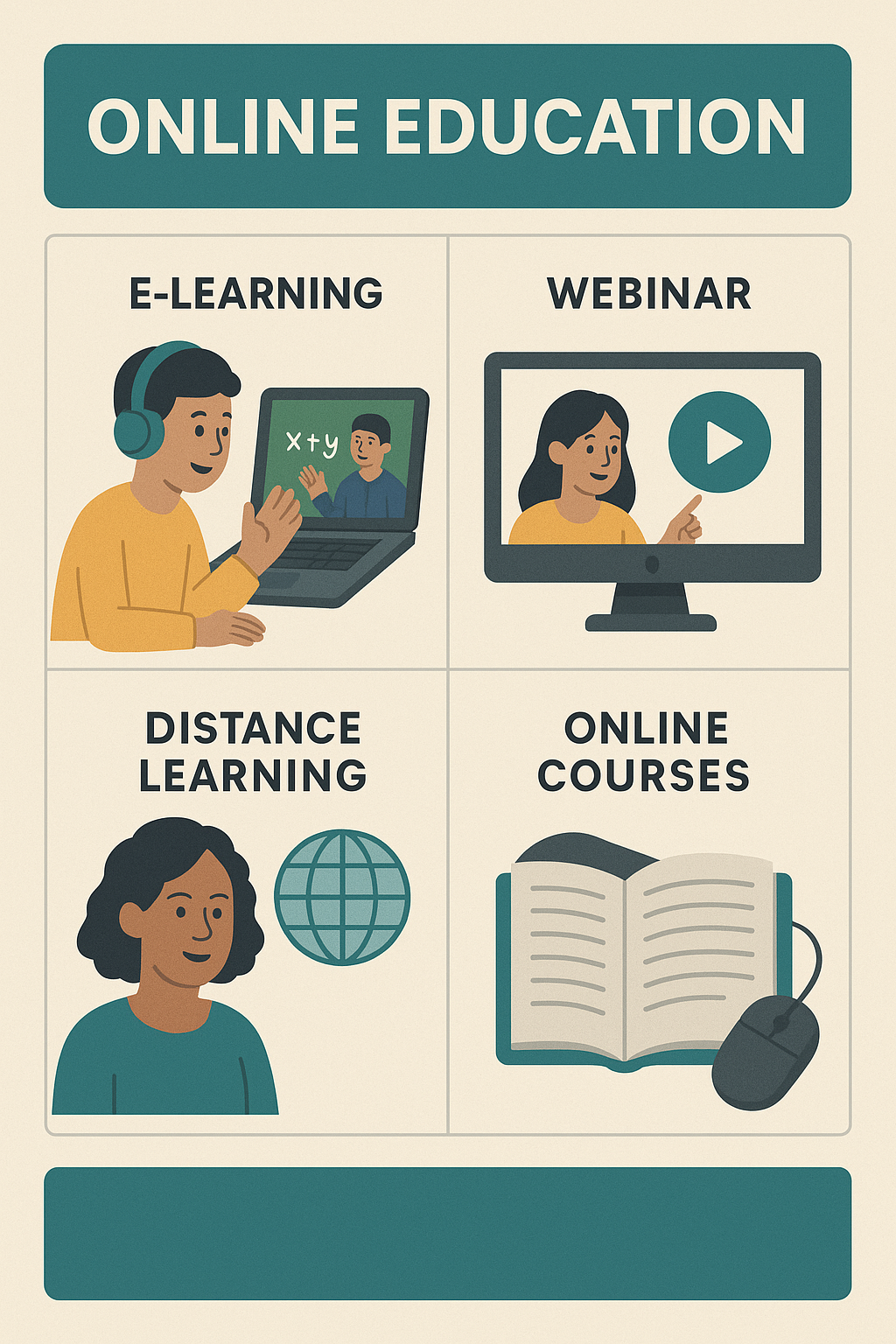
Distance learning offers a variety of methods to meet the diverse needs of students. Among the most commonly used are e-learning, blended learning, and virtual classrooms. Each method has specific characteristics, advantages, and potential challenges, depending on the context, student needs, and available technological resources.
One of the most popular approaches is e-learning, also known as self-paced online learning. This method allows students to access digital learning materials, such as video lectures, readings, audio recordings, and interactive exercises, whenever and wherever they want. It is an asynchronous form of learning, meaning students do not need to be connected to instructors or classmates at the same time. A typical example is a course offered through a Learning Management System (LMS) platform, such as Moodle, Coursera, edX, or Udemy. These platforms provide structured content divided into modules, along with tools such as quizzes, discussion forums, and automated feedback.
Students can study independently, review lectures as needed, and progress at their own pace. This flexibility makes e-learning particularly suitable for adult students, professionals, or anyone who needs to balance study with work or family commitments.
Another widely adopted model is Blended Learning, which integrates online and in-person elements to create a more dynamic and interactive learning experience. A popular example is the flipped classroom approach, in which students are assigned theoretical content - such as recorded lectures, articles, or slides - to study at home, while class time is used for practical activities, collaborative exercises, and direct interaction with the teacher.
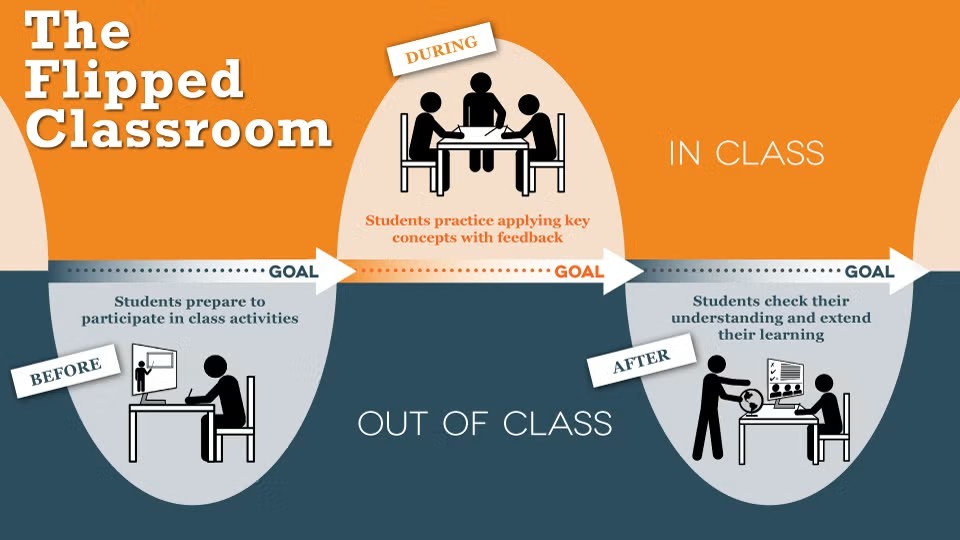
This method fosters deeper understanding, as students arrive in class prepared to actively engage with the material, rather than passively receiving it. Blended Learning can take different forms depending on the institution's objectives and is often used in schools, universities, and corporate training programs.
Finally, the virtual classroom replicates a traditional classroom environment in real time through videoconferencing tools such as Zoom, Microsoft Teams, or Google Meet. This synchronous method requires students and teachers to be connected simultaneously, allowing for live interaction, immediate feedback, and real-time collaborative work. Features such as breakout rooms for group discussions, shared digital whiteboards, screen sharing, and live Q&A sessions increase engagement and enable a more personal connection between participants. The virtual classroom is particularly useful in those cases where it is important to maintain a sense of community and continuity, such as in the primary and secondary education or university seminars.
Each of these distance learning methods offers specific benefits, and in many cases, institutions are adopting a hybrid model that combines aspects of all three, in order to create a more comprehensive and adaptable learning environment for the students.
2.1.2 Most common difficulties related to distance learning: motivation, isolation, technical difficulties
Distance learning, while offering undeniable advantages in terms of flexibility and accessibility, inherently presents a series of challenges that can hinder the effectiveness of the training path. Among the most recurring difficulties, motivation is a critical factor. The absence of physical contact and immediate interaction with the trainer and colleagues can lead to a decrease in commitment, with the risk of procrastination and abandonment. Maintaining high attention and interest requires significant self-discipline on the part of the student. At the same time, isolation is another relevant issue. The lack of spontaneous social interactions, typical of traditional learning environments, can generate a sense of detachment and loneliness, negatively affecting psychological well-being and the perception of belonging to a learning community. This can translate into a lower propensity to ask for clarifications or to actively participate. Finally, technical difficulties represent a concrete obstacle. Internet connection problems, software incompatibilities, and lack of familiarity with platforms and digital tools can frustrate students, interrupt the flow of learning, and in the most serious cases, prevent them from accessing content altogether. Overcoming these barriers requires adequate technical support and clear preliminary preparation. Proactively addressing these challenges is essential to optimizing distance learning.
2.1.3 Main differences between in-person and remote mentoring, the role of facilitator and the importance of participant engagement
Mentoring is a powerful educational and development tool, whether conducted in person or via digital platforms. Essentially, mentoring aims to guide, support, and inspire students along their personal and professional growth.
However, the differences between in-person and remote mentoring are substantial, particularly in how relationships are built, how students are engaged, and how this engagement is maintained over time.
In in-person mentoring, communication is rich and multidimensional. Nonverbal cues, such as facial expressions, posture, gestures, and eye contact, play a crucial role in conveying empathy, understanding, and nonverbal feedback to students.
The natural spontaneity of interactions allows mentors to quickly adapt to the needs of the class, and physical presence often facilitates building trust and a closer relationship. Furthermore, the ability to directly observe the student's environment provides valuable context that can contribute to more effective guidance.
In the remote environment, however, these elements are absent and must be intentionally reconstructed by the mentors. The lack of physical presence can create a sense of distance that mentors must actively work to overcome. In this context, their role becomes even more central and multifaceted. In addition to sharing knowledge and expertise, mentors must act as motivators, facilitators, and designers of learning experiences. They are responsible for creating a stimulating, inclusive, and engaging virtual environment where students feel seen, heard, and supported.
This involves carefully selecting appropriate communication tools (video calls, chat platforms, collaborative whiteboards), setting clear expectations, and maintaining regular and meaningful contact.
Example: Instead of simply posting materials on the forum, the mentor could start each week with a short, personalized video message. Perhaps capturing a moment from their day on the farm, to create a sense of familiarity and authenticity. They could say, "Hello everyone from [mentor name], today here at [location] we're monitoring the growth of [species raised]. I wanted to say hello and encourage you in this week's module on X. Remember, I'm here for any questions!" This not only provides information, but also creates a personal connection.
Example: Organize "virtual coffees" or short, optional synchronous Q&A sessions (e.g., 15-20 minutes per week). These aren't lectures, but informal moments where farmers can connect, ask quick questions, or simply "see" the mentor and other colleagues, breaking the isolation.
Example: Propose weekly challenges related to the module, for example, "This week, try to identify three potential sources of pollution on your farm and share a possible solution in the forum." This makes learning hands-on and interactive.
Example: Use gamification (game elements). Experience points could be awarded for participating in forums, completing quizzes, or sharing best practices. A friendly leaderboard could encourage participation.
Example: Provide constructive and timely feedback. If a farmer posts a question or task, the mentor should respond within a reasonable time (e.g., 24-48 hours), acknowledging the effort and providing clear and encouraging guidance. Personalized feedback, even brief, makes the learner feel valued.
One of the main challenges in remote environments is maintaining high participant engagement. In a virtual context, distractions are numerous, and attention spans often decline. To counter this, the mentor should integrate concrete examples from everyday life relevant to the students' context in this case, for example, practical scenarios drawn from the daily experiences of workers and entrepreneurs in the bivalve farming sector. When training resonates with participants' real-world experiences, it becomes more impactful and engaging.
Furthermore, incorporating stimulating and interactive exercises during training sessions can significantly improve student participation and retention. Activities such as quick quizzes to break the ice, live polls, collaborative activities in separate rooms, role-playing games, or simulations of real-life situations can transform a passive session into an active and collaborative experience.
Example: Vary content formats. Instead of text-only content, the mentor should include video tutorials (perhaps filmed directly in the field to demonstrate practical techniques), infographics, podcasts to listen to while working, or real-life case studies to analyze and discuss.
Example: Encourage peer collaboration. For example, create small virtual study groups where farmers from different regions can discuss specific problems and share solutions. The mentor can provide a framework for discussion.
Example: Integrate theory with daily practice. Ask farmers to take photos or short videos of their operations and upload them to the platform for group discussion. This creates a direct link between the lesson and the reality of the work.
Example: Be proactive in identifying and addressing issues. If the mentor notices that a participant is absent or not interacting, they should send a private message to ask how they are and if they need support, demonstrating personal interest.
These techniques not only help maintain attention but also foster a sense of community, even when participants can only see each other through a screen. Ultimately, while remote mentoring presents unique challenges, it also offers opportunities for innovation.
If carefully designed and facilitated, it can be as impactful as in-person mentoring, thanks to its flexibility and potential for customization. The key lies in the mentor's ability to adapt, engage, and bring learning to life, regardless of the course delivery methodology.
2.1.4 Pedagogies associated with distance learning: AGILE, ADDIE, etc.
The effectiveness of distance learning is strongly influenced by the adoption of specific pedagogical techniques and teaching methodologies specifically designed for the virtual environment.
Among the most widespread and well-known models is the “ADDIE model”, which represents a systematic and predefined framework for designing and developing training programs.
"ADDIE" is the acronym representing the five phases of the creation, delivery, and evaluation process: Analysis, Design, Development, Implementation, and Evaluation.
In the Analysis phase, data is collected on the recipients, their learning needs, the skills to be developed, the available resources, and the objectives to be achieved are defined.
In the Design phase, the training programme is planned in detail: clear and measurable learning objectives are established, the content is structured into modules and lessons, and appropriate teaching methods and strategies, support tools, and assessment criteria are chosen.
The Development phase involves the actual production of materials: handouts, slides, videos, quizzes, simulations, and e-learning platforms, which are then tested for quality. Implementation involves delivering training: lessons, workshops, or online activities are organized, support is provided to mentors and participants, and the effectiveness of the delivery is monitored.
Finally, Evaluation is a cross-cutting process: data is collected to assess learning, participant satisfaction, and the impact on the application context, allowing for potential improvements.
The ADDIE model is flexible, cyclical, and adaptable to different settings: schools, universities, corporate training, and digital learning. Its strength lies in the consistency between initial analysis, careful planning, and outcome assessment, ensuring high-quality and easily replicable training interventions.
This sequential approach ensures a rigorous structure and ongoing evaluation, ensuring that the training material is well-structured and aligned with the learning objectives of the course.
Example from the ADDIE course:
|
Sustainable Management of Bivalve Molluscs Farming 1. Analysis Audience: bivalve farmers (mussel or oyster farmers), with varying levels of experience. Training needs: Updates on environmental regulations, water quality monitoring techniques, sustainable management of facilities and resources. General objectives: Improve productivity while reducing environmental impact. Constraints: Seasonal working hours, limited time availability, variable digital literacy levels. 2. Planning Specific objectives Participants will be able to:
Structure: Modular course, 4 modules:
Methodology: online lessons + guided facility tours + demonstration videos + real-life case studies Evaluation: End-of-module assessment questionnaires, practical tests. 3. Development
4. Implementation
5. Evaluation
|
The AGILE approach is complementary or alternative to ADDIE. AGILE is increasingly gaining ground in the field of e-learning.
Derived from the world of software development, the AGILE model emphasizes interaction, flexibility, and adaptability. It focuses on short development cycles and continuous feedback, allowing for rapid changes to content and teaching strategies based on emerging needs. This approach is particularly advantageous in dynamic contexts or when rapid refinement of materials is required.
In addition, other relevant pedagogical approaches include Connectivism, which emphasizes the creation of knowledge networks through digital resources, and Problem-Based Learning (PBL), which encourages students to solve complex, real-world problems, promoting critical thinking and the practical application of knowledge. Choosing the most appropriate pedagogical method depends on the course objectives, student profiles, and available resources, but integrating multiple approaches can often maximize the effectiveness of distance learning.
2.2 Understanding the different platforms for online training and their functionalities
The digital age has radically transformed the way we learn and train, making online training an irreplaceable component in both academic and professional settings. In this ever-changing scenario, the role of the mentor also adapts: it is no longer enough to simply transmit knowledge, but it is essential to know how to navigate and exploit the different e-learning platforms.
Understanding the features of these tools is crucial for mentors, allowing them to better guide learners and choose the most effective solution for each specific training need.
2.2.1 Online training platforms
Online training platforms are one of the ideal tools for spreading knowledge, overcoming geographical and time barriers.
There are mainly three types of platforms for online training: Learning Management Systems (LMS), Massive Open Online Courses (MOOC) and webinar/videoconferencing platforms. Each of them has distinctive features and functions.
The most complete are the Learning Management Systems, real communities where mentors can create structured courses on the most diverse topics.
The LMS is a software platform specifically designed to manage, distribute and track online courses and training programs. The LMS allows you to:
- Organize and distribute educational content - In an LMS you can upload and structure courses, modules, videos, documents, presentations, interactive quizzes and any other educational material. This content can be used by students independently and at their own pace (e-learning) or as a support for in-person lessons (blended learning).
- Manage users - LMS allows you to enroll and unenroll students, assign roles (student, teacher, administrator), create learning groups and manage user profiles.
- Track progress - One of the most important features. An LMS carefully monitors student activity: what content they viewed, how much time they spent, the results of quizzes, progress in training paths. This is essential to evaluate the effectiveness of training and identify any difficulties.
- Evaluate learning - LMS allows you to create and administer tests, quizzes, assignments and other forms of assessment. It often also offers automatic grading systems and the ability to issue certificates upon completion of courses.
- Facilitate communication and collaboration - Many LMSs include communication tools, such as discussion forums, chat, internal messaging, and sometimes even synchronous virtual classroom capabilities, for live sessions between teachers and students.
- Generate reports and statistics - LMS can provide detailed data on platform usage, student progress, and course effectiveness. These reports are valuable for administrators and trainers to continuously improve training programs.
Massive Open Online Courses (MOOCs), represent a revolution in distance learning. These are university or higher education courses, made available online for free or at low cost, and open to a potentially unlimited number of participants from all over the world. Main characteristics of MOOCs:
- Massive: they are designed to accommodate a very large number of participants, from hundreds to hundreds of thousands of students at the same time, overcoming the limits of a physical classroom.
- Open: access to courses is generally free and open or low-cost. There are no specific admission requirements (such as previous qualifications), except in some cases a basic knowledge of the topic or language of the course.
- Online: the entire course is delivered via the internet, allowing the use of teaching materials, lessons and activities from any place and at any time, as long as you have an internet connection.
- Course: they are structured as real courses, with a well-defined program, teaching materials (video lessons, readings, handouts), exercises, quizzes, often discussion forums for interaction between students and sometimes even tutors or teachers.
MOOCs are usually delivered through dedicated platforms (such as Coursera, edX, FutureLearn, Udacity, Federica.EU, EduOpen, etc.).
The contents are often divided into weekly or thematic modules, with video lessons, in-depth materials, self-assessment quizzes and, in some cases, assignments to be submitted. Interaction between participants is often encouraged by discussion forums, where students can exchange views, ask for clarifications and collaborate. At the end of the course, in many cases, it is possible to obtain a certificate of participation or completion, sometimes for a fee, which attests to the skills acquired.
In addition to these, there are webinar and live streaming platforms, perfect for real-time training sessions on specific topics. They offer direct interaction and the possibility of doing Q&A. There are also tools dedicated to the creation and sharing of multimedia content (video tutorials, gaming), often integrable within the LMS. Finally, platforms for quizzes and surveys, very useful for verifying learning and collecting feedback from your students. Knowing these options will help the mentor choose the most effective tool to train their target group.
2.2.2 How to choose the right platform? Factors: cost, functionality, ease of use
Selecting the right e-learning platform is a crucial decision that directly impacts the effectiveness and sustainability of a distance learning path. Three main factors must guide this choice: cost, features offered, and ease of use.
Cost is not limited to the purchase price or subscription fee; it is essential to also consider any hidden costs related to maintenance, technical assistance, integration with other systems, or the need for customizations. A thorough cost-benefit analysis is necessary to ensure the economic sustainability of the project, especially when resources are limited and long-term usage is expected.
Features are the heart of the platform. It is crucial that the system supports all the planned teaching activities: upload and management of multimedia content, interactive learning tools such as quizzes and exercises, synchronous and asynchronous communication options (forums, chats, videoconferencing), and monitoring tools to track student progress and engagement. However, having many features is not enough—if they are not actually used or are too complex to implement, they become a burden rather than an asset.
Ease of use is another decisive factor, particularly when working with target groups who may have limited digital experience, such as small-scale shellfish farmers or professionals from non-technical backgrounds. A platform with an intuitive interface, clear navigation, and minimal technical barriers greatly enhances adoption and user satisfaction.
When users can focus on the content rather than struggling with the tool, learning becomes more efficient and motivating.
In the context of the OPTIMA project, a tailored solution has been adopted to address these very needs. The project will make use of a dedicated e-learning platform specifically developed by the Greek partner IDEC.
This platform has been designed within the framework of the project itself, ensuring that it is aligned with the specific training objectives and the profile of the participants. IDEC's platform has been conceived with a strong emphasis on usability, accessibility, and relevance to real-world contexts, providing a robust yet user-friendly environment in which mentors and learners can interact effectively. This customized tool represents a strategic investment that reflects all the key selection criteria-cost efficiency, functionality tailored to training content, and intuitive design-making it an ideal choice for the project’s implementation.
2.2.3 Main features: user interface, content management, communication tools, evaluation systems
Modern Learning Management Systems (LMS) platforms are designed to optimize the distance learning experience and course management, offering a wide array of functionalities.
A pivotal element of these platforms is the User Interface (UI), which must be clear, intuitive, and well-organized to facilitate navigation for both instructors and students. A clean and customizable UI significantly enhances usability, making the platform immediately accessible and seamless.
Content management is a fundamental pillar. A good LMS must allow for the uploading, organizing, and presentation of diverse educational materials—from text and video to audio, presentations, and PDF documents—in a structured and easily accessible manner. The ability to create sequential modules, lessons, and personalized learning paths is essential. Similarly, the option to create separate "rooms" (or breakout rooms) for dividing students into working groups on specific topics is crucial for fostering collaboration and active learning.
Communication tools are vital for promoting interaction and preventing isolation. Discussion forums, chat, internal messaging, and integrations with video conferencing platforms are indispensable for enabling effective synchronous and asynchronous interactions between students and instructors, thereby building a sense of community.
Finally, assessment systems are crucial for monitoring progress and learning effectiveness. These include the creation of multiple-choice quizzes and open-ended questions, the ability to upload assignments, assign grades, provide personalized feedback, and track detailed student activity.
An effective LMS harmoniously combines all these features, creating a complete, dynamic, and highly functional learning environment.
2.2.4 Examples of LMS platforms: Moodle, Canvas, Google Classroom
The Learning Management System (LMS) platform market offers different solutions, each with its own peculiarities and strengths. Among the most well-known and used globally are Moodle, Canvas and Google Classroom. Moodle is one of the most popular open-source platforms in the world. Its open-source nature makes it highly customizable and scalable, suitable for different needs, from small organizations to large universities. It offers a wide range of additional modules and plugins that extend its functionality, allowing it to be adapted to specific contexts, although its interface may be less intuitive for beginners. Canvas, developed by Instructure, is a cloud-based LMS known for its modern, clean and intuitive user interface, which facilitates navigation and interaction. It is particularly appreciated for its reliability, robust communication and collaboration features, and integration with external tools. Canvas is often the choice of educational institutions and companies looking for a complete and user-friendly solution. Finally, Google Classroom is a simpler platform and integrated into the Google ecosystem. It is ideal for basic course management, document sharing, assignment and collection, and communication through announcements and streams. Its strength lies in its ease of use and native integration with Google Drive, Docs, Sheets, etc., making it a popular choice for K-12 education and less complex training courses. The choice between these and other platforms depends on the specific needs of the training project.
2.3 Knowing how to adapt the training materials to the distance/online training and adopting multimedia tools to enrich the educational experience
In this chapter, we will explore methodologies to effectively deliver the OPTIMA training program remotely. The goal is to develop innovative teaching strategies that make distance learning not only more accessible, but also enjoyable and engaging for students, especially considering the specificities of the target (bivalve mollusc farmers). It is essential to recognize the substantial differences compared to in-person training. While the latter benefits from immediate interaction and non-verbal communication, online requires a careful redesign of materials and dynamics. We need to compensate for the physical distance by enriching the educational experience with diversified multimedia tools. This means going beyond the simple transposition of paper content into digital format, to embrace an approach that fully exploits the potential of technology.
The adoption of videos, audio, infographics and simulations will become crucial to maintain high attention and facilitate the understanding of complex concepts.
The challenge is to transform a potential limitation into an opportunity to create a dynamic and stimulating learning environment, capable of effectively supporting the acquisition of new skills in the specific context of aquaculture.
2.3.1 Use of engaging content: texts, videos, audio, infographics and storytelling techniques.
To maximize the effectiveness of distance learning and maintain a high level of student engagement, it is essential to use a variety of stimulating multimedia content. Simply presenting long and dense texts can be monotonous and ineffective in an online context. Instead, it is crucial to complement the texts with explanatory videos (short videos will be produced in each country involved in the OPTIMA project) that show real practices and processes in aquaculture, allowing farmers to concretely visualize what they have learned. The use of audio, such as podcasts or interviews with industry experts, can offer a flexible and accessible learning modality even on the move. Infographics are powerful tools to summarize complex information, statistical data or process schemes in a visually appealing and easily digestible format. Furthermore, the application of storytelling techniques can make the content more engaging and relevant, contextualizing the theoretical notions through practical examples or case studies that reflect the farmers' daily experiences. This diversification not only responds to different learning styles, but also helps create a richer, more dynamic and less distracting learning experience, which is essential for maintaining students' attention and motivation in the long term.
#BBD0E0 »
2.3.2 Using interactive activities: quizzes, discussions, games, hands-on exercises to encourage active learning.
Distance learning does not have to be a passive experience. To promote meaningful engagement and deeper understanding of concepts, it is essential to regularly integrate interactive activities. The use of quick quizzes, multiple choice or fill-in-the-blank, strategically distributed throughout the lessons, allows for real-time understanding and to consolidate concepts. Online discussions, facilitated through forums or dedicated chats, encourage the exchange of ideas, the comparison of experiences and the collaborative construction of knowledge. This is particularly useful for farmers, who can share their challenges and solutions. The introduction of educational games or simulations can make learning fun and engaging, turning complex concepts into simple ones. Finally, practical exercises, even if virtual or scenario-based, are crucial to encourage the application of acquired knowledge. These could include case study analyses, solving specific problems related to aquaculture, or simulations of operational processes. The aim is to shift the focus from the mere reception of information to active learning, where students are the protagonists of their learning journey, strengthening understanding and practical skills in a dynamic and participatory way.
Example of a possible quiz for bivalve farmers:
|
You notice a sudden increase in mortality in your clam farm after a windless summer heatwave. What is the most likely cause you should check first?
To effectively protect a mussel farm from predation by sea bream, which strategy is most effective in the long term?
You are evaluating a new site for an oyster farm. What is the first, fundamental parameter to check to ensure that the product is marketable for direct human consumption?
While monitoring, you detect the beginning of an algal bloom of a potentially toxic species near your facility. What is the most correct and prudent action to take immediately?
Which of the following is the first indicator that a farmer can observe directly in the field that suggests the risk of contamination by marine biotoxins?
An analysis detects the presence of DSP (Diarrhetic Shellfish Poisoning) toxins in your farm. What is the main risk to public health associated with the consumption of contaminated bivalve molluscs?
After a closure due to biotoxin contamination, what is the essential requirement to be able to reopen an area for harvesting and marketing?
What management practices can help a farmer mitigate the economic impact of a toxic algal bloom?
|
2.3.3 Microlearning: dividing content into micro-lessons to encourage learning
Microlearning is an innovative and highly effective teaching strategy, particularly suited for instructors training professionals in the bivalve mollusc aquaculture sector.
It is a methodology based on breaking down training content into "micro-lessons," short, focused learning units that address a single concept or specific skill at a time.
This approach offers mentors the opportunity to design more streamlined, modular, and easily updateable courses, better meeting the needs of bivalve mollusc farmers, who often have flexible schedules, limited time, and need to access content "just-in-time." Micro-content can be short videos, infographics, short quizzes, or practice sheets for direct consultation in the field.
Bivalve mollusc farmers operate in a sector that requires continuous updates on health regulations, sustainable management techniques, water quality control, food safety, and awareness of the ecosystem services provided by this type of farming.
Microlearning allows for the provision of readily available, easily digestible training pills that can be immediately applied to everyday life.
Furthermore, reducing cognitive load promotes retention of key concepts and increases motivation to complete the training program.
For industry mentors, this means rethinking the structure of traditional courses, identifying key areas of knowledge and transforming them into short, concise, self-contained modules, distributed on a digital platform that can also be accessed from mobile devices such as tablets or smartphones, which are now familiar to all learners, including bivalve mollusc farmers.
✅ Better course completion rate.
✅ Greater interaction with breeders, thanks to “snackable” content, i.e. also shareable on messaging apps or social networks within the community of practice.
✅ Rapid updating of teaching materials based on regulatory and scientific developments.
|
Examples and links for further information:
Learn more: |
2.3.4 Cooperative learning: the importance of creating sub-rooms by dividing the class into subgroups to encourage the exchange of ideas and problem solving or to do exercises
Cooperative learning is an extremely effective teaching methodology, especially in distance learning, because it stimulates active interaction, participation, and exchange among students. This strategy, if well-planned and implemented, allows mentors to transform online lessons into true laboratories for discussion and co-construction of knowledge, essential for a sector like bivalve mollusc aquaculture, which relies on practical skills, shared experiences, and continuous updating on regulations and legislative restrictions. A key aspect of this approach is the use of so-called breakout rooms or "virtual sub-rooms."
Many videoconferencing platforms allow a large virtual class to be divided into small subgroups, creating "alternative rooms" to which the mentor can assign different tasks. The mentor can also move freely depending on the needs of each of these rooms. Dividing the class into small work groups allows bivalve farmers in training to discuss real-world cases, compare the different farming techniques used, analyze common problems, and find innovative solutions together. The more intimate environment created by this type of sub-room encourages participation by more people, even the most timid and reluctant students, encouraging critical discussion and boosting motivation throughout the class. In the specific case of bivalve mollusc farmers, teachers can organize cooperative activities divided into sub-rooms for topics such as:
✅ Case study analysis;
✅ Sharing best practices between farmers from different areas and countries;
✅ Simulations of production improvement or sustainable management plans;
✅ Resolving problems related to contamination or disease.
In this case, the mentor acts as a facilitator, monitoring the groups and periodically moving from sub-room to sub-room, intervening with targeted clarifications, offering food for thought, and enhancing the ideas that emerge. At the end of this activity, the class gathers together to share the results of each subgroup with all the other students, comparing the solutions found and drawing shared conclusions.
This methodology not only reinforces the learning of technical and scientific content, but also develops transversal skills essential for those working in the sector:
✅ It allows for effective communication, for better understanding between farmers and stakeholders.
✅ It facilitates teamwork, essential for managing complex facilities.
✅ It stimulates problem-solving, useful for addressing the challenges associated with bivalve farming, such as: water quality; disease control, alien species, and predators; climate change; sustainability; and increased awareness of ecosystem services.