Completion requirements
4.Organising digital training
4.1 Being able to support participant engagement during online training
4.1.2 Identifying difficulties: signals to monitor and strategies to prevent them
As we've already mentioned, remote mentoring facilitates the training of workers with time constraints and logistical challenges. But distance, which makes mentoring so accessible and flexible, can also introduce significant complexity. Recognizing and promptly addressing emerging difficulties in these training courses is crucial to ensuring their success.
The ability to identify early signs of discomfort or ineffectiveness in a remote mentoring relationship is the first step toward problem-solving. These signs can be subtle or obvious, but they all indicate that something isn't working as expected.
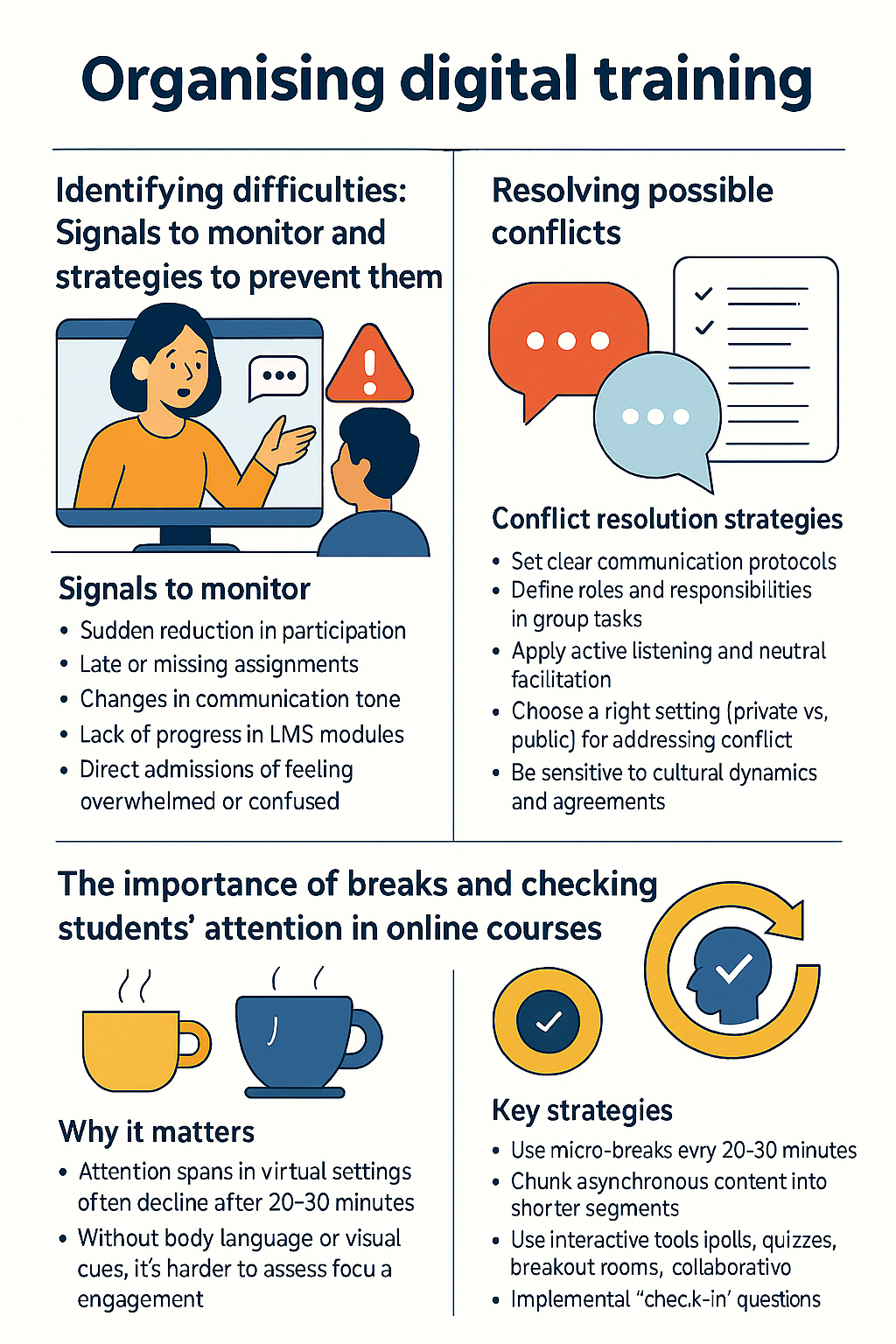
Signs to monitor:
- Sudden reduction in participation, including silences during discussions or cameras being turned off.
- Late or missed submissions of tasks, especially if they represent a change from previous behavior.
- Changes in the tone of communication, such as vague, brief, or emotionally charged messages.
- Lack of progress in modules uploaded to the learning management system (LMS), evidenced by suspended tasks or a lack of interaction.
- Direct admissions of feeling overwhelmed or confused.
Once the signs are identified, it's crucial to take action. Even better, you can adopt proactive strategies to prevent these difficulties from emerging.
Preventative Strategies: Mentoring and Best Practices
- Pre-module Assessment: conduct short surveys or ice-breaking activities to understand participants' previous online learning experiences, their level of digital familiarity, and expectations.
- Set Clear Expectations: explicitly communicate what active participation means in the online context (e.g., "Attendance at least twice a week and always with your camera turned on").
- Foster Psychological Safety: create an environment where participants feel free to ask questions, make mistakes, and express concerns without fear of judgment.
- Use a Variety of Engagement Strategies: offer a mix of individual, small-group, and plenary activities to address different learning preferences and maintain interest.
- Collect regular feedback: use quick surveys, anonymous questionnaires, or direct questions to monitor participants' cognitive and emotional state.
Other intervention strategies for mentors:
Regular and varied check-ins:
- Individual "coffee chats": offer optional, short 10–15-minute meetings to discuss participants' progress, challenges, and overall well-being.
- Small group discussions: facilitate small group discussions to encourage participation from more reserved participants who may be reluctant to engage when their classmates are present.
- Automatic reminders: use the learning platform's features to send automatic reminders about upcoming deadlines or encouraging messages.
Anonymous feedback tools:
- Proposal box: create an online proposal box or anonymous survey to allow participants to express concerns without being identified.
- Plus/Delta feedback: periodically ask participants what is working (plus) and what could be improved or changed (delta) within a distance learning course.
Adapting pacing and flexibility:
- Flexible deadlines (within reason): whenever possible, offer flexibility in delivery, especially for projects, to accommodate unexpected challenges.
- Break down content: break complex topics into smaller, manageable units to reduce cognitive overload.
- Offering options: allow participants to choose from different ways to demonstrate their understanding (e.g., written assignment, video presentation, audio recording).
Creating a psychologically safe environment:
- Promoting a growth mindset: Reinforce the idea that challenges are learning opportunities and that mistakes are part of the journey.
- Normalizing asking for help: Explicitly state that it's normal to have difficulties and encourage early requesting support.
- Active listening: When participants express difficulties, listen empathetically, without judgment, and validate their emotions.
- Sharing resources: Actively provide information about available support services (e.g., academic tutoring, psychological support, technical assistance).