Completion requirements
5.3 Communicating the importance of ecosystem services, low carbon footprint, and the ecological and social role of bivalves: ability to communicate complex ideas to a consumer audience using accessible language and platforms
5.3.1 Explaining the low environmental impact and carbon footprint of bivalve production compared to other protein sources
Bivalve aquaculture occupies a uniquely favourable position in the global food system from an environmental standpoint.
Unlike finfish aquaculture, poultry, or livestock production, bivalve farming requires no external feed, no freshwater inputs, no fertilisers, and no land. Bivalves filter phytoplankton and suspended organic particles directly from the water column, making them entirely dependent on — and tightly integrated with — the aquatic ecosystem.
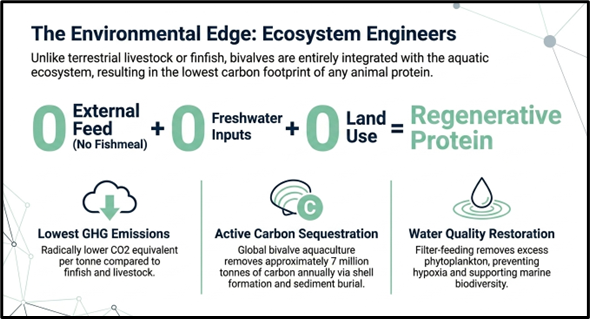
Fig. 30 - Comparison between intensive terrestrial and marine farms with marine mollusc farms
Greenhouse gas emissions
Life cycle assessment (LCA) studies consistently show that bivalve aquaculture generates substantially lower greenhouse gas emissions per tonne of protein than most other animal production systems.
Research published in BioScience (2022) demonstrates that on-farm GHG emissions for finfish production systems have a median of approximately 1,040 kg CO2-equivalent per tonne wet weight, compared to the substantially lower total GHG footprint of bivalve farming.
A key driver is the absence of fishmeal in the production cycle: shellfish LCAs differ considerably from other aquaculture LCAs because bivalve production avoids entirely the environmental burdens associated with fishmeal production (Vélez-Henao et al., 2021).
Carbon sequestration
The relationship between bivalve farming and carbon is more nuanced than a simple 'carbon sink or source' binary.
Recent research published in Science of the Total Environment (Song et al., 2024) reviewed evidence showing that global bivalve aquaculture is expected to remove approximately 7 million tonnes of carbon annually through shell formation. Furthermore, bivalve aquaculture at moderate stocking densities shifts phytoplankton community structure toward smaller, carbon-dense species, potentially increasing total carbon storage in the water column. Bivalve aquaculture also increases sedimentation rates of suspended particles, promoting carbon burial in low-energy coastal environments (Song et al., 2024).
It must be noted that scientific consensus on the net carbon balance of bivalve aquaculture is still developing, and professionals should communicate this as an area of significant promise while acknowledging ongoing research.
Comparison with terrestrial proteins
Replacing a portion of dietary protein from beef, pork, or poultry with bivalve protein represents one of the lowest-carbon dietary substitutions available.
Zhang et al. (2025) review evidence that bivalves are climate-friendly sources of animal protein with very high nutritional quality and argue that such substitutions at scale could contribute meaningfully to climate change mitigation strategies.
Water quality and ecosystem services
Bivalves are ecosystem engineers. Filter-feeding populations improve water clarity by removing excessing phytoplankton and suspended particles, which reduces hypoxia risk and supports the recovery of submerged aquatic vegetation. Their biodeposition contributes to nutrient cycling, and their hard substrate structures provide habitat for other marine organisms (Filgueira et al., 2019).
These services have measurable economic value, though they remain largely unaccounted for in market prices — a policy gap that aquaculture professionals and sector organisations can communicate actively to regulators and planners.