Aggregazione dei criteri
5.3 Communicating the importance of ecosystem services, low carbon footprint, and the ecological and social role of bivalves: ability to communicate complex ideas to a consumer audience using accessible language and platforms
5.3.3 Selecting appropriate communication platforms (social media, websites, events, educational campaigns) for different audiences
The effectiveness of a communication strategy depends not only on what is said, but on where and how it is said.
Platform selection must follow audience analysis: different segments inhabit different digital and physical spaces, have different information needs, and respond to different formats.
➔Social media (Instagram, TikTok, Facebook): these platforms are optimal for reaching consumers directly, particularly younger demographics.
Short-form video content (15–90 seconds) showing harvesting processes, preparation methods, or behind-the-scenes farm operations generates high engagement. Visual content (photography, infographics) works well for nutritional and environmental claims.
The algorithmic nature of these platforms rewards consistency and interaction over episodic posting.
Key message types: product origin, sensory appeal, environmental credentials, recipes.
➔Websites and long-form digital content: the company website functions as a central credibility hub. It is where professional buyers, journalists, researchers, and interested consumers go to verify claims made elsewhere.
Long-form content — producer profiles, sustainability reports, links to peer-reviewed references — belongs here.
This is also where eco-certifications and third-party endorsements should be prominently displayed.
A well-structured website with up-to-date environmental and nutritional content significantly supports export market development and institutional relationships.
➔Events, markets, and direct-to-consumer channels: farmers' markets, food festivals, restaurant partnerships, and farm visits offer irreplaceable direct contact with consumers.
Tasting experiences are among the most effective conversion tools for bivalve products: sensory engagement bypasses scepticism and creates a direct emotional association with the product.
These events are also ideal settings for storytelling — the producer present in person is the most powerful brand asset available.
➔Educational campaigns and institutional channels: communication targeting schools, health professionals, policymakers, and institutional buyers (hospitals, school canteens, public procurement) requires a different register. Scientific accuracy, institutional endorsements, and policy-relevant framing are essential. Partnerships with public health authorities, universities, or environmental agencies lend credibility and open access to channels not available through commercial marketing alone.
➔B2B communication (restaurants, retailers, distributors): professional buyers require product quality data, food safety documentation, supply reliability assurances, and sustainability credentials presented in a commercially relevant format.
Case studies, product specification sheets, and traceability documentation support purchasing decisions at this level.
Digital platforms such as LinkedIn are effective for maintaining visibility with professional audiences and for positioning sector actors in policy and industry debates.
A practical framework for platform selection is to map each target audience against three variables: where they consume information, what format they prefer, and what decision they are being asked to make. This mapping produces a prioritised channel list that concentrates communication effort where it generates the highest return, rather than dispersing it uniformly across platforms regardless of fit (Zimand-Sheiner, 2024; Kaimakoudi, 2024).
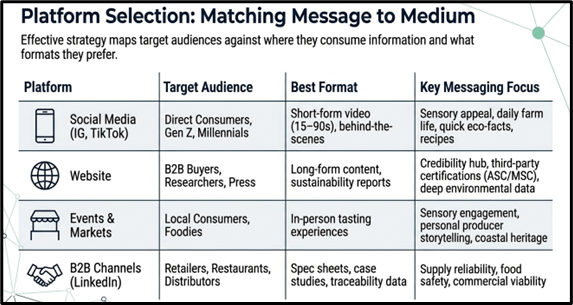
Fig. 32 - How to publicize your product through online platforms
Note on Sources and Scientific Integrity
All pedagogical content in this module is grounded in peer-reviewed scientific literature and sector-specific research.
Key references include publications in Food Chemistry X (Tan et al., 2025), Critical Reviews in Food Science and Nutrition, BioScience, Science of the Total Environment, the International Journal of Life Cycle Assessment, the Journal of Applied Communication Research, the Journal of Brand Management, and reports from FAO (2024), the Global Seafood Alliance (2021), and the Aquaculture Stewardship Council.
Where scientific consensus is incomplete — notably regarding the net carbon balance of bivalve aquaculture — this is acknowledged explicitly in the text.
Professionals are encouraged to consult original sources when developing communication materials, and to update their content as the evidence base evolves.