Απαιτήσεις ολοκλήρωσης
2.1 Main differences between the countries involved in the project
2.1.2 Farming techniques and their distribution across the country in the different countries of the project
Farming techniques are a direct reflection of the marine and oceanographic conditions (tide height, water depth, exposure to waves) that can be found in the 5 partner countries.
Spain is Europe's giant in mussel farming, with production focused almost entirely on the Mediterranean mussel (Mytilus galloprovincialis). Spain's success is based on a perfect combination of unique oceanographic conditions and a traditional yet highly efficient farming technique: the batea.
Almost all Spanish production comes from Galicia's Rías Baixas, deep coastal inlets where upwelling (the rising of nutrient-rich deep waters) creates an exceptionally productive environment. The batea is a kind of floating raft, rectangular or square in shape (often 20 x 20 m), made of a sturdy lattice of wooden beams (traditionally eucalyptus, due to its resistance to saltwater) supported by large floats. Up to 500 ropes, typically 10 to 12 m long, hang vertically from this structure, baited with mussels. To prevent the weight of the growing mollusks from causing the batea to slide to the bottom, the ropes are punctuated with plastic or wooden pegs.
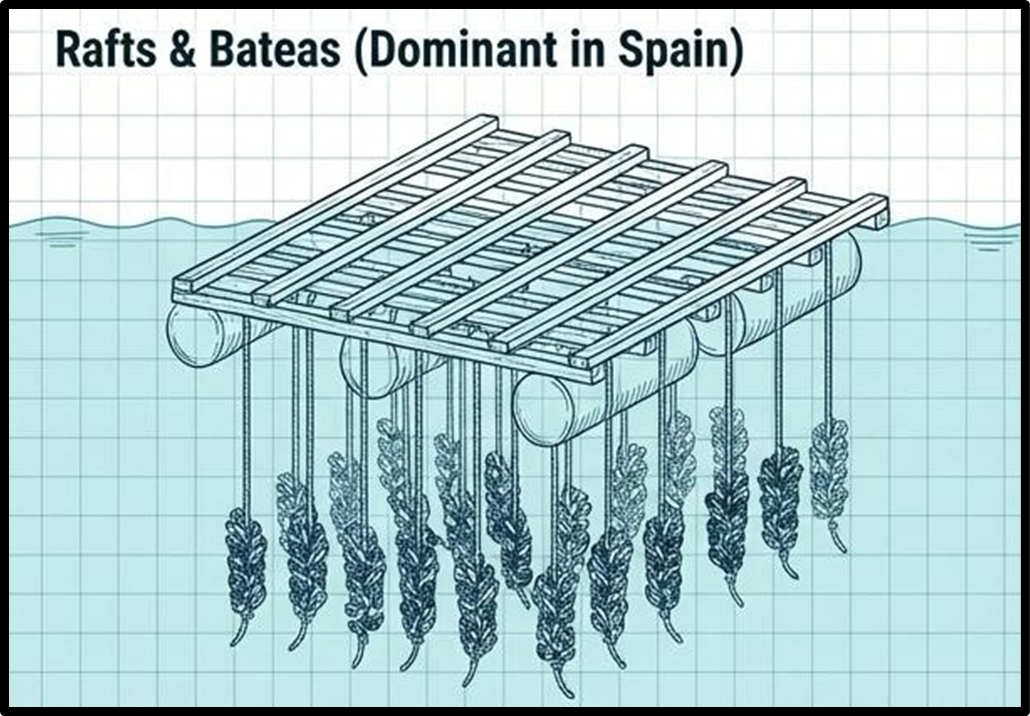
Fig. 10 - Galician Bateas - Typical composition of a bateas
The production cycle unfolds as follows: farmers collect the juveniles (mexilla) by scraping them directly from the rocky cliffs or by collecting them from "collector ropes". The juveniles are then wrapped around the ropes using a thin biodegradable cotton net. Halfway through the growth cycle, when the mussels become too large and dense, they are thinned: the ropes are lifted and the mussels are shelled, selected, and re-bagged onto a larger number of ropes to ensure maximum access to phytoplankton, allowing for some of the fastest growth rates in the world (8-12 months to reach commercial size). This Galician ecosystem produces a product that represents the pride of Spanish aquaculture. Mejillón de Galicia is a true symbol of Spanish identity, and was one of the first seafood products in Spain to obtain European Protected Designation of Origin (PDO) recognition in 2007. The PDO specifications, rigorously managed by the Regulatory Council of the Mejillón de Galicia PDO (partner in the OPTIMA project), are extremely stringent. To bear this label, the mussel must be farmed exclusively on registered and authorized farms within the Galician estuaries covered by the specifications. Furthermore, the purification and processing phases for marketing must take place within authorized centers in the same geographical area. The PDO mark guarantees superior and unmistakable organoleptic quality, resulting from the specific phytoplankton diet of the estuaries: the flesh of the Galician mussel is turgid, intensely orange in color, and has a very high pulp yield. Each batch sold under this mark is traced with a numbered identification label, which guarantees European consumers not only its origin, but also compliance with strict food safety standards, environmental sustainability, and the protection of the artisanal knowledge of the thousands of Galician families who have been working the bateas for generations.
Beyond Galicia, there are other important bivalve production centers on the Mediterranean coast (Catalonia, the Ebro Delta, and the Valencian Community). In these areas, the limited availability of sheltered areas and the lack of upwelling force farmers to use different systems. In addition to modified bateas (such as those located within the port of Valencia), long-line offshore installations, similar to those in Italy, are used, which better withstand the swell of the open sea.
France boasts the most advanced oyster industry in Europe, with production split between the Atlantic coast (wide tidal ranges) and the Mediterranean coast. This diversity has given rise to highly specialized farming techniques. Along the Atlantic coast (Brittany, Normandy, Nouvelle-Aquitaine), the wide tidal range has favored the intertidal technique of poches sur tables. Oysters (Crassostrea gigas) are placed in net bags (poches) and placed on metal frames (tables) anchored to the seabed. The tidal cycle exposes the oysters to air twice a day: this thermal and physical shock (trompage) forces the animals to hermetically close their valves, a process that strengthens the adductor muscle, which is essential for preserving the oyster above water during the marketing phase.
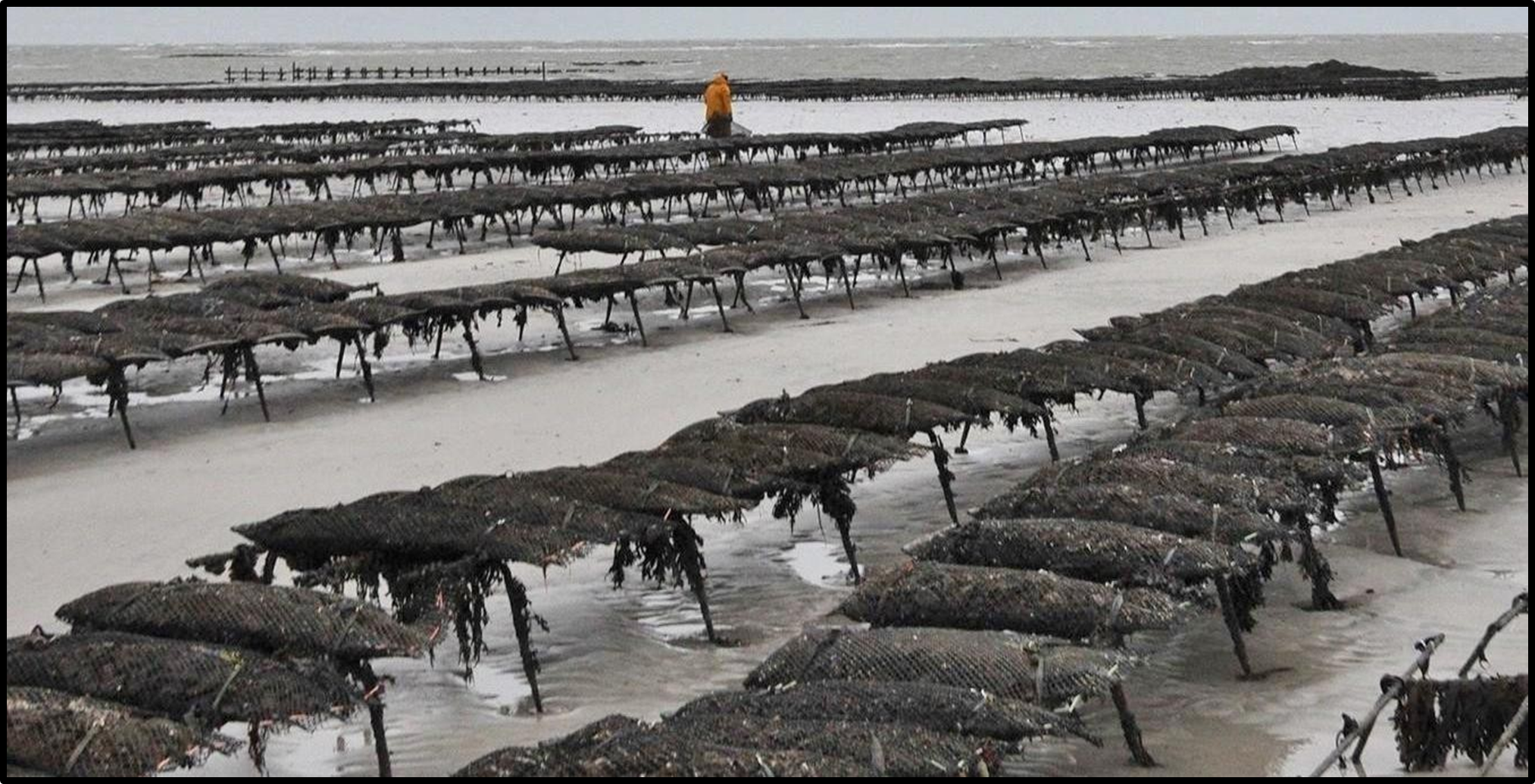
Fig. 11 - Bags of oysters on trestle
When it comes to mussels, France is world-famous for its "bouchots". These consist of long rows of tall wooden poles (often oak or pine) driven deeply into the sand of the Atlantic intertidal zone. Juvenile mussels are caught on coconut fiber ropes, which are then spiraled around the poles. To protect the mussels from benthic predators (such as crabs), the base of the poles is often covered with a smooth plastic collar (called a Tahitian collar). A type of mussel farmed on "bouchots", like the Galician and Scardovari mussels, enjoys a Protected Designation of Origin (PDO) and is renowned for its small size, clean shell, and strong flavor.
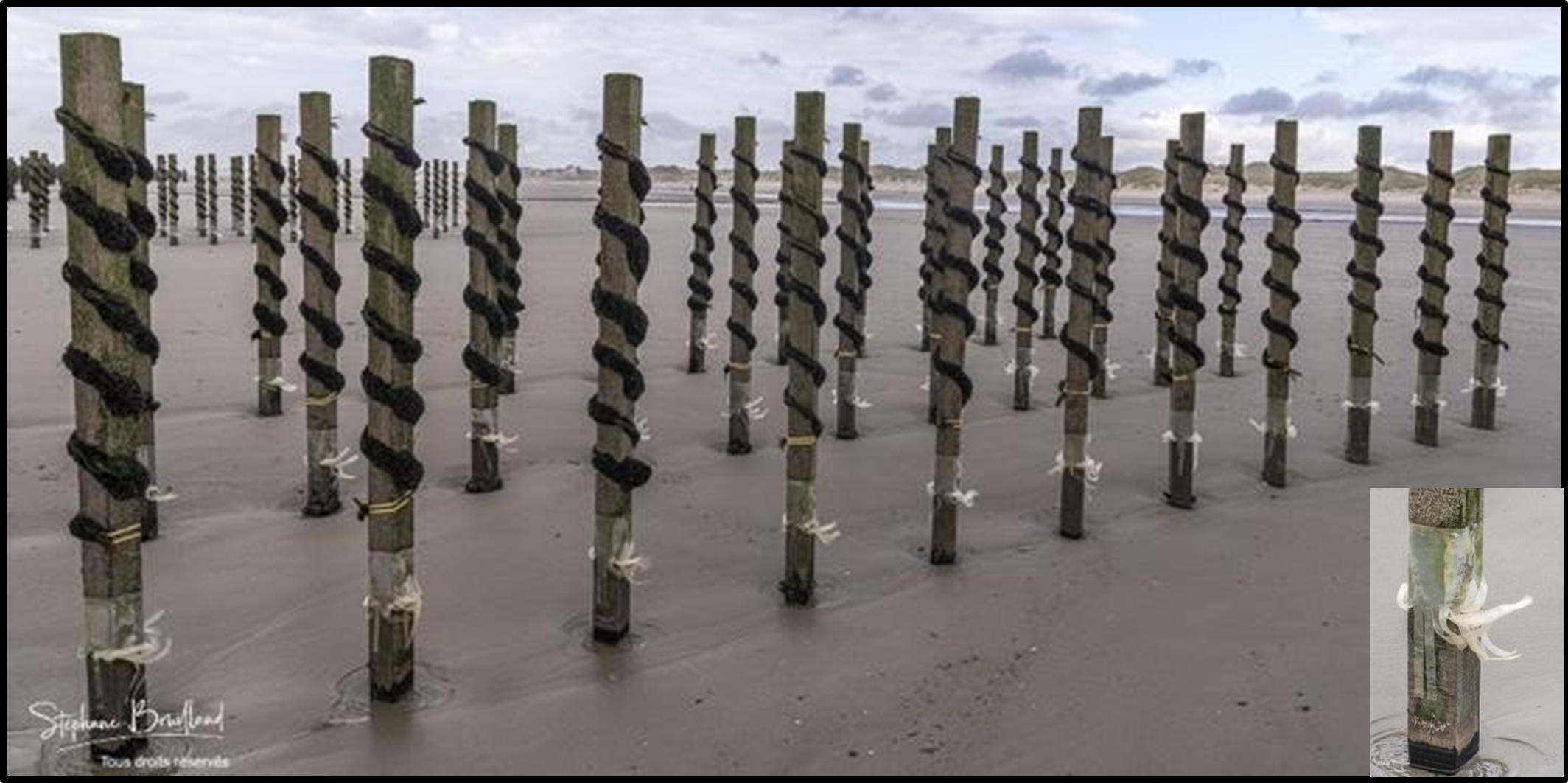
Fig. 12 - Francia, baia della Somme, Quend-Plage, cozze Bouchot. Le cozze Bouchot possono essere dotate di protezioni in plastica alla base per impedire ai granchi di arrampicarsi e predare le cozze. © Stéphane Bouilland
In the French Mediterranean (particularly in the Thau Étang in Occitanie), the lack of significant tides has necessitated the use of suspended systems similar to longlines. For oysters, the sophisticated technique of collage (rope cementation) is used. Individual oysters are manually glued, one by one, to a rope using a biological cement or resin. The ropes are then hung from floating structures positioned in the sea. To replicate the effect of ocean tides, farmers use winch systems (including automated or solar-powered ones) to cyclically lift the ropes out of the water (artificial flooding), thus ensuring a final product of exceptional quality.
In Ireland, the bivalve aquaculture industry is extremely diverse and adapts to the complex morphology of the region. The sector skillfully combines intertidal systems along rugged coastlines with systems in the open sea or in deep fjords, making excellent use of the protection offered by bays and loughs. Irish production is clearly divided between oyster farming and mussel farming, with profoundly different techniques depending on the species and the environment.
Oyster farming in Ireland focuses primarily on the Crassostrea gigas, alongside a small but historically significant indigenous production of the European flat oyster (Ostrea edulis), famous in areas like Galway Bay. The dominant technique is intertidal farming, which takes advantage of the wide tidal ranges of the Atlantic Ocean. Farmers use the trestles and bags system (metal tables and bags): the oysters are placed in rigid plastic mesh bags and placed on iron structures raised about half a meter above the sandy or muddy seabed. This technique requires intense physical labor, strictly dictated by the rhythms of the moon and the tides. During low tide, the oysters emerge, allowing operators to access the facilities using tractors to turn and shake the bags (preventing the oysters from growing misshapen), encouraging the breaking of the more fragile edges of the shell (pruning) and giving the oyster a more harmonious shape.
New types of bags exploit the presence of buoys, incorporated into the bag, which facilitate movement as the tide changes: in this way, the oysters are moved within the bag without the need for an operator. This movement process, combined with exposure to air and sun, "trains" the oyster's adductor muscle, which learns to remain hermetically sealed. The result is a product with a prolonged shelf life and extraordinary organoleptic quality, highly prized and sold on international markets.
Atlantic mussel (Mytilus edulis) farming in Ireland uses two distinct cultivation methods: bottom culture and rope culture.
Bottom-farming, widely practiced in large, shallow bays with suitable seabeds (such as Castlemaine Harbour in the southwest or Lough Foyle in the north), represents a form of semi-natural aquaculture. It relies on catching juveniles (seed) from natural beds, which are then transported and "seeded" at controlled densities in protected concessions within bays. Here, phytoplankton-rich currents ensure growth. After approximately 18–24 months, the mussels are harvested using vessels equipped with specialized dredges. This high-volume production technique is often sold in bulk to European processing plants, but it is highly exposed to natural fluctuations in seed and attacks by benthic predators such as starfish and crabs.
Rope-farming, practiced along the rugged southwest and west coasts (Bantry Bay or Killary Harbour Fjord), takes advantage of deep waters sheltered from violent storms. The systems used are longlines, floating systems of ropes supported by buoys. It is precisely in this area that Ireland has brought about a true technological revolution. In recent decades, to maximize efficiency and increase sustainability, Irish farmers have comprehensively adopted an advanced technology: the so-called New Zealand technique or Continuous Rope System. Unlike the traditional longline system, which uses individual "awns" (cylindrical, disposable plastic nets hung individually from the row), the New Zealand system uses a single, long rope (often a "fuzzy" rope, with filaments to aid the mussels' grip). The rope is passed around the upper waterline, creating a continuous series of loops that descend to the depths and then ascend, running along the entire length of the row.
The adoption of the New Zealand system in Ireland has transformed the industry, bringing enormous operational and environmental benefits. Irish vessels are equipped with crane-mounted hydraulic star-wheels, capable of grabbing the continuous rope and lifting it out of the water. This allows the vessel to advance along the line and perform continuous and automated inspection, thinning, washing, or harvesting operations directly on the vessel's deck, dramatically reducing the time and laborious manual effort required to manage and untie hundreds of individual nets.
Another key advantage is the environment aspect. The New Zealand system almost completely eliminates the need for traditional plastic net "socks," which in other parts of Europe represent a cost and a significant source of waste, given the potential loss of material in the event of storms. In the continuous rope system, the juvenile mussels are secured along the main rope by wrapping them in a thin biodegradable cotton mesh. This cotton dissolves in the sea within a few weeks, just enough time for the mussels to adhere to the rope through the byssus, a rope that will then be reused cycle after cycle for years.
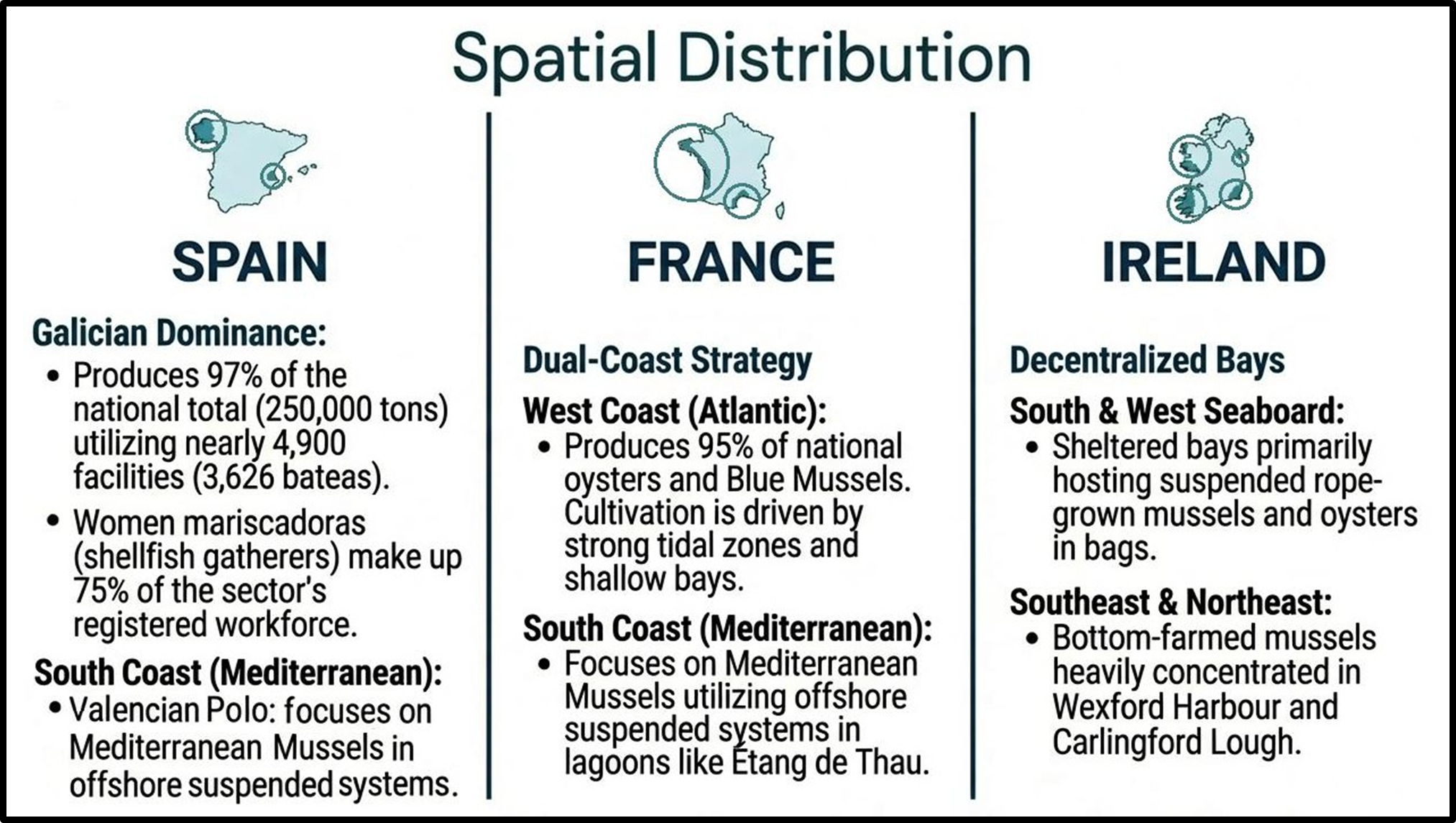
Fig. 13 - Main bivalve mollusc farming areas in Spain, France and Ireland.
In Italy, the Mediterranean's coastal configuration (linear shorelines, lack of fjords) and low tidal range have pushed the industry to develop offshore farming technologies and maximize the use of lagoon environments.
The dominant mussel farming technique in Italy is the offshore long-line (Fig. 6). Mussels are farmed in facilities designed to withstand strong winter storms, although even the most intense can still damage the structure. The facilities consist of a sturdy main cable (the beam), sometimes hundreds of meters long, held in place by enormous concrete blocks laid on the seabed and supported at a constant depth by floating buoys. From the main beam hang the "reste" (tubular cylindrical nets similar to socks) filled with mussels. To escape the kinetic energy of surface waves and summer temperature fluctuations, the main rope is kept submerged at a depth of 3-4 meters, although this does not guarantee the product's safety from strong seas or high temperatures. During the production cycle, the awns must be periodically removed from the water for reclamation: the grown mussels are shelled and reintroduced into larger-meshed nets. This operation was once entirely manual, but is now facilitated by modern vessels equipped with innovative on-board machinery (awn haulers, shellers, and awning machines).
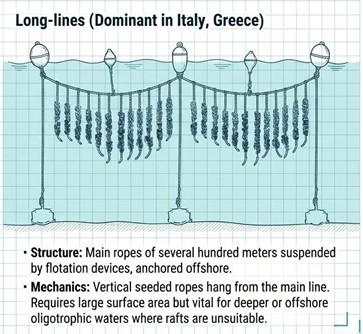
Fig. 14 - Long line system model
Italy is a EU leader in Philippine clams farming (Ruditapes philippinarum), a sector concentrated in the large lagoons of the Northern Adriatic (Po Delta, Sacca di Goro, Sacca di Scardovari, and the Venice Lagoon). Here, the technique is on-bottom farming. Farmers operate under concessions in carefully delineated bodies of water. The cycle begins with cleaning the seabed and sowing the juveniles (often from hatcheries or nursery areas), which burrow into the sandy-muddy substrate. To protect the young bivalves from predators such as
crabs or sea bream, the sowing areas are often covered with large protective nets placed on the seabed. Harvesting is a highly mechanized phase. While traditional manual rakes are still used in some areas, the preferred tool is the "idrorasca"
(or lagoon hydraulic dredge). This sophisticated machine, mounted on the bow of flat-bottomed boats, sprays pressurized water jets onto the substrate to liquefy the sand, allowing a metal grid to advance, collecting the clams without crushing their shells.
Despite being an extremely efficient harvesting method, the use of the idrorasca is subject to very strict regional regulations to prevent excessive alteration and resuspension of lagoon sediments, in a constant balance between productivity and the protection of extremely fragile ecosystems.
In addition to clam farming, these same lagoon ecosystems are home to a flagship sector of Italian aquaculture. Within the Po Delta, the Sacca di Scardovari is renowned not only for its clams, but is also historically famous for the production of the Scardovari Cozza DOP (Mytilus galloprovincialis). This mussel represents a unique achievement at the national level, having been the first in Italy to be awarded the prestigious European Protected Designation of Origin (PDO) label (obtained in 2013).
In this unique environment, the meeting of the freshwaters of the Po River and the saltwater of the Adriatic Sea creates a shallow brackish basin (averaging 3 meters) characterized by an exceptional concentration of nutrients and phytoplankton. Given the shallow depths, the farming technique differs from the offshore long-line system described above. In the Scardovari Sacca, fixed lagoon systems are used, consisting of long rows of poles driven directly into the soft seabed, connected by ropes (beams) from which the mussel pods (cylindrical stockings) are suspended.
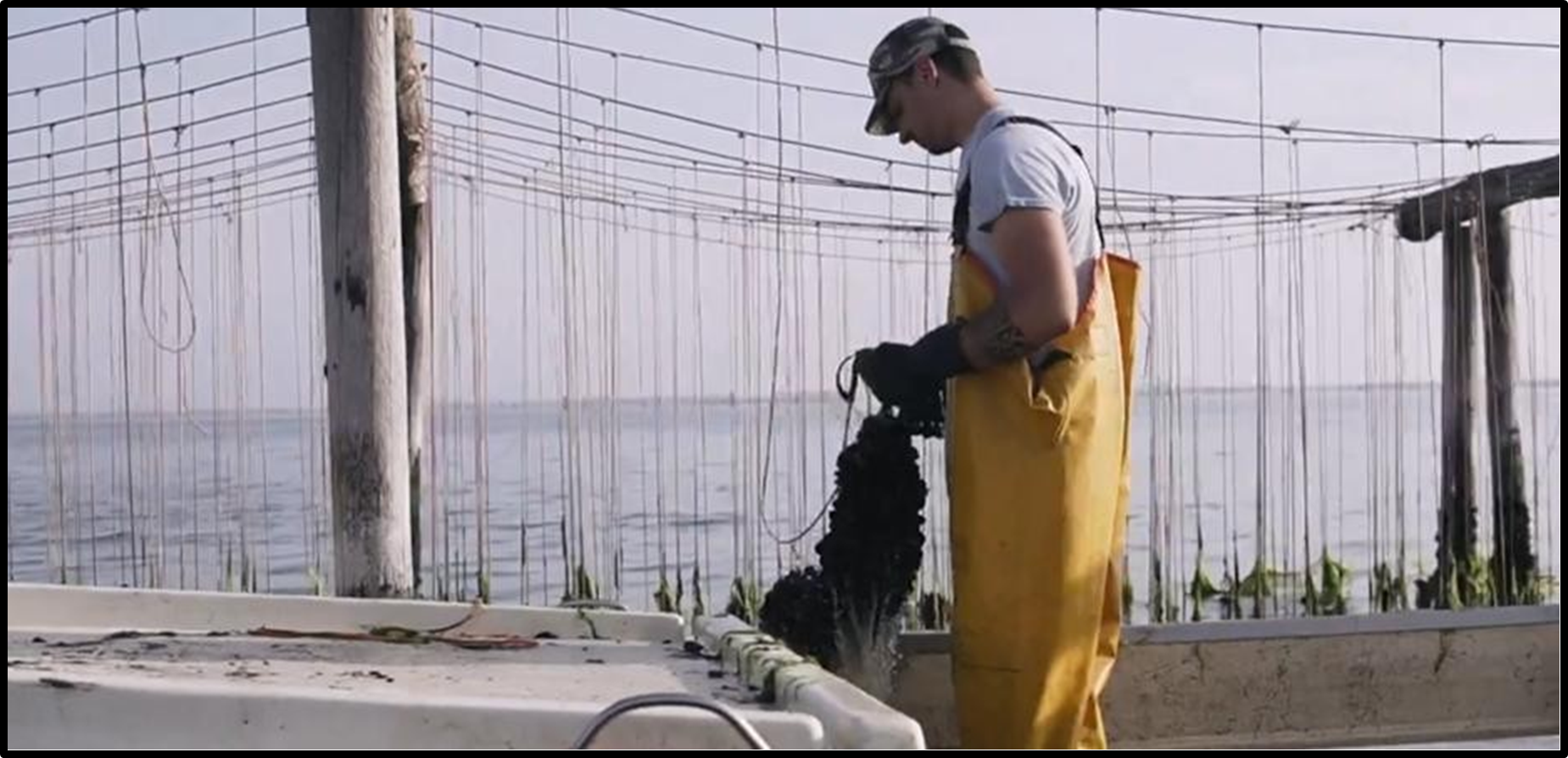
Fig.15 - Farming of the "Scardovari mussel" in the lagoon, one of three in Europe with the DOP label.
In Greece, bivalve aquaculture is characterized by a highly specialized approach, almost a monoculture: the sector is entirely dominated by the farming of the Mediterranean mussel (Mytilus galloprovincialis). The Greek industry exploits the oceanographic characteristics of specific semi-enclosed gulfs located in the north of the country, but is undergoing rapid technical and spatial evolution to survive modern climate challenges. Unlike the rugged southern coastline and the nutrient-poor islands, over 80-90% of Greek mussel farming is concentrated in the Thermaikos Gulf and, to a lesser extent, in the Amvrakikos and Maliakos Gulfs. These basins are the biological engine of Greek aquaculture because they receive a massive influx of freshwater and nutrients from major continental rivers (such as the Axios, Loudias, and Aliakmon). This mixture of waters creates an ideal brackish, estuarine environment for phytoplankton proliferation, ensuring extremely rapid mussel growth rates.
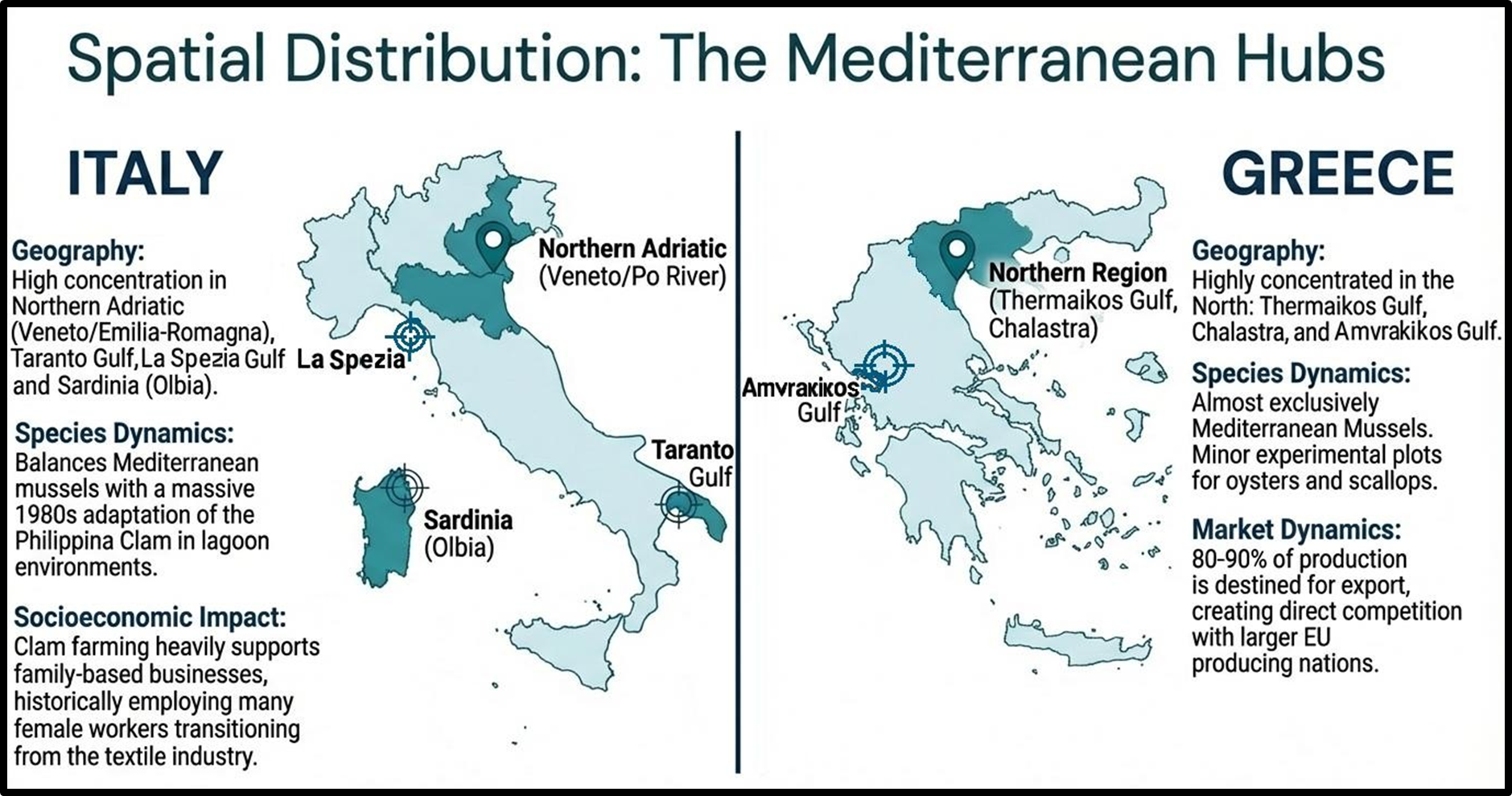
Fig. 16 - Main bivalve mollusc farming areas in Italy and Greece.
Technologically, Greece has almost exclusively adopted the long-line system (suspended lines), adapting it from the Italian model. The standard setup consists of long horizontal lines supported at the surface or subsurface by large floating plastic buoys, firmly anchored to the seabed by concrete moorings. From these main beams hang vertically the awns, within which the mussels grow by filtering the water. The Greek production cycle relies heavily on the natural capture of juveniles (the seed): in autumn or spring, farmers lower special collecting lines onto which the pelagic mussel larvae settle spontaneously. Once reached the appropriate size, the mussels juveniles are shelled and stuffed into the mussel nets for growth. Just as in Italy, the cycle requires an operation (changing the net as the mussels grow), which are now partially mechanized on board dedicated vessels.
The current unique feature of Greek farming is its migration to the open sea. Historically located very close to the coast and in relatively shallow and sheltered waters, Greek farms are suffering the devastating impact of climate change. Prolonged summer heatwaves cause coastal waters to frequently exceed 28-30°C, causing dramatic mass deaths due to heat stress and anoxia. To save the sector, the national strategy is to relocate long-line farms to the open sea, where the seabed is deeper, the currents stronger, and the summer temperatures less extreme. This technological transition requires much more robust facilities to withstand wave action. To facilitate this shift and reduce growing conflicts over coastal use (the seaside tourism industry), the Greek government is implementing a complex marine zoning system based on the AZA (Allocated Zones for Aquaculture) guidelines. These zones aim to group farms into dedicated, well-regulated marine parks, providing them with the necessary infrastructure to operate safely away from the coast.