Απαιτήσεις ολοκλήρωσης
3.1 Ecosystem services: definition, typology and EU policy on the matter
3.1.1 Understanding what ecosystem services are
Bivalve mollusc aquaculture is also important for the significant ecosystem services it provides. Bivalves, in fact, play a crucial role in maintaining the health of coastal ecosystems, contributing significantly to the regulation of biogeochemical cycles and the protection of habitats by performing a series of services that we can summarize below.
Seawater filtration
One of the most well-known and ecologically significant ecosystem services provided by bivalve molluscs is their remarkable ability to filter large volumes of water. Through their feeding behaviour, these organisms consume phytoplankton, suspended organic matter, and detritus, effectively improving the quality of the surrounding water. This process, referred to as biological depuration, not only helps reduce water turbidity but also plays a crucial role in lowering excess nutrient levels, particularly nitrogen and phosphorus, which are key contributors to eutrophication. By filtering particulate matter from the water column, bivalves help restore balance in marine ecosystems, reducing the risk of harmful algal blooms (HABs), which can have devastating effects on local biodiversity, water quality, and fisheries. Bivalve filtration also significantly enhances water clarity, which is vital for the health of submerged vegetation such as seagrasses and macroalgae. These plants rely on clear water to photosynthesize effectively, and by improving light penetration, bivalve molluscs indirectly support the productivity of these crucial habitats. Additionally, the filtration process helps promote nutrient cycling, contributing to more stable and productive ecosystems. As highlighted by Smaal and Poutiers (2003), a single individual Mytilus edulis (blue mussel) can filter up to 25 litres of water per day, underscoring the potential of even small populations of bivalves to make substantial improvements to water quality.
This filtration capacity is not only important for maintaining ecological balance but also has significant implications for aquaculture sustainability. For example, in coastal farming systems, bivalve molluscs can reduce the need for external water treatment interventions, making aquaculture operations more environmentally friendly and less reliant on artificial filtration technologies.
A practical example of this service is the European flat oyster (Ostrea edulis), used for nutrient bioextraction in the Mar Menor coastal lagoon in Spain. This species has demonstrated a substantial capacity to mitigate eutrophication by filtering copious quantities of organic matter from the water, thereby improving water quality and aiding ecosystem recovery (Albentosa et al., 2023).
Role of Bivalves in the Carbon and Nutrient Cycle
Bivalve molluscs play a crucial role in the carbon cycle by sequestering carbon dioxide (CO₂) from seawater and incorporating it into their shells, which are primarily composed of calcium carbonate (CaCO₃). This biological process, known as biomineralization, contributes to mitigating climate change by reducing atmospheric CO₂ concentrations. In addition to inorganic carbon sequestration, the biomass of bivalve molluscs serves as an important reservoir of organic carbon. Through their metabolic processes and subsequent deposition in sediments, these organisms facilitate the burial of organic matter, further contributing to the carbon cycle. Although calcification processes release some CO₂ as a byproduct, the net effect of bivalve farming on carbon sequestration remains positive, particularly under well-managed environmental conditions (Heilweck et al., 2023).
Furthermore, bivalve aquaculture provides significant environmental benefits through the sequestration of nutrients such as nitrogen and phosphorus. These organisms filter large amounts of organic particulate from the water, removing excess nutrients that can cause eutrophication in coastal areas.
A study has highlighted that bivalve farming can help remove nutrients, improve water quality and promote the health of marine ecosystems (Gren, 2019). Additionally, integrating bivalve aquaculture into Integrated Multi-Trophic Aquaculture (IMTA) systems can enhance nutrient recovery efficiency, reducing the overall environmental impact of aquaculture.
In conclusion, while the contribution of bivalves to carbon sequestration requires careful management to maximize benefits, their role in the nitrogen and phosphorus cycle represents a crucial ecosystem service for marine environmental health.
The adoption of sustainable management practices in bivalve aquaculture can therefore offer benefits for both food production and environmental protection.
Creation of habitats and nursery areas
Bivalve mollusc farms play a crucial role in creating complex habitats that provide shelter and nourishment for various marine organisms.
The physical structures used in aquaculture, such as ropes, nets, and poles, offer surfaces for sessile epifauna to colonize, creating an intricate habitat matrix. The enriched and diversified sediments beneath these structures provide a favourable environment for infauna, increasing local biodiversity.
Research by Rumohr et al. (2016) highlights that mussel farms can boost biodiversity by supporting a variety of benthic and nektonic species. These farms serve as nursery areas for juvenile fish and invertebrates, improving survival rates by offering protection from predators and favourable conditions for growth.
The increased habitat complexity around bivalve farms promotes ecological interactions that support the productivity and resilience of marine ecosystems.
Bivalve structures also contribute to nutrient cycling and sediment stabilization, essential services for maintaining marine ecosystem health, particularly in areas damaged by human activities.
By integrating these practices, bivalve aquaculture has the potential to enhance ecosystem services, promote biodiversity, and support sustainable fisheries, contributing to the ecological and economic stability of coastal regions.
Coastal erosion protection
Bivalve mollusc farms can help protect coastlines by attenuating wave energy and stabilizing sediments. Farming structures can act as breakwaters, reducing the impact of storm surges on the coastline.
An analysis by Turner et al. (2009) showed that oyster farms can significantly reduce coastal erosion, contributing to the tutelage of coastlines and local communities.
Furthermore, as highlighted in the comprehensive review by van der Schatte Olivier et al. (2018), bivalve aquaculture provides a wide range of ecosystem services, including, as mentioned above, coastal protection. The study emphasizes that the dense, structured habitats created by bivalve farms enhance sediment deposition and reduce erosion, contributing to the overall stability of coastal ecosystems.
By acting as natural barriers, these farms not only preserve shorelines but also improve water quality and promote biodiversity.
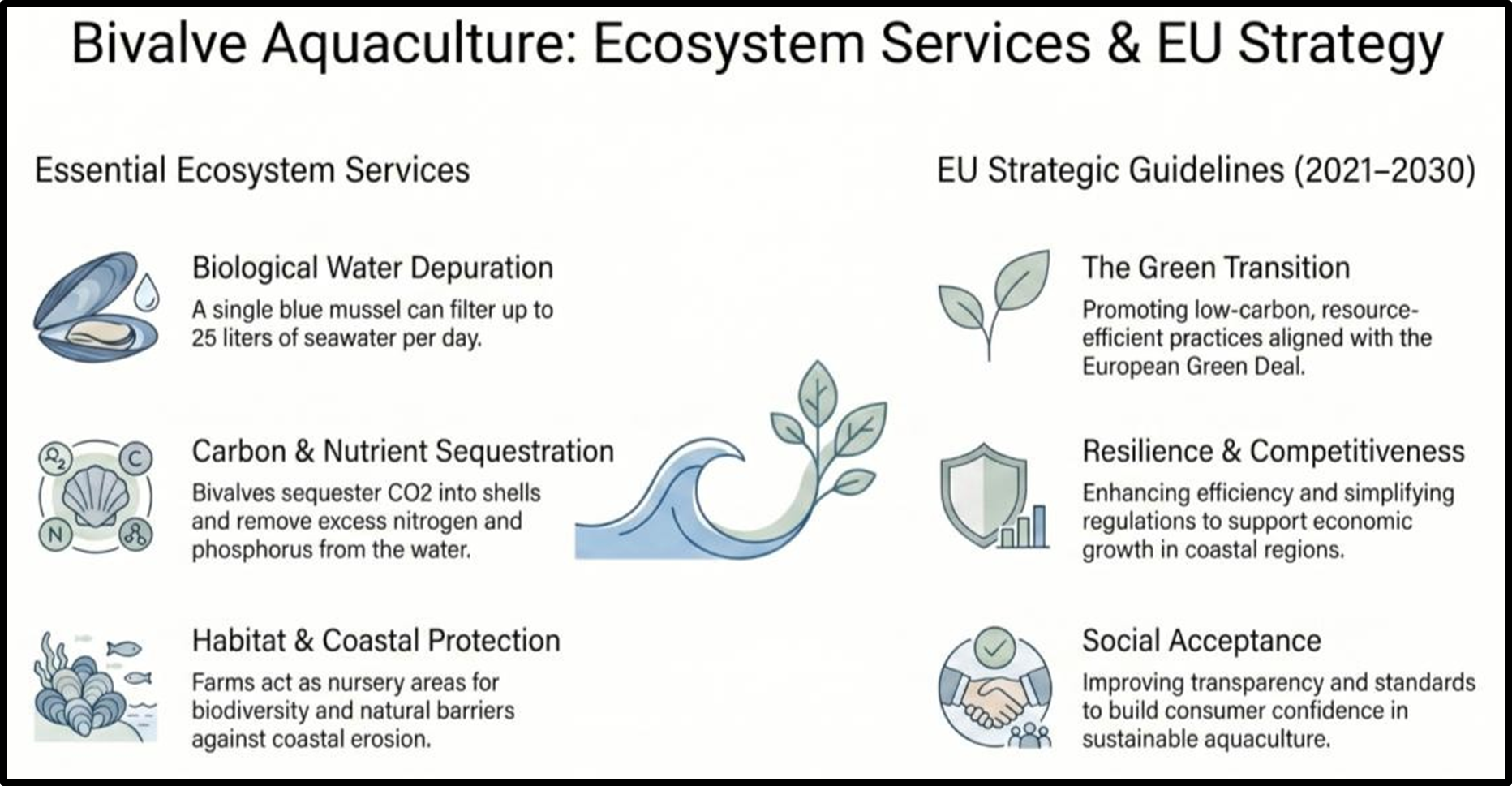
Fig. 20 - Ecosystem services of bivalves and EU strategy, a perfect match