Conditions d’achèvement
4.1 Understanding national and international markets for bivalve molluscs, including consumer trends and behaviour
4.1.1 Understanding the structure and dynamics of the national and international markets for bivalve molluscs farmed in the countries that are part of the OPTIMA consortium
The bivalve mollusc market represents a fundamental pillar of the European blue economy, contributing 30% of the total turnover of EU aquaculture in 2021, with a value of around €1.27 billion.
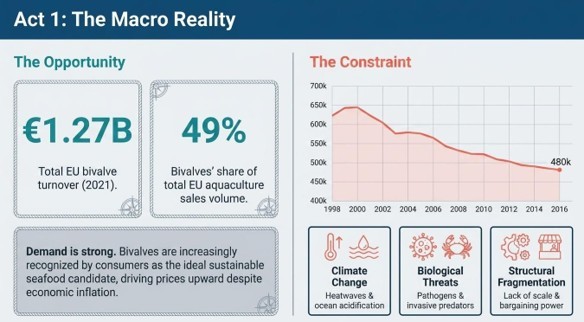
Fig. 24 - The macro reality of the bivalve mollusc aquaculture sector in the EU.
The structure of this sector is characterised by a very high prevalence of micro and small enterprises that provide widespread support for employment in coastal communities. In the five countries examined, there are profoundly different organisational models: in Italy and Spain, the supply chain is centred on producer cooperatives and consortia that seek to counteract the atomisation of the sector in order to gain greater bargaining power vis-à-vis large retailers. In Spain, in particular, the PDO "Mejillón de Galicia" and the Producer Organisations (POs) manage industrial volumes (around 250,000 tonnes per year), closely integrating with the canning industry. Italy, despite being the European leader in the production of clams, suffers from greater fragmentation in mussel farming; despite the presence of a PDO certification for the Scardovari mussel, internal competition between micro-enterprises scattered along the coasts is very high.
In contrast, France has an extremely mature and specialised market, where value is guaranteed by prestigious labels such as Label Rouge and the PGI Marennes Oléron, and where direct sales at the farm or local markets often exceed 50% of production, ensuring higher profit margins for the producer. Ireland has developed a model oriented almost exclusively towards exports to Asian countries. The government and institutions are supporting this model and have ensured that almost all products leaving the country are certified.
There is no mussel production in Ireland that is not MSC-certified, a label that has been obtained both for mussels farmed on the seabed and for those farmed in offshore longline facilities. For oysters, on the other hand, certifications are guaranteed by national certifications such as the Origin Green national sustainability programme. Greece, on the other hand, operates as an export hub (80-90% of production) to Italy and Spain, but suffers from a more individualistic structure, a lack of quality labels and bureaucratic delays in the establishment of AZA (Allocated Zones for Aquaculture) zones.
The dynamics of these markets are intrinsically linked to environmental and health factors: the classification of the waters (Class A, B or C) determines the operating costs, since molluscs from areas that are not excellent must pass through purification or relaying centres before sale. In Ireland, the high natural quality of the water represents a unique competitive advantage, often allowing direct marketing. However, climate change is altering these balances, with heat waves that in 2024 caused widespread die- offs in the Mediterranean (with temperatures of 30°C for months) and the physiological failure of the byssus in mussels.
These crises often force sales below cost to save the product, depressing market prices. At the international level, the main challenge remains competition from non-EU countries, such as Chile, which exports mussels to the EU at very low prices, sometimes with misleading labelling, putting pressure on local producers. The resilience of the European sector therefore depends on the ability to diversify production (e.g. by introducing oyster farming in Italy) and to monetise the ecosystem services provided by bivalves, such as carbon sequestration and water biofiltration.
With regard to regulations for the trade of products, access to the single market and exports, these are governed by strict European health standards, in particular by the so- called "Hygiene Package" (EC Regulations 852/2004 and 853/2004), which establishes specific rules for products of animal origin intended for human consumption. Each batch of live bivalve molluscs intended for marketing or reintroduction into the marine environment must be accompanied by harmonised health certificates guaranteeing their traceability and the absence of pathogens or marine biotoxins. For trade with third countries (non-EU), the European Union imposes strict official controls through the TRACES (Trade Control and Expert System) system, which monitors import flows to prevent the introduction of exotic diseases or invasive alien species.
These regulations ensure that the European product maintains its premium positioning, offering food safety guarantees superior to those of global competitors. A thorough understanding of these regulations and price fluctuations – which peak during the holidays, especially in France for oysters – is essential to enable operators to plan seeding and harvesting cycles that mitigate the economic risks associated with seasonality and environmental crises.